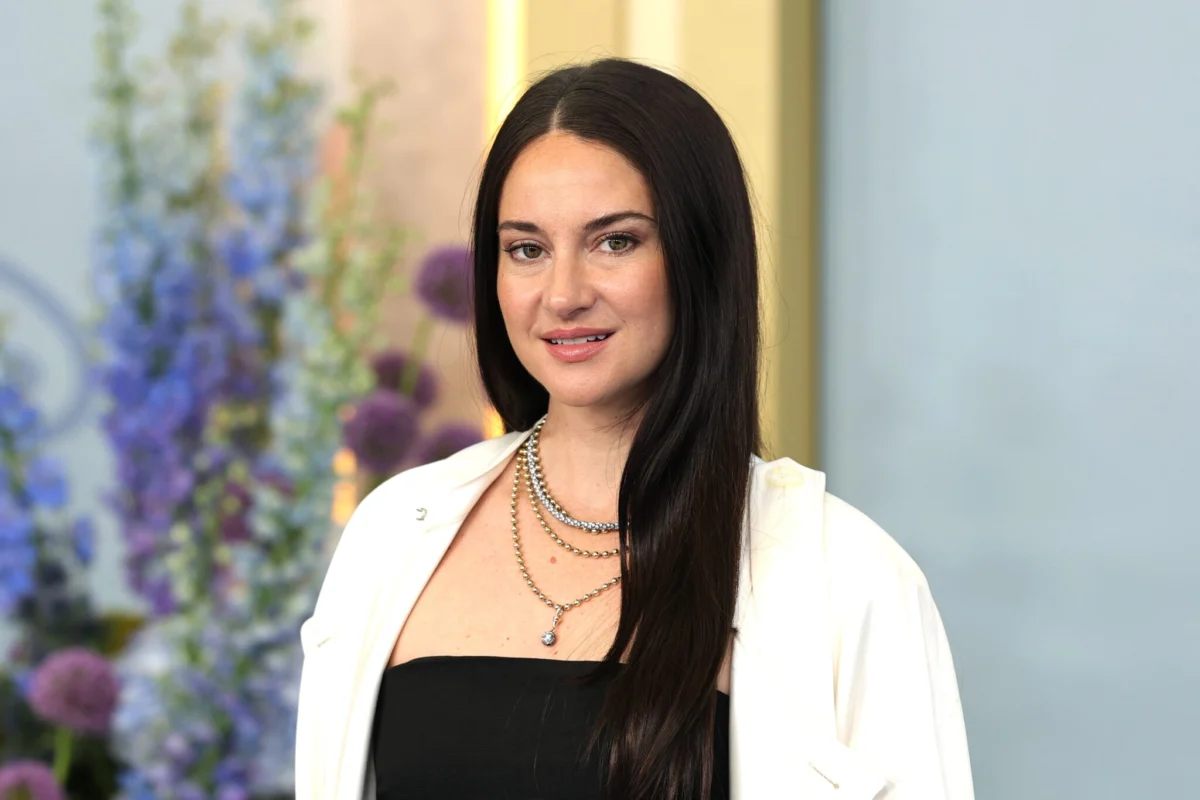
More than a decade after the release of The Amazing Spider-Man 2, the ghost of what might have been continues to haunt the legacy of Marc Webb’s superhero franchise. Shailene Woodley, a powerhouse talent whose career has spanned critical darlings like The Descendants and cultural phenomena like Big Little Lies, recently provided a candid look back at a formative moment of professional heartbreak: the sudden, abrupt removal of her portrayal of Mary Jane Watson from the 2014 blockbuster.
In a wide-ranging, reflective conversation as part of the SAG-AFTRA Foundation’s "Conversations" series, Woodley peeled back the curtain on the industry’s often opaque decision-making processes, detailing her journey from landing her dream role to discovering, a year later, that her contributions to the web-slinger’s cinematic universe had been relegated to the cutting room floor.
The Dream Role: Landing Mary Jane Watson
For many actors, landing a role in a major studio superhero franchise is a career milestone. For Shailene Woodley, the casting was personal. Growing up, Woodley identified Mary Jane Watson as her favorite character, and Spider-Man held the title of her favorite superhero. When she was cast by director Marc Webb to step into the iconic red-headed shoes previously filled by Kirsten Dunst in the Sam Raimi trilogy, it felt like a manifestation of a childhood aspiration.
"When I got it, I was like, ‘This is so exciting,’" Woodley recounted during her SAG-AFTRA interview. At the time, the casting was met with significant buzz. The prospect of seeing a new interpretation of Peter Parker’s most famous love interest, played by a rising star who was rapidly becoming Hollywood’s next "it girl," promised a fresh direction for the franchise. Woodley arrived on set with enthusiasm, filming roughly three scenes alongside Andrew Garfield. The chemistry, at least on paper, was set to redefine the romantic stakes for the Peter Parker of the Amazing era.
Chronology of a Cut: From Filming to Silence
The timeline of Woodley’s involvement reveals the precarious nature of tentpole filmmaking. After filming her scenes, Woodley went about her business, anticipating her debut as the iconic MJ. However, as the film moved through its lengthy post-production phase, the reality of the studio’s creative direction began to shift.
Roughly a year after the cameras stopped rolling, Woodley received the phone call that every actor dreads. "That was a fun phone call," she remarked with a touch of dry irony. The production team informed her that her character would not be appearing in the film. The explanation provided at the time was rooted in narrative economy: the film was already balancing a heavy load of new characters and complex plot threads.
"They were like, ‘We’ve introduced a lot of new characters in this last one, and we’re going to wait for… whatever happens between [Emma Stone’s character, Gwen Stacy] and Andrew,’" she explained. The studio’s reasoning was that introducing a second love interest would complicate the emotional arc of Peter and Gwen. The plan, as it was explained to Woodley, was to save Mary Jane for a future installment—a film that ultimately never came to fruition following the mixed critical reception and disappointing box office performance of The Amazing Spider-Man 2.
Official Responses and Studio Logic
The decision to remove Woodley from the film was not handled lightly by the production team, but the reasons cited were strictly structural. At the 2014 New York premiere—an event that ironically featured a Mary Jane-themed cocktail, highlighting the bizarre disconnect between the marketing and the final edit—producer Matt Tolmach addressed the controversy directly in an interview with Variety.
"We bit off more story than we could tell," Tolmach admitted at the time. "We had a 148-page script. We were in the middle of that, and we realized this story [with Mary Jane] is not going to be in this movie."
This rationale underscores the immense pressure placed on modern blockbuster directors to weave together complex cinematic universes. By attempting to lay the groundwork for a third film—which would have presumably featured Mary Jane—the production team inadvertently created a script that was too bloated to function as a coherent singular story. The decision to sacrifice the Mary Jane arc was viewed as a "necessary evil" to protect the pacing and focus of the central tragedy of the film: the death of Gwen Stacy.
The Uncertainty of the Industry
Woodley’s reflection on the incident reveals a degree of humility and a mature understanding of how the "sausage is made" in Hollywood. While she was given a clear explanation by the production team, she remains philosophical about whether that explanation was the complete truth.
"Well, that’s what I was told, you know," Woodley said, acknowledging the ambiguity inherent in studio notes. "But again, who knows what the truth is. I could have been terrible and they’re like, ‘We can’t do this.’"
This comment touches on the imposter syndrome and professional vulnerability that even A-list actors grapple with. In an environment where projects are constantly re-evaluated through test screenings and executive meddling, an actor is rarely privy to the internal deliberations that lead to such drastic cuts. For Woodley, the experience served as a masterclass in the detachment required to survive in the entertainment industry.
Broader Implications: The "What If" Effect
The removal of Mary Jane from The Amazing Spider-Man 2 serves as a case study in the risks of franchise world-building. Studios are often so eager to set up sequels and spin-offs that they risk undermining the film they are currently producing. Had Mary Jane been introduced, the final act of the movie—the emotional climax involving Gwen Stacy—might have lacked the singular focus required to make it land with the audience.
However, the "what if" remains a compelling topic for fans of the franchise. Because the third installment of the Amazing series was scrapped in favor of the Sony-Marvel deal that brought Tom Holland’s Spider-Man into the MCU, we will never know how Woodley’s interpretation of the character would have evolved. Would she have been a catalyst for Peter’s grief? A bridge to his recovery? The cut scenes remain a lost piece of superhero history, a "what could have been" that persists in the digital archives of the internet.
Looking Forward: The Career Beyond the Cut
The "SAG-AFTRA Foundation Conversations" interview was not merely an exercise in looking back at what was lost, but a testament to the trajectory of Woodley’s career since that pivotal year. Since the Spider-Man setback, Woodley has cultivated a filmography that prioritizes character depth and thematic complexity over sheer franchise participation.
She discussed her roles in Divergent, a rare foray into leading a massive YA franchise; the critical success of The Descendants; the emotional weight of The Fault in Our Stars; and the prestige television heights of HBO’s Big Little Lies. Her recent work in Dumb Money and Hulu’s Paradise further cements her reputation as a versatile actor capable of navigating both massive, audience-driven spectacles and intimate, dialogue-heavy dramas.
Ultimately, Shailene Woodley’s story is a reminder that in the high-stakes world of Hollywood, even the most promising starts can be cut short by the unpredictable shifting of studio strategy. Yet, as she demonstrates in her recent work, professional resilience is defined not by the parts you play, but by the ability to pivot, grow, and continue delivering compelling performances long after the cameras stop rolling on a "dream role."
As the industry continues to evolve, with superhero franchises becoming increasingly modular and interconnected, the lesson of Woodley’s cut performance remains relevant: no script is sacred, no role is guaranteed, and the most interesting stories are often the ones that happen behind the scenes.