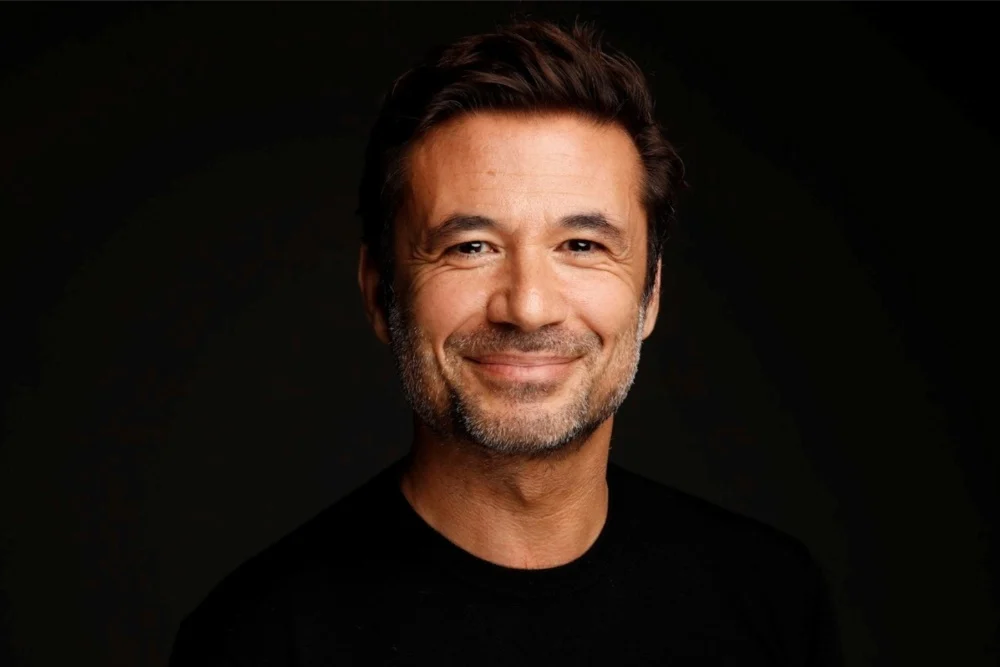
At the prestigious James MacTaggart Memorial Lecture during this year’s Edinburgh TV Festival, Pedro Pina, YouTube’s Vice President for Europe, Middle East, and Africa, stepped onto the stage with a clear mission: to dismantle the "well-scripted tragedy" currently defining the narrative of the British television industry. For years, the prevailing consensus among traditional broadcasters and production houses has positioned global tech giants like YouTube as the primary antagonists—the digital disruptors responsible for the erosion of linear viewership, the decline of advertising revenue, and the fragmentation of the cultural zeitgeist.
Pina, however, offered a counter-narrative. Far from being the villain of the story, he argued that YouTube is a vital catalyst for the industry’s evolution, acting as a talent incubator, a revenue generator, and a bridge to a new generation of audiences. To underscore his commitment to this partnership, Pina announced a fresh £3 million ($4 million) investment into the U.K. creative sector, signaling that YouTube intends to be a long-term architect of Britain’s media future rather than merely a spectator to its decline.
The Regulatory Pressure Cooker
The timing of Pina’s address is far from coincidental. YouTube is currently navigating a precarious regulatory climate in Europe. As the European Commission reviews the rules governing the audiovisual sector, officials are grappling with how to establish a "level playing field" between legacy media groups—which have long been subject to stringent investment and content quotas—and digital-native platforms.
The debate centers on whether YouTube should be classified alongside traditional broadcasters and streaming services like Netflix. The latter has been particularly vocal in its push for regulatory parity. Earlier this year, Netflix Co-CEO Ted Sarandos made waves in Brussels by explicitly labeling YouTube a "straightforward competitor," arguing that the platform’s massive scale and content library render the old distinction between "social video" and "professional streaming" obsolete.
By framing YouTube as a direct rival, competitors are effectively lobbying for the same regulatory burdens to be applied to the Google-owned giant, including mandates for heavy investment in European-produced content. Pina’s speech was a sophisticated preemptive strike against this framing, aiming to re-categorize YouTube in the minds of policymakers not as a competitor, but as an indispensable partner in the ecosystem of British storytelling.
Historical Parallels and the "Third Golden Age"
To soften the resistance of the traditional television establishment, Pina employed a historical analogy that resonated with the creative audience in Edinburgh. He drew a parallel between the rise of YouTube and the invention of photography in the 19th century. At the time, painters feared that the camera would render their art obsolete. Instead, Pina noted, photography liberated painting from the duty of strict realism, allowing it to evolve into more abstract and expressive forms.
"Far from destroying visual art, photography helped it mature as a medium," Pina argued. He suggested that the current friction between television and online video is a symptom of a similar maturation process.
Pina went even further, asserting that Britain is currently on the cusp of a "third golden age of television." He framed the previous two golden ages—the shift in the 1950s caused by the rise of television, and the cable and satellite proliferation of the 80s and 90s—not as eras of stability, but as eras of disruption. "In reality, more competition meant more appetite for risk, and more space for new voices," he said, citing the landmark successes of The Sopranos, The Wire, and Breaking Bad as products of the very fragmentation that industry incumbents once feared.
The Talent Pipeline: YouTube as a Creative Incubator
A cornerstone of Pina’s argument was the role of YouTube as a foundational training ground for the next generation of British media talent. He pointed to a growing list of "YouTube-to-TV" success stories, where creators have leveraged the platform’s massive reach to launch mainstream careers.
Notable examples include Amelia Dimoldenberg and Nella Rose, both of whom have transitioned from viral YouTube success to becoming fixtures on primetime television. Similarly, the crossover success of figures like George Clarke on Strictly Come Dancing and Angry Ginge winning I’m a Celebrity illustrates a porous membrane between digital fame and traditional prestige.
According to data presented by Pina, the reliance is mutual: 75% of U.K. creators who identify as having a career in media and entertainment state that they began their journey on YouTube. To bolster this pipeline, the new £3 million investment will be spread over three years, specifically targeting the support of new entrants and the re-skilling of mid-career professionals. Furthermore, YouTube plans to expand its partnership with the National Film and Television School (NFTS), increasing the capacity of its "Creator Incubator" tenfold.
Economic Impact and the Revenue-Sharing Model
Beyond the intangible benefits of talent development, Pina provided hard data to argue for YouTube’s tangible economic contributions to the U.K. The platform reportedly supports more than 45,000 full-time-equivalent jobs in the country and contributes over £2.2 billion ($2.9 billion) to the national GDP.
Addressing the long-standing criticism that YouTube "extracts" value without commissioning content, Pina highlighted the platform’s revenue-sharing model. By sharing more than 50% of advertising revenue directly with creators on a video-by-video basis, he argued that YouTube is effectively acting as a decentralized production studio.
He also pointed to collaborative successes with traditional institutions, such as the BBC, noting that the Gavin & Stacey clips hosted on YouTube channels—managed by BBC Studios and BritBox—have amassed millions of views, serving as a powerful marketing engine that drives audiences back to the original broadcast content.
Implications for Regulation and Future Policy
The speech carried a clear lobbying subtext. As Brussels deliberates, Pina took aim at proposals for "forced prominence"—a regulatory mechanism that would require platforms like YouTube to prioritize public-service media in their recommendation algorithms.
Pina warned that such measures could stifle the very independent creators who have made the platform a success. He argued that audiences do not view media in silos; they move organically between broadcast, streaming, and social video. Imposing rigid structural mandates, he suggested, would only serve to disadvantage the independent production companies that rely on YouTube’s algorithm to find their niche audiences.
Conclusion: An Epic, Not a Tragedy
As the Edinburgh TV Festival audience reflected on Pina’s remarks, the underlying message was one of pragmatic optimism. The executive acknowledged the anxieties of the industry but urged producers and broadcasters to lean into their comparative advantages rather than retreating into defensiveness.
By reframing the narrative from "disruption as destruction" to "disruption as evolution," Pina is attempting to secure a seat for YouTube at the table of British media policy. Whether the European Commission and the U.K. broadcast establishment will accept this invitation remains to be seen. However, Pina’s parting words served as a rallying cry for an industry in flux: "A story is unfolding before our eyes. It is not a tragedy. YouTube is not the villain… This next chapter of British television will not be a tragedy. It will be an epic."
For the British television industry, the challenge now lies in determining whether they can collaborate with the digital giants to write that epic, or if the friction between the old guard and the new medium will continue to dominate the discourse for years to come.