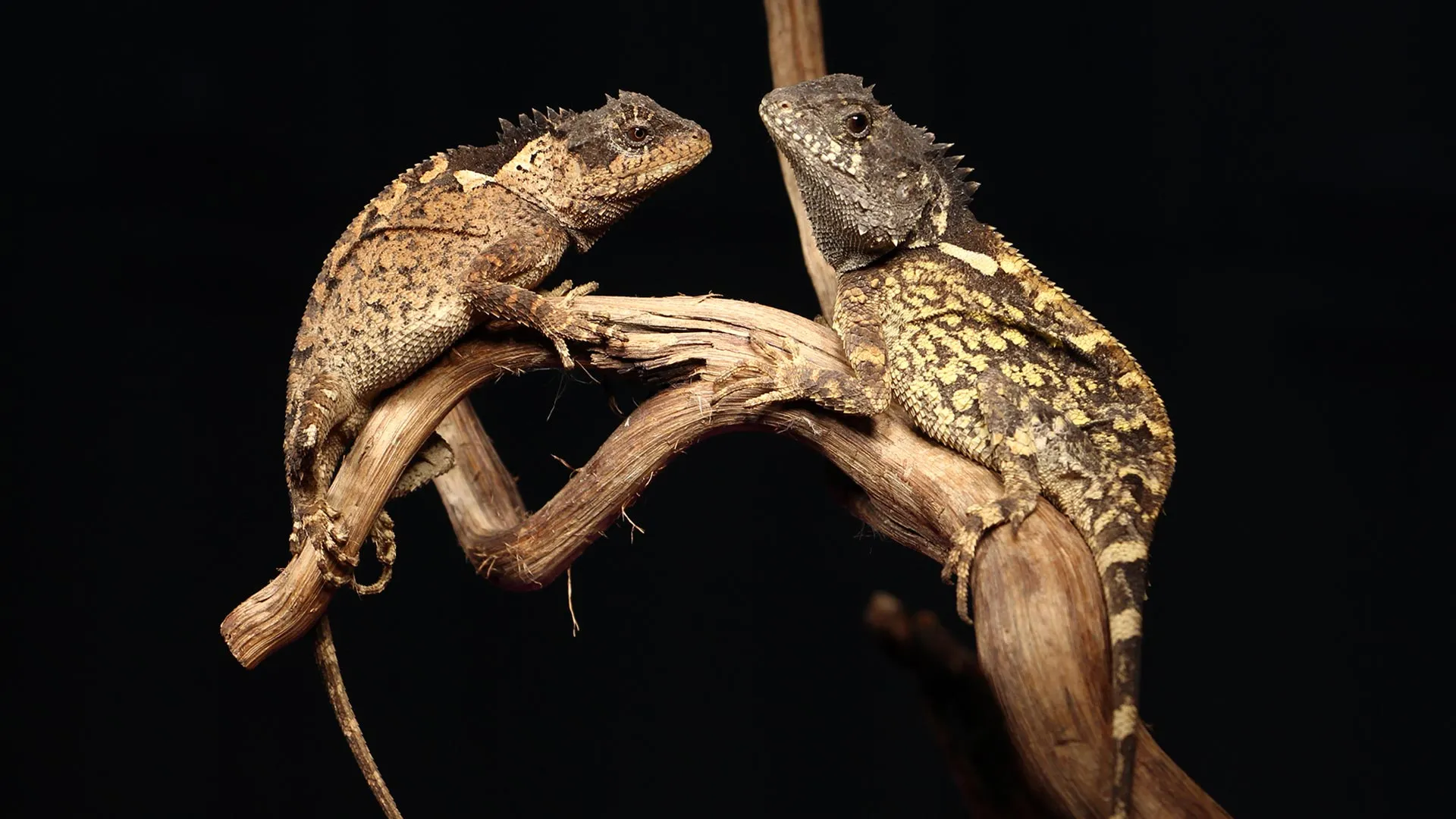
In the mist-shrouded, high-altitude evergreen forests of western Thailand, researchers have uncovered a creature that seems to have stepped directly out of the pages of George R.R. Martin’s Westeros. Scientists have officially identified a new species of lizard, Acanthosaura syrax, a discovery that has captivated both the herpetological community and fans of high-fantasy television alike. Named after the fearsome, golden-scaled dragon ridden by Queen Rhaenyra Targaryen in the HBO series House of the Dragon, this diminutive reptile serves as a vivid reminder of the hidden biodiversity still waiting to be cataloged in Southeast Asia’s most rugged terrains.
Main Facts: A Dragon in Miniature
The discovery of Acanthosaura syrax marks a significant addition to the genus Acanthosaura, bringing the total number of recognized species to 23. These lizards, collectively known as "mountain horned dragons," are iconic for the dramatic, spiny crests that run along their necks and backs, giving them a prehistoric, dragon-like silhouette.
Found exclusively within the Mae Wong National Park in the Tak-Kamphaeng Phet Province, A. syrax thrives at elevations exceeding 1,300 meters. The species was formally described in a study led by Poramad Trivalairat of the Chulabhorn Royal Academy and his colleagues at Kasetsart University. Published in the open-access journal ZooKeys, the study highlights that the lizard is not merely a biological curiosity but a distinct evolutionary lineage confirmed through rigorous morphological and genetic analysis.
Chronology of Discovery: Tracking the Elusive Reptile
The journey to naming Acanthosaura syrax began with field expeditions into the remote, mountainous corridors of western Thailand. Researchers had long suspected that the high-elevation forests of Mae Wong harbored unique biological treasures due to their isolation and specific microclimates.
- Exploration Phase: During surveys in the high-altitude forests, the research team encountered a population of mountain horned dragons that exhibited phenotypic traits inconsistent with known species.
- Initial Assessment: Observations noted a unique color palette—specifically a yellowish-green hue—and a lack of the characteristic black eye patches seen in closely related species like A. lepidogaster.
- Laboratory Verification: Upon returning to the lab, the team conducted DNA barcoding, focusing on two specific genes. The molecular data confirmed that the population was genetically divergent from all other known Acanthosaura species.
- Taxonomic Classification: After validating the physical and genetic data, the team formally described the species, selecting the moniker syrax to honor the creature’s remarkable physiological parallels to the fictional dragon.
- Publication: The formal findings were published in ZooKeys, signaling to the global scientific community that a new chapter in Thai herpetology had been written.
Supporting Data: The Science of the Syrax
The physical traits of A. syrax are as fascinating as its name. Beyond its vibrant color, the lizard is distinguished by several unique anatomical features. It possesses the smallest neck and back crest scales documented within its genus, a subtle trait that sets it apart from its more "spiny" cousins. Furthermore, while many of its relatives sport a distinct black patch around the eye, A. syrax features a clean, uniform face accented by a characteristic dark collar marking.
The decision to name the lizard after the Targaryen dragon was not a trivial pop-culture nod; it was a deliberate choice based on shared traits. In House of the Dragon, Syrax is celebrated for her striking yellow-gold scales, her relatively compact size compared to the legendary beasts of legend, and her high fecundity—the ability to produce large clutches of eggs. The biological A. syrax mirrors these traits with uncanny precision: it is among the smallest members of the Acanthosaura genus, exhibits a vibrant yellowish-green coloration, and displays a high reproductive rate relative to its small body size.
Genetic Distinction
The genetic analysis was the final piece of the puzzle. By comparing the mitochondrial DNA of the new species with that of A. lepidogaster and other regional agamid lizards, the researchers confirmed that A. syrax represents a distinct evolutionary branch. This separation is likely the result of the rugged, high-altitude terrain of the Mae Wong mountain range, which acts as a natural barrier, isolating populations and driving speciation over thousands of years.
Official Responses and Conservation Implications
The discovery of Acanthosaura syrax has prompted immediate concern regarding its habitat. Because the species appears to be a "micro-endemic"—meaning it lives in an extremely restricted geographic range—it is exceptionally vulnerable to environmental shifts.
"The rugged landscape naturally separates its populations," noted the research team in their report. "This fragmentation makes the species especially susceptible to localized threats, such as habitat loss or climate-induced changes in the high-altitude evergreen forests."
A Flagship for Conservation
The research team is now calling for a concerted effort to increase the protection status of the high-elevation forests within Mae Wong National Park. By framing A. syrax as a "flagship species," scientists hope to generate public and governmental interest in preserving the entire ecosystem.
In conservation biology, a flagship species is a charismatic or distinctive organism that serves as a symbol for a broader conservation movement. By protecting the habitat of the Syrax mountain horned dragon, authorities would inherently be protecting a host of other rare and endangered animals sharing that same forest, including:
- The Asian Forest Tortoise: One of the oldest living tortoise species.
- Oldham’s Leaf Turtle: A rare, semi-aquatic turtle species often threatened by habitat degradation.
- The Indochinese Tiger: An apex predator whose presence is a key indicator of ecosystem health.
Broader Implications: Why New Species Matter
The identification of A. syrax serves as a poignant reminder of the importance of taxonomy in the 21st century. As climate change continues to shrink the viable habitats for high-altitude species, the "mountain islands" of Thailand are becoming increasingly isolated. If these species go extinct before they are even described, humanity loses not only a piece of biological heritage but also vital data on how ecosystems adapt to extreme environments.
Furthermore, the public engagement sparked by the name "Syrax" highlights the power of naming in science. By bridging the gap between popular culture and taxonomic rigor, researchers have succeeded in bringing attention to a lizard that might otherwise have been ignored by the general public. This "Syrax effect" illustrates that scientific discovery does not exist in a vacuum; it is deeply connected to the narratives we tell about the world around us.
Conclusion: Looking to the Future
As the team from Chulabhorn Royal Academy and Kasetsart University continues their work, the focus shifts from discovery to preservation. The Syrax mountain horned dragon is now a permanent entry in the biological record, but its long-term survival is far from guaranteed.
The researchers have proposed "Syrax mountain horned dragon" as the standard English common name, alongside a corresponding Thai name that carries the same thematic weight. This ensures that whether in the lab or in the field, the legacy of this tiny, golden, mountain-dwelling dragon is honored. As we look toward the future, the hope remains that through stronger policy, dedicated environmental stewardship, and the continued support of the global community, the real-world Syrax will continue to roam its high-altitude forests for generations to come, proving that the most incredible dragons aren’t just found in fantasy—they are waiting to be found in the wild.