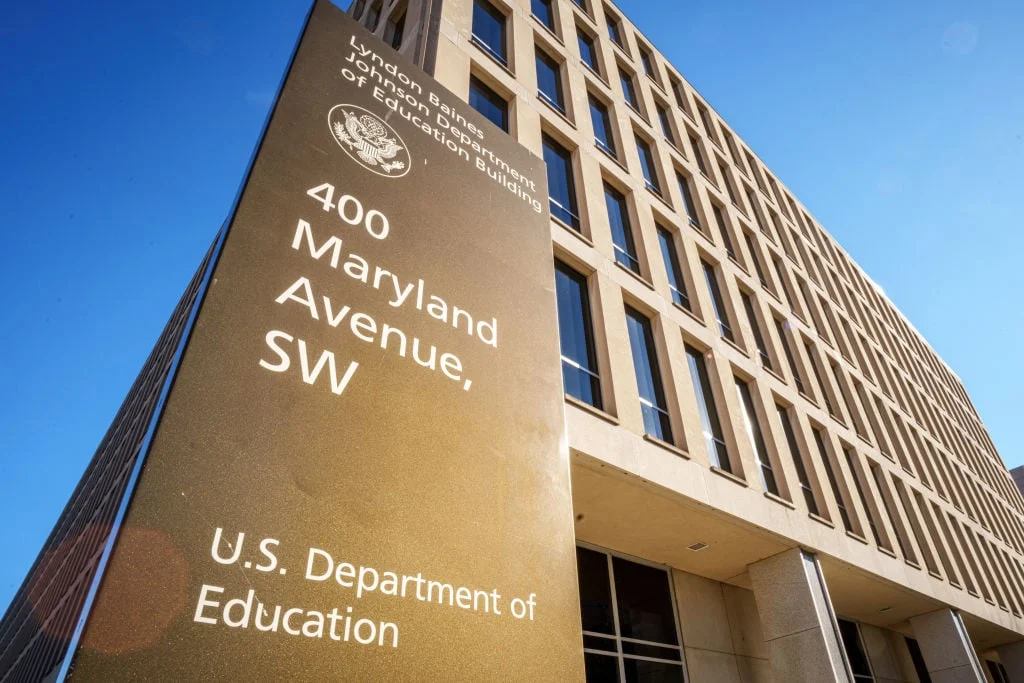
In a move that promises to reshape the landscape of American higher education, the Trump administration has officially unveiled its proposed overhaul of the accreditation system. The 354-page regulatory proposal, released Wednesday, represents a fundamental shift in how the federal government evaluates the quality and legitimacy of colleges and universities. By drastically expanding the scope of what accrediting agencies are required to monitor, the Department of Education aims to pivot the sector away from what officials describe as “ideological capture” toward a system hyper-focused on student outcomes, fiscal efficiency, and viewpoint neutrality.
The proposal, now open for a public comment period ending September 19, marks the culmination of a multi-year effort by the administration to challenge the traditional gatekeepers of federal student aid.
The Core Mandate: Redefining the Role of Accreditors
For decades, the accreditation process has functioned as a peer-review system—a self-regulated framework where institutions evaluate one another to ensure academic standards are met. The Trump administration argues that this model has become insular, antiquated, and increasingly detached from the economic realities of the modern student.
Education Under Secretary Nicholas Kent, speaking on the impetus behind the rule, offered a stinging critique of the status quo. “Instead of ensuring institutions offer high-quality educational programs that justify the time and cost of a college education, the antiquated accreditation system has contributed to inflated tuition, administrative bloat, and ideology-driven mandates on college campuses,” Kent stated.
The new regulations seek to transform accreditors from passive monitors of academic quality into active enforcers of administrative and ideological standards. Under the proposed rule, accreditors would be tasked with the following expanded responsibilities:
- First Amendment Compliance: Accreditors would be required to police institutional adherence to free speech and expression mandates.
- Research Integrity: Oversight bodies would be expected to monitor and enforce standards regarding research misconduct.
- Fiscal Efficiency: Agencies would be required to assess whether an institution’s spending is effectively tied to student outcomes, targeting the "administrative bloat" cited by the Department.
- Standardization: Accrediting groups would be forced to abandon vague peer-review standards in favor of specific, measurable metrics regarding student achievement and faculty hiring practices.
Chronology: A Contentious Path to Implementation
The road to this proposal has been marked by significant friction between the Department of Education and the higher education establishment.
- May 2023: Then-candidate Donald Trump publicly commits to dismantling the "radical left" influence within college accrediting bodies, framing the move as a necessity for protecting academic freedom and taxpayer dollars.
- Early 2026: The Department of Education convenes a specialized advisory committee tasked with navigating the complex regulatory shifts. The meetings are characterized by intense pushback from legacy accreditors and institutional representatives who express concerns over the expansion of federal authority.
- April 2026: Tension peaks as the Department of Education systematically dismisses various industry concerns during the negotiation phase, signaling a firm resolve to push the agenda forward despite widespread opposition from traditional higher education stakeholders.
- May 2026: Following two rounds of rigorous negotiations, the advisory committee—despite previous reservations—formally signs off on the proposal. The version released this week remains largely identical to the document approved in May.
- August 2026: The formal public comment period begins, setting the stage for a final showdown between the administration and its critics.
Supporting Data and Technical Changes
While the headline-grabbing components of the rule involve ideological and administrative oversight, the proposal also contains significant technical adjustments. One of the less controversial, yet highly anticipated, provisions is the mandate for increased transparency regarding transfer credits.
Institutions will now be required to provide clear, accessible explanations for how transfer credits are evaluated and, crucially, a detailed justification for any courses that are denied. For years, students have complained about the "credit-loss" phenomenon, where credits earned at one institution are not accepted by another, forcing students to pay for redundant coursework.
Furthermore, the rule aims to democratize the accreditation market. By lowering the barriers to entry, the Department of Education hopes to encourage the rise of new, innovative accrediting organizations that might be more aligned with the current administration’s vision. The goal is to move away from a "monopoly" of traditional regional accreditors toward a more competitive marketplace.
Official Responses and Stakeholder Reaction
The reaction to the proposed rule has been predictably polarized. Supporters of the administration’s plan argue that the current accreditation system acts as a "cartel" that protects failing institutions and stifles competition. They believe that by tying federal aid to clearer, more rigid standards, the government can effectively force universities to lower tuition and refocus on vocational preparation.
Conversely, higher education lobbyists and academic unions have expressed profound alarm. Critics argue that forcing accreditors to police "ideological mandates" is, in itself, an ideological move that risks politicizing the accreditation process. There is a widespread fear that the new rules will lead to a "chilling effect" on academic inquiry, as universities scramble to conform to the administration’s definitions of research integrity and speech protections to avoid losing their accreditation—and, by extension, their access to federal financial aid.
"The Department is effectively turning academic accreditation into a political compliance tool," said one representative from a major higher education association. "The threat to institutional autonomy is unprecedented."
Implications for the Future of Higher Education
If finalized before November 1, the regulations are scheduled to take effect on July 1, 2027. This timeline creates a massive scramble for colleges and universities across the country.
The Impact on Institutional Autonomy
The most immediate implication is the shift in power. For over a century, colleges have enjoyed significant autonomy in how they define "quality." Under the new framework, that power shifts to the Department of Education, which will define the criteria that accreditors must use. Institutions that fail to meet these new, granular standards—or that run afoul of the new speech and research requirements—face the existential threat of losing their federal funding.
Market Competition
The push to allow new accreditors into the market could fundamentally change the "brand" of accreditation. We may see the emergence of specialized accreditors that focus specifically on vocational training, technical certifications, or private-sector partnerships, effectively decoupling from the traditional liberal arts focus of current regional bodies.
The Legal Battleground
Legal experts anticipate that the final rule will face immediate court challenges. Opponents are likely to argue that the Department of Education has exceeded its statutory authority, particularly regarding the mandate for accreditors to police First Amendment compliance. Whether these regulations will survive the inevitable litigation remains an open question, but the administration is clearly betting that the legal framework, combined with its strong mandate, will provide enough cover to see the changes implemented.
The Student Perspective
For the average student, the outcome remains uncertain. Proponents argue that the changes will lead to lower tuition and more relevant, job-ready degrees. Critics, however, warn that the "administrative bloat" the administration seeks to cure will simply be replaced by a new, more expensive layer of compliance-related administrative staff, as colleges race to document their compliance with the new federal mandates.
As the September 21 deadline for public comments approaches, the higher education sector is bracing for a transformation that will, at the very least, ensure that the relationship between the federal government and the institutions it funds will never be the same. The "modernization" of the accreditation system is no longer a distant threat—it is a concrete, 354-page reality that will define the next decade of American academic life.