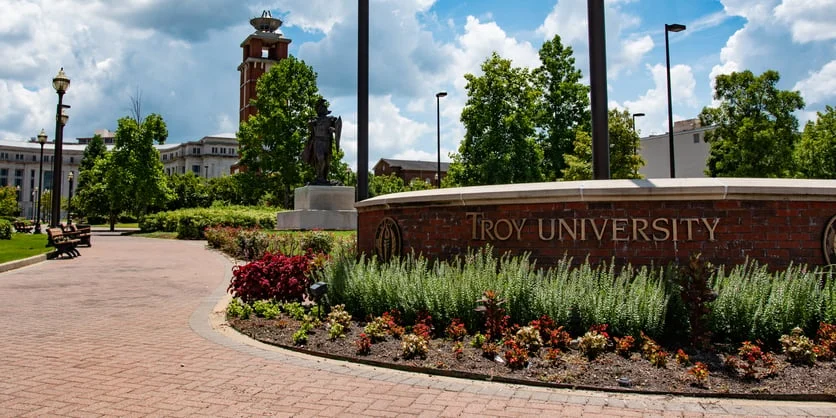
A chilling episode at Troy University has ignited a firestorm regarding the boundaries of academic freedom and the extent to which public university faculty may engage with state government officials. Micah Swartz, an assistant professor of teacher education in his first year on the tenure track, claims he was effectively gagged by university administration after expressing professional frustrations to Alabama state leaders. The incident, which saw Swartz stripped of his institutional digital access, raises significant questions about institutional autonomy, the role of faculty in policy discourse, and the potential for political pressure to stifle academic dissent.
The Trigger: A Letter to State Officials
In April, Micah Swartz, seeking to advocate for his students and the integrity of his department’s programming, authored a formal letter addressed to Alabama Superintendent Eric Mackey and several state representatives. The recipients were key members of the Alabama Numeracy Act Course Review Committee, a body currently tasked with the rigorous and often contentious process of reviewing math syllabi for undergraduate education students across the state.
In the correspondence—which Swartz penned on university letterhead—he did not mince words regarding the bureaucratic obstacles he had encountered. He cited "long turnaround times" and "inconsistent standards" as primary impediments to developing a compliant curriculum. Swartz characterized the preceding year as "the most challenging of my career," emphasizing that the lack of clarity from the committee was hindering the university’s ability to adequately prepare future teachers.
For an early-career scholar, such communication is often viewed as a standard exercise of professional advocacy. However, the fallout was immediate and punitive, suggesting that the university administration viewed his engagement not as a scholarly contribution, but as a liability that threatened institutional relations with state authorities.
A Chronology of Suppression
The swiftness of the administrative response suggests a high level of anxiety within Troy University’s leadership regarding state scrutiny. The following chronology outlines the rapid escalation of the situation:
- The Correspondence (April): Swartz sends his letter to Superintendent Mackey and members of the Alabama Numeracy Act Course Review Committee.
- The Digital Lockout (Day After Letter): Swartz discovers he has been summarily locked out of his university email and computer systems. His IT manager directs him to Fred Figliano, the Dean of the College of Education.
- The Confrontation (3:30 p.m.): Ten minutes into a scheduled class, Swartz is summoned to Dean Figliano’s office. According to Swartz, Figliano admitted to receiving multiple phone calls from state leaders regarding the letter. The dean allegedly informed Swartz that he had disabled his access to all university technology to prevent him from engaging in further dialogue with state officials.
- The Ultimatum: During the meeting, Figliano reportedly instructed Swartz to cease all communication with the state, promising that university leadership would handle the situation to "smooth over the disruption." Swartz was coerced into agreeing to these terms under the threat of continued professional isolation.
- The Canvas Incident (One Week Later): In response to student inquiries regarding his unexplained disappearance from the classroom and his inability to answer emails, Swartz posts the original letter to his course management system, Canvas, titling it "Letter that got me in trouble."
- The Disciplinary Action: Swartz receives two formal written warnings. The first reprimands him for "unauthorized communication" regarding the use of university letterhead; the second cites "unprofessional conduct" for sharing the letter with students. Both warnings carry the implicit threat of termination for "additional disciplinary action."
The Precedent of Political Engagement
The irony of Swartz’s current predicament is underscored by his history of successful engagement with the very state officials who now appear to be at the center of his silencing. Prior to the April incident, Swartz had shared his research regarding the impact of screen time on early childhood development with several Alabama representatives. His research was not only well-received but became the foundational evidence for a bill championed by state Rep. Jeana Ross.
In March, Governor Kay Ivey signed that legislation into law, placing limits on screen time within childcare facilities across Alabama. Swartz’s success in shaping public policy demonstrates that he is a productive researcher whose work has direct, tangible benefits for the state. "I understand there are processes Troy has, but at the same time, there’s important work, research and things that I’m doing that I think warrants reaching out to them," Swartz stated. His experience highlights a recurring tension in higher education: when does an expert’s advice become an "unauthorized" interference in the eyes of an administration sensitive to political optics?
Official Responses and Institutional Silences
When contacted by Inside Higher Ed for comment, Troy University maintained a posture of administrative caution. A spokesperson declined to address the specifics of the Swartz case, citing the common institutional policy of not commenting on "confidential personnel matters."
However, the university did provide a general statement regarding its stance on faculty speech:

"Troy respects the rights of faculty and staff to speak as private citizens on matters of public concern. Employees speaking in a personal capacity are expected to make clear that they do not represent the University and to ensure that their statements could not reasonably be perceived as an institutional endorsement. Troy remains committed to free speech and academic freedom consistent with its mission as a public university."
The discrepancy between this boilerplate defense of academic freedom and the reality of Swartz’s experience—where he was blocked from his own tools of communication for the crime of contacting a government body—remains the central point of contention. The university’s insistence that faculty must ensure their speech is not perceived as "institutional endorsement" serves as a nebulous standard that administrators can invoke to chill speech whenever it becomes politically inconvenient.
Broader Implications for Higher Education
The case of Micah Swartz is emblematic of a broader, national trend where public universities, feeling the heat of intense political scrutiny, often prioritize institutional survival over the traditional faculty right to participate in governance and public debate.
The Erosion of Shared Governance
Academic freedom is not merely about what is taught in the classroom; it encompasses the ability of faculty to engage in the administrative and political processes that govern their fields. By cutting off a professor’s access to state officials, Troy University has effectively weakened the faculty’s voice in the state’s legislative process, arguably violating the spirit of shared governance.
The Chilling Effect on Junior Faculty
As a first-year, tenure-track professor, Swartz is in an inherently vulnerable position. The threat of dismissal for "unprofessional conduct" sends a clear message to other faculty members: maintain silence on policy issues, or risk your career. This environment discourages the type of robust, intellectual engagement that universities are ostensibly designed to foster.
The Weaponization of "Professionalism"
The use of terms like "unprofessional conduct" to describe a professor sharing a letter with his own students is particularly alarming. By branding transparency as a disciplinary offense, the administration creates a culture of secrecy. When students ask why a professor is being silenced, and the professor is punished for answering them, the university undermines the very educational mission it claims to protect.
Conclusion: A Test of Institutional Integrity
As the tenure-track clock continues to tick for Micah Swartz, the case remains a litmus test for Troy University’s commitment to its stated values. If public universities in states like Alabama are to remain centers of objective research and critical inquiry, they must afford their faculty the latitude to advocate for policy improvements without fear of retaliation.
The "disruption" caused by Swartz was not an act of malice; it was an act of professional concern. By opting for silence and disciplinary warnings over dialogue, the administration has arguably caused far more disruption to the reputation of the institution than the letter itself ever could have. As the academic community watches, the central question remains: will Troy University uphold the principles of open inquiry, or will it continue to prioritize the comfort of state officials over the academic freedom of its own faculty?