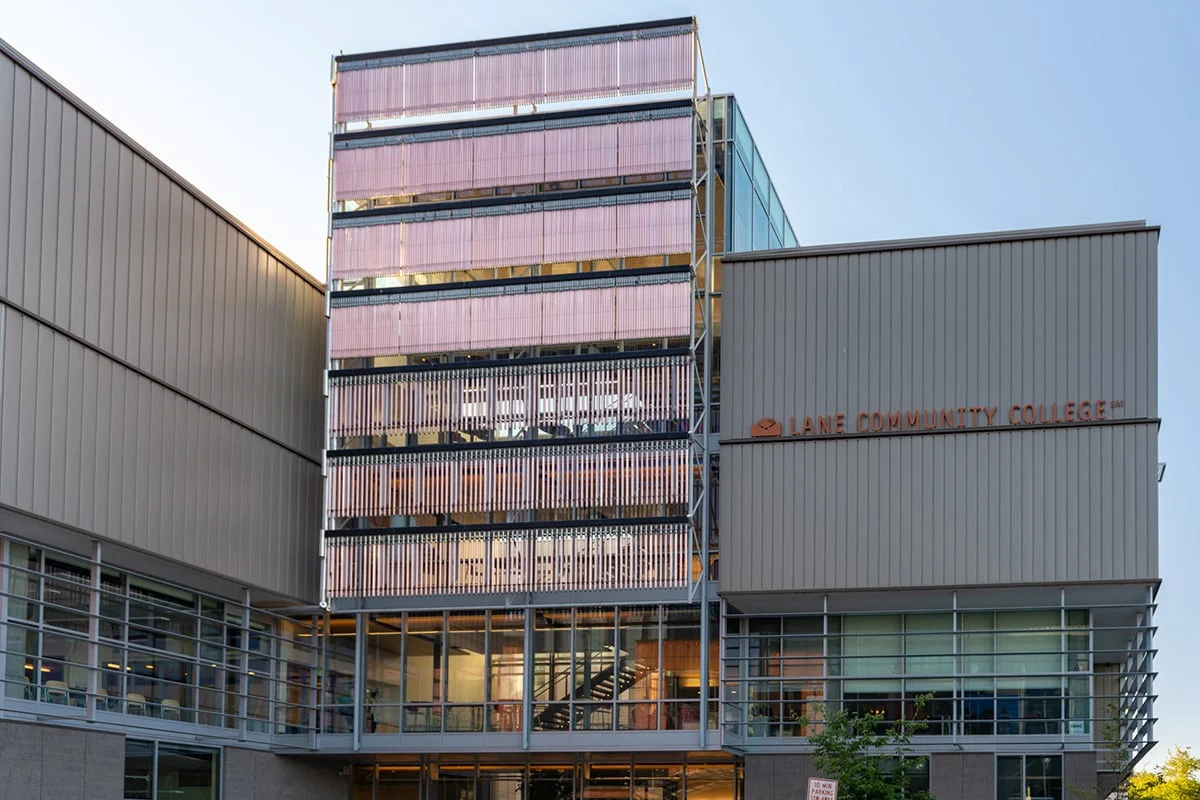
EUGENE, Ore. — Lane Community College (LCC), a pillar of higher education in the Willamette Valley, is facing a critical juncture in its institutional history. The Northwest Commission on Colleges and Universities (NWCCU), the regional accrediting body responsible for overseeing the college’s academic standing, has officially placed the institution on “accreditation warning.”
This disciplinary measure, formally communicated to LCC President Stephanie Bulger last week, serves as a high-stakes ultimatum. The accreditor’s decision follows a tumultuous period defined by allegations of discriminatory behavior at the board level, a subsequent third-party investigation, and a mounting sense of instability regarding the college’s governance structure. For an institution of LCC’s size and mission, the warning is more than a bureaucratic reprimand; it is a signal that the college’s fundamental ability to manage its affairs in an equitable and ethical manner is currently in jeopardy.
The Core Conflict: A Failure of Governance
The NWCCU’s decision was not made in a vacuum. It follows a rigorous special review conducted by the commission in March, which was triggered by widespread complaints regarding the conduct of certain members of the LCC Board of Education.
The heart of the controversy centers on the treatment of President Stephanie Bulger, a Black woman who has served as the college’s leader during a period of significant internal friction. Reports surfaced throughout 2025 detailing instances where board members allegedly exhibited racist and sexist behavior toward Bulger during public and private meetings. These allegations, which were later corroborated by an independent third-party investigation, painted a picture of a governing board that had lost sight of its fiduciary and professional responsibilities, choosing instead to engage in behavior that undermined the college’s leadership and eroded campus morale.
In response to the scandal, the board eventually censured its own former chair and issued a joint apology. However, for the NWCCU, these symbolic gestures were insufficient to offset the deep-seated issues of institutional culture. The accreditor’s findings were explicit: LCC failed to uphold the essential standards required for continued accreditation. Specifically, the commission cited a lack of an “effective governance structure” and a failure to exemplify “high ethical standards in its management and operations.”
The NWCCU further noted that the college’s internal dysfunction hindered its ability to maintain “fair and equitable treatment of students, faculty, administrators, staff, and other stakeholders.” In the eyes of the accreditor, the board’s conduct created a toxic environment that threatened the college’s ability to serve its primary mission: providing a stable, inclusive educational environment for the students of Lane County.
Chronology of the Crisis
The path to this warning is marked by a series of events that have gradually eroded public and professional confidence in LCC’s oversight:
- Early 2025: Tensions begin to mount as reports emerge regarding hostile interactions between certain board members and President Bulger. Complaints are filed with the college’s administration and oversight bodies.
- Spring 2025: The situation escalates during a series of board meetings. Observers and stakeholders voice concerns regarding the discriminatory nature of the discourse.
- Late 2025: An independent, third-party investigation is commissioned to probe the allegations of racism and sexism. The report confirms that board members engaged in conduct that violated professional and ethical codes.
- October 2025: The LCC Board of Education formally censures its former chair and issues a public, joint apology, attempting to address the fallout of the report.
- March 2026: Recognizing the severity of the governance failure, the NWCCU conducts a special review of the institution.
- August 2026: The NWCCU officially notifies President Bulger that the college has been placed on accreditation warning.
- Fall 2027: The college is mandated to provide a comprehensive progress report to the NWCCU detailing the corrective measures implemented to date.
- August 5, 2030: The ultimate deadline for the college to demonstrate full compliance and systemic reform.
The Regulatory Mandate: A Path to Reform
The NWCCU has laid out a clear, if demanding, roadmap for LCC to regain its standing. The commission has given the college until August 5, 2030, to “take appropriate action” and provide evidence that it has rectified its governance issues.
The requirements are multifaceted. First, the college must establish and maintain an effective, respectful governance structure. This includes clearly defining the roles, authorities, and responsibilities of the board members versus those of the administration. Too often, the accreditor noted, the lines between oversight and interference have been blurred, leading to the current crisis.
Second, the college is required to overhaul its engagement with stakeholders. This involves fostering an environment where faculty, staff, and students feel that their input is valued and that the institution is committed to equity.
Third, and perhaps most critically, the college must implement and adhere to strict policies prohibiting conflicts of interest. The accreditor specifically highlighted the need for board members to act with transparency and integrity, ensuring that personal biases and individual agendas do not supersede the collective interest of the institution.
Institutional Response: An Acknowledgment of Fault
In the wake of the sanction, the college’s leadership has adopted a tone of contrition and accountability. President Stephanie Bulger and Board Chair Jesse Maldonado issued a joint statement acknowledging the gravity of the NWCCU’s findings.
“We take the findings seriously and accept the responsibility that comes with them,” the statement read. “We know that how the Board governs affects the campus beyond Board meetings. It shapes how decisions are made, how clearly roles are understood across the college, and how effectively the institution can respond to challenges.”
This statement suggests a shift in the board’s posture. By publicly validating the accreditor’s concerns, the leadership is attempting to pivot toward a period of restorative governance. However, skeptics note that the transition from policy apology to cultural change is arduous. The board will need to demonstrate, through sustained action rather than mere rhetoric, that it is capable of operating in a manner that is both ethical and professional.
Implications for the Future of Lane Community College
The implications of the accreditation warning are significant, affecting every facet of the college’s operation.
Financial and Operational Impacts
Accreditation is the lifeblood of an American higher education institution. It is a prerequisite for receiving federal financial aid, which constitutes a significant portion of LCC’s operating budget. While a “warning” is not a revocation of accreditation, it is a precursor that suggests the institution is on a downward trajectory. If the college fails to meet the 2030 deadline, the consequences would be catastrophic: the loss of access to Title IV federal student aid, which would effectively shutter the institution.
Student and Faculty Retention
The current governance crisis risks damaging the college’s reputation, making it harder to recruit and retain high-quality faculty and staff. For students, the uncertainty surrounding the institution’s future can cause anxiety, potentially leading to lower enrollment numbers. A stable, well-governed college is essential for student success; when that stability is compromised, the primary victims are the learners who rely on the institution for their career and educational advancement.
The Challenge of Cultural Change
Beyond the structural changes mandated by the NWCCU, LCC faces the intangible challenge of healing its culture. Addressing systemic racism and sexism requires more than policy updates; it requires a commitment to equity that must be woven into the fabric of the college’s decision-making processes. The board’s ability to move past the personality-driven conflicts of 2025 and 2026 will be the true test of its maturation.
Conclusion: A Turning Point
The accreditation warning issued to Lane Community College serves as a sobering reminder of the critical importance of institutional ethics. Governance is not merely a bureaucratic requirement; it is the foundation upon which academic excellence is built.
As LCC looks toward its fall 2027 progress report and the final 2030 deadline, the eyes of the academic community, the local Eugene public, and the NWCCU will be fixed on the college. The path forward will require deep introspection, structural reform, and an unwavering commitment to the principles of equity and accountability. Whether the institution can successfully navigate this crisis and emerge as a more stable, inclusive, and effective community college remains an open question—one that will be answered not by the board’s words, but by its future actions.
For now, the warning stands as a call to action, demanding that the leadership of Lane Community College prioritize the health of the institution above the political and personal conflicts that have brought it to this precarious, yet potentially transformative, moment.