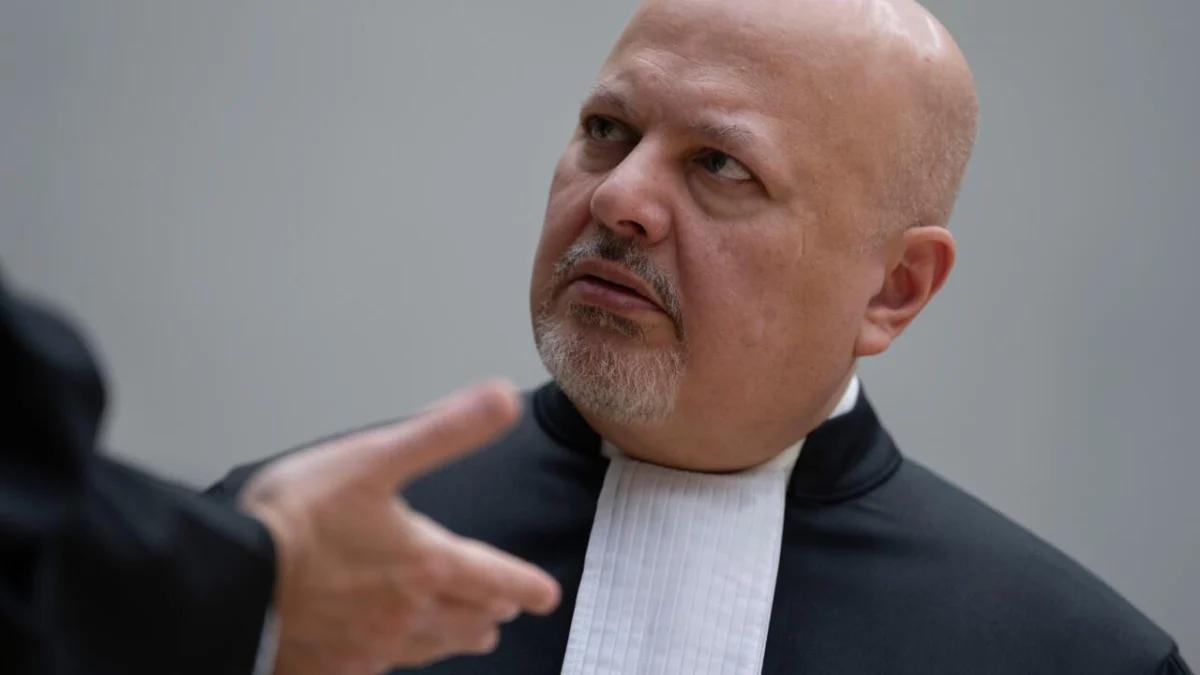
In an unprecedented turn of events that has sent shockwaves through the global legal community, member states of the International Criminal Court (ICC) voted decisively on Friday to remove Chief Prosecutor Karim Khan from office. The vote marks the first time in the tribunal’s history that a sitting chief prosecutor has been ousted, signaling a profound institutional crisis for the world’s permanent war crimes court.
The decision follows a protracted and highly sensitive internal investigation into allegations of sexual misconduct brought against the 56-year-old British barrister by a female aide. While Khan has consistently maintained his innocence, labeling the allegations as part of a broader campaign to undermine his work, a majority of the 125 member states concluded that the evidence presented by the court’s oversight body was sufficient to warrant his immediate removal.
The Core Allegations and Findings
The downfall of Karim Khan, who assumed the role of prosecutor in 2021, centers on reports of an inappropriate sexual relationship with a subordinate. According to documents obtained by the Associated Press, the investigation conducted by the executive committee of the Assembly of States Parties (ASP)—the court’s oversight body—found that Khan not only engaged in the relationship but also allegedly exerted pressure on the aide to prevent her from pursuing formal complaints.
In June 2024, as the weight of these findings began to emerge, Khan was temporarily suspended from his duties. The oversight committee characterized his behavior as "serious misconduct," a finding that served as the primary catalyst for Friday’s emergency session.
Throughout the process, Khan has steadfastly denied any wrongdoing. His defense team has argued that the proceedings were marred by procedural irregularities and that the allegations were weaponized by geopolitical actors who took issue with his aggressive pursuit of high-profile cases. However, these protestations failed to sway a decisive majority of the voting states, who prioritized the integrity of the institution over the tenure of its chief legal officer.
Chronology of a Crisis
The removal of Karim Khan is the culmination of a nearly two-year period of escalating tension within the ICC.
- Early 2023: Internal whispers regarding the conduct of the prosecutor began to circulate within the Hague, eventually reaching the ears of the ICC’s oversight committee.
- Early 2024: The ICC made international headlines by requesting arrest warrants for Israeli Prime Minister Benjamin Netanyahu and former Defense Minister Yoav Gallant, citing crimes against humanity in the Gaza Strip. This move triggered an immediate and hostile reaction from Israel and the United States.
- June 2024: Following a formal report by the oversight body finding evidence of "serious misconduct," Karim Khan was placed on administrative leave.
- Late 2024 (The Lead-up): Diplomatic efforts to retain Khan faltered. A last-minute motion brought by Sierra Leone, which aimed to establish a higher evidentiary threshold for removal, was defeated early in the Friday session, clearing the path for the final vote.
- Friday, November 2024: In a closed-door session, member states held a secret ballot, ultimately voting by a large majority to terminate Khan’s contract.
Official Responses and Diplomatic Positioning
The vote was characterized by a distinct split among member states, though the final tally was overwhelming. The Netherlands, acting as the host state for the court, joined France and Norway in publicly declaring their support for removal before the secret ballot commenced.
"We believe it has been proven beyond reasonable doubt that his conduct constituted sexual harassment and abuse of power," Norway’s deputy foreign minister, Andreas Motzfeldt Kravik, stated in a formal address to the press. The sentiment was echoed by Dutch Foreign Minister Tom Berendsen, who indicated that the consensus among the contracting parties was that the reputation of the court could no longer withstand Khan’s continued presence.
Conversely, the atmosphere inside the meeting was described by diplomats as "heavy" and "fractured." Pivi Kaukoranta, president of the Assembly of States Parties, opened the session by framing the vote as a necessary exercise in accountability. "We are here to address a complex and sensitive disciplinary matter as part of this governance and oversight role," she noted, acknowledging the heavy burden the assembly carried in deciding the fate of its top prosecutor.
The Geopolitical Shadow: The US and the Gaza Investigation
The removal of Khan cannot be separated from the intense geopolitical pressure currently facing the ICC. Khan was notably absent from the proceedings, as he is currently barred from entering the United States due to sanctions imposed by the Trump administration during his tenure—sanctions linked to his investigation into Israeli military conduct.
Critics of the court argue that the timing of the sexual misconduct allegations, and their subsequent escalation, coincides perfectly with the backlash against the ICC’s pursuit of Israeli leadership. Pro-Palestinian advocates and certain member states have suggested that the "scandal" may have been exploited by intelligence agencies or political opponents to force the removal of a prosecutor who refused to back down from politically sensitive investigations.
However, supporters of the removal process argue that the severity of sexual misconduct charges necessitates a zero-tolerance policy. They emphasize that the ICC cannot effectively hold world leaders accountable for crimes against humanity if the person leading that charge is simultaneously embroiled in credible allegations of sexual abuse and coercion.
Implications for the International Criminal Court
The ousting of a chief prosecutor at this juncture leaves the ICC in a precarious position. The court is currently facing what many observers call a "perfect storm":
- Institutional Fragility: The removal of the chief prosecutor creates a power vacuum during an active period of investigation into major global conflicts.
- Credibility Crisis: The court must now balance the perception of being an instrument of Western legalism with the need to prove that it can police its own ranks.
- External Hostility: With the United States—which is not a member of the ICC—actively engaged in efforts to "dismantle" the court’s influence, the tribunal is more vulnerable than at any point since its inception under the Rome Statute.
The process of selecting a successor will be fraught with difficulty. The Assembly of States Parties must now find a candidate who possesses the legal gravitas to command international respect while simultaneously undergoing a vetting process that will undoubtedly be more rigorous than ever before.
A Future Under Scrutiny
The departure of Karim Khan represents a watershed moment for international justice. For decades, the ICC has struggled to assert its authority, often accused of being a "toothless tiger" when faced with powerful nations. By removing its own leader, the court has signaled a commitment to internal accountability, but at a significant cost.
As the international community watches, the ICC faces the challenge of maintaining its independence while rebuilding the trust of its member states. The allegations against Khan, the secret ballots, and the diplomatic maneuvering that led to his exit serve as a stark reminder that the pursuit of justice on a global scale is never merely a legal matter—it is a deeply political one.
Whether the court can emerge from this crisis as a stronger, more transparent institution remains to be seen. What is certain is that the dismissal of Karim Khan has altered the landscape of international law, setting a precedent that no official, regardless of their position or the magnitude of the cases they handle, is beyond the reach of the tribunal’s disciplinary mechanisms. The world now waits to see who will take the helm of an institution that is, by its very nature, tasked with the impossible: bringing justice to a world that is often governed by power rather than principle.