The past eleven years have etched themselves into the geological record as the hottest in human history. As climate patterns shift with unprecedented speed, the concept of a "seasonal summer" is being replaced by the relentless reality of heat domes and record-breaking thermal events. For millions of Americans, the dream of relocating to sunny climes is colliding with the harsh reality of a planet in transition. While warm weather remains a top driver for migration, prospective homebuyers are increasingly forced to weigh the allure of sunshine against the mounting risks of extreme heat.
The New Thermal Reality: Key Findings
The data is unequivocal: we are living through a period of sustained, anomalous warmth. From the Mojave Desert to the humid expanse of the Rio Grande Valley, the United States is experiencing a climate transformation.
Recent research indicates that every year for the past decade has either shattered or closely mirrored the previous year’s temperature records. The rise of "heat domes"—high-pressure systems that trap hot air over vast regions—has brought historic, life-threatening temperatures to nearly every continent. In the U.S., this phenomenon has made the Sun Belt a primary focal point for climate scientists and urban planners alike.
A Chronology of Rising Temperatures
The escalation of heat is not a sudden anomaly but a steady, concerning trajectory. The following timeline captures the recent acceleration of extreme weather events that have defined the current decade:
- 2020–2021: Death Valley, California, records what are widely considered the highest temperatures ever documented in modern times, with unofficial readings reaching 130°F.
- 2023: A year of record-breaking heat for Texas cities, including Laredo and Brownsville, which saw their highest temperatures in over a century.
- 2024: Las Vegas shatters its all-time heat record, hitting a staggering 120°F. Globally, the year surpasses the 1.5°C threshold above pre-industrial levels, a critical tipping point identified by climate experts.
- 2025: Scientists confirm the trend continues, with 2025 ranking as one of the warmest years on record. Phoenix endures its second-hottest year ever, cementing the region’s status as the epicenter of urban heat in the U.S.
The Hottest Urban Centers: Data-Driven Rankings
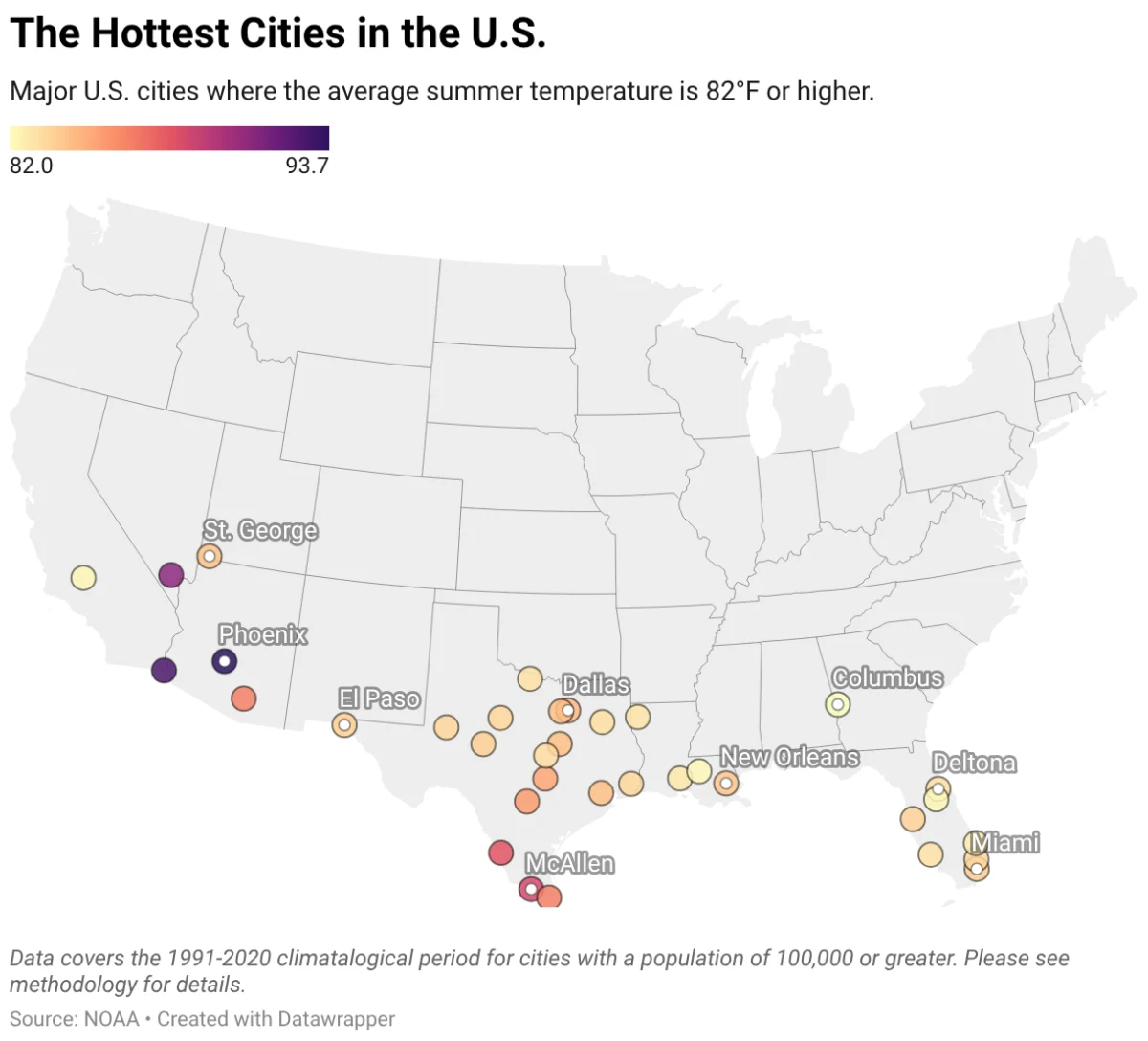
When evaluating cities by their average summer temperature (June through August), the map of the United States reveals a clear concentration of risk. The top ten hottest cities are located entirely within the Southwest and Texas.
| City | Avg. Summer Temp | Avg. Annual Temp | Record High |
|---|---|---|---|
| Phoenix, AZ | 93.7°F | 75.4°F | 122°F (1990) |
| Yuma, AZ | 92.8°F | 75.9°F | 124°F (1995) |
| Las Vegas, NV | 90.8°F | 70.1°F | 120°F (2024) |
| McAllen, TX | 88.5°F | 77.4°F | 111°F (2023) |
| Laredo, TX | 88.0°F | 74.6°F | 115°F (Multiple) |
| Brownsville, TX | 86.4°F | 76.2°F | 106°F (Multiple) |
| Tucson, AZ | 86.4°F | 69.7°F | 117°F (1990) |
| San Antonio, TX | 85.4°F | 71.1°F | 111°F (2000) |
| Austin, TX | 85.1°F | 70.0°F | 112°F (2000, 2011) |
| Dallas, TX | 84.5°F | 68.0°F | 113°F (1980) |
Note: Data derived from NCEI/NOAA 1991–2020 climate normals.
While these cities top the list for summer heat, those seeking year-round warmth might look toward Honolulu, Hawaii, which boasts an average annual temperature of 78°F, followed closely by McAllen and Miami.
The Science of the Sun Belt
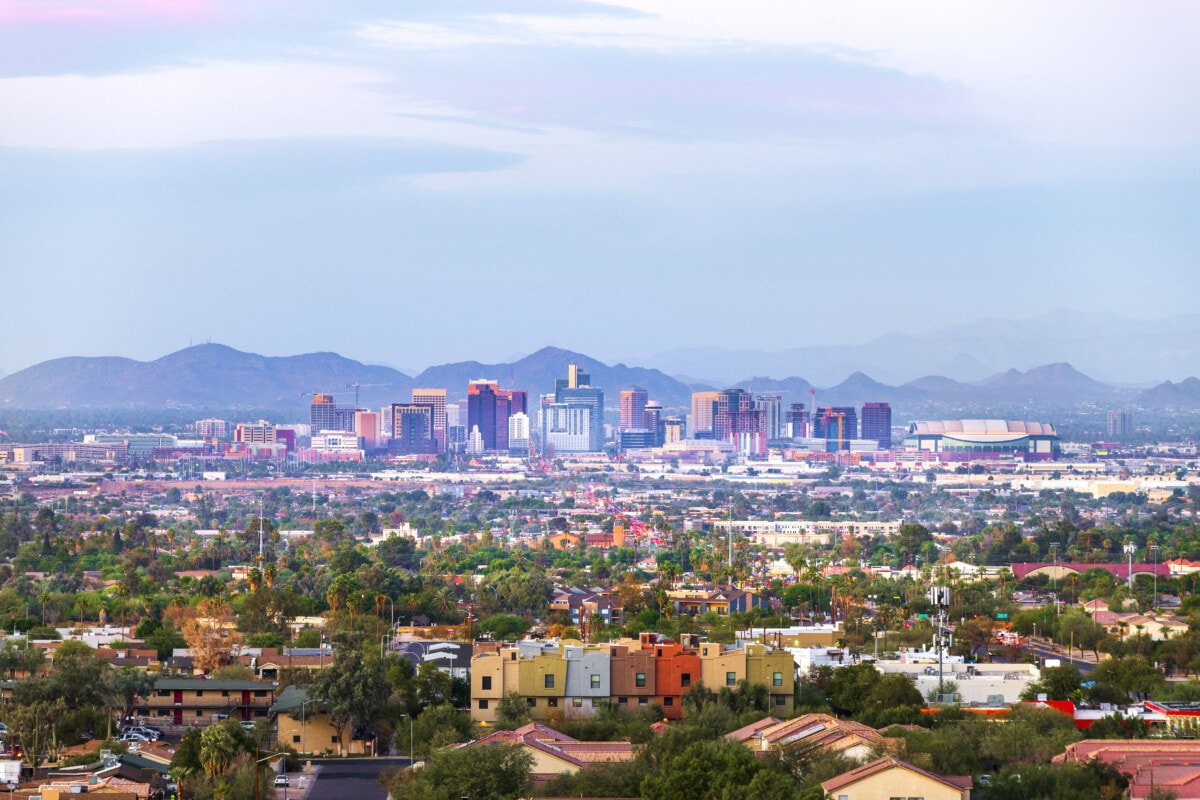
The "Sun Belt," stretching across the southern third of the country, is characterized by its proximity to the equator and arid landscapes. Cities like Phoenix, Yuma, and Las Vegas are nestled within the Sonoran and Mojave Deserts, where the lack of moisture allows temperatures to spike rapidly.
In contrast, the Rio Grande Valley (RGV) presents a different challenge. Cities like McAllen and Brownsville experience a synthesis of two extremes: the blistering dry heat of the Chihuahuan Desert and the oppressive humidity of the Gulf of Mexico. This humidity prevents nighttime cooling, a phenomenon that significantly increases the heat index and poses a heightened risk of heat-related illness.
Official Perspectives and Scientific Concerns
Climate researchers and agencies like the National Oceanic and Atmospheric Administration (NOAA) have issued stark warnings regarding these trends. The breach of the 1.5°C (2.7°F) warming threshold is not merely a number on a chart; it represents the crossing of a boundary that triggers irreversible ecological shifts.
According to recent studies published in Proceedings of the National Academy of Sciences (PNAS), the failure to curtail greenhouse gas emissions could render some of these regions effectively uninhabitable within the next 50 to 80 years. This would necessitate a massive, multi-generational migration or the implementation of extreme, costly adaptation strategies. Currently, the "new normal" in Texas involves triple-digit heat becoming an annual expectation, with the state experiencing over 1,000 more days of record-breaking heat in the last decade than in the previous one.
Socioeconomic Implications: The Paradox of Migration
Despite the well-documented climate risks, these regions remain among the fastest-growing in the United States. Las Vegas, for example, has seen its population nearly double since 2000, and Phoenix remains a national leader in population growth.
This creates a paradox: people are moving to areas that are becoming increasingly hostile to human habitation. Economists point to the relative affordability and the promise of year-round sunshine as the primary drivers of this influx. However, the cost of living in these regions is increasingly tied to energy consumption. As outdoor temperatures rise, households are forced to invest heavily in robust HVAC systems, energy-efficient windows, and high-performance insulation to maintain a livable environment.
Protecting Your Future: Adaptation Strategies
For those who choose to reside in or move to these high-risk areas, proactive adaptation is essential. Urban planning, home construction, and personal behavior must shift to accommodate the changing climate.
Essential Home Features for Hot Climates
- High-Efficiency Cooling: Older HVAC systems are often insufficient for the extreme heat loads of modern summers. Investing in high-SEER rated units is a necessity.
- Thermal Envelope Improvements: Strengthening insulation in attics and walls, and installing double- or triple-paned windows, keeps the heat out and the cool air in.
- Strategic Shading: Exterior shutters, awnings, and heat-reflective roofing can significantly reduce the internal temperature of a home.
- Low-Water Landscaping (Xeriscaping): Reducing reliance on grass lawns helps conserve water and prevents the "urban heat island" effect caused by high-irrigation landscapes.
Personal Safety Protocols
- Hydration and Scheduling: Adjusting daily routines to avoid the "peak heat" hours—typically between 2 p.m. and 6 p.m.—is critical for those working or exercising outdoors.
- Climate Literacy: Prospective buyers should utilize tools like those offered by real estate platforms that incorporate climate risk assessments, including heat, flood, and air quality indices, before signing a contract.
Conclusion: The Choice to Adapt
The reality of our warming planet is that there are no longer "safe zones" immune to the impacts of climate change. However, some regions are on the front lines of this challenge more than others. As we look toward the future, the decision of where to live must move beyond aesthetic preference and proximity to employment. It must now include a sober assessment of climate resilience.
Whether you are looking for a forever home or a temporary residence, understanding the thermal risks of your environment is a key component of financial and personal planning. As scientists and policymakers continue to grapple with the global implications of a heating world, the responsibility to adapt falls, in part, on the individual. By prioritizing energy-efficient housing and adopting heat-conscious lifestyles, residents in the Sun Belt and beyond can navigate this new, hotter chapter of the 21st century with greater security and peace of mind.