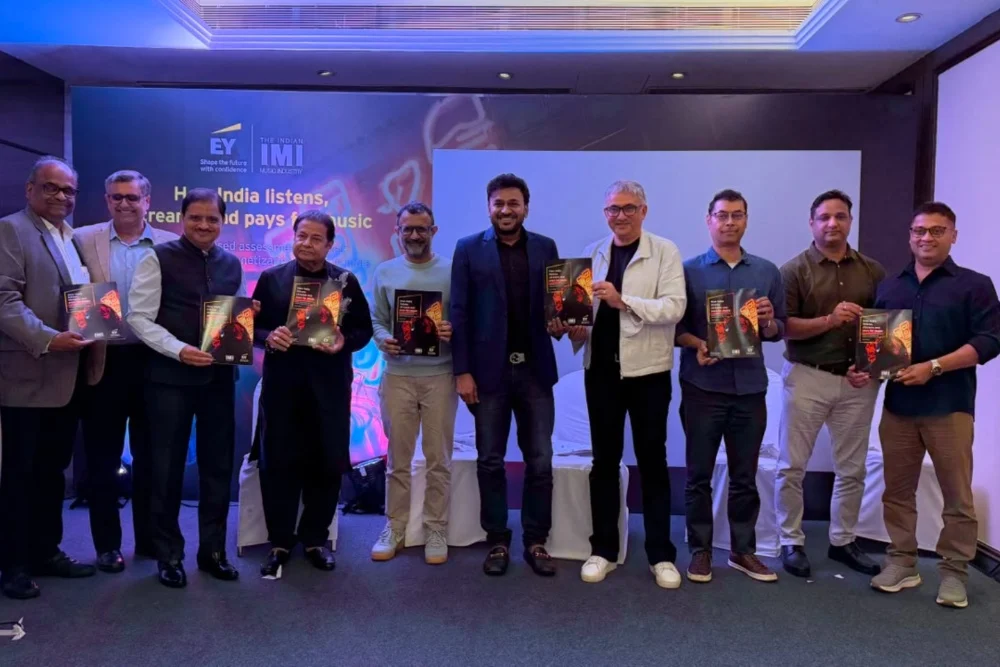
India’s music industry is currently navigating a profound paradox. While the nation boasts a massive, hyper-engaged audience—where nearly every smartphone owner consumes music daily—the transition from a "free-for-all" culture to a sustainable, subscription-based ecosystem remains a daunting uphill climb. A landmark report released this Friday in Mumbai, titled "How India Listens, Streams and Pays for Music" by EY and the Indian Music Industry (IMI), offers a granular look at this transition, projecting a path forward that could see the nation’s paid subscriber base double within three years.
As the industry grapples with the legacy of a market that leaped directly from physical media to ad-supported digital consumption, the findings provide both a sobering reality check and a roadmap for future expansion.
Main Facts: The State of the Indian Music Market
The core finding of the EY-IMI report is one of significant untapped potential. As of December 2025, India hosts approximately 14 million paid music streaming subscribers. The report projects this figure to climb to between 28 million and 30 million by 2028. While this represents robust growth, it remains a fraction of the total addressable market.
The data reveals a stark contrast between audio and video consumption. While 96% of India’s vast smartphone-owning population consumes music, and a staggering 80% listen for over an hour daily, the conversion rate to paid audio services sits at only 38%. By comparison, 86% of the same demographic has, at some point, paid for video streaming services.
Dedicated Digital Service Providers (DSPs) serve as the primary hub for structured music listening, capturing 60% of the market. However, YouTube remains the dominant force for music discovery, largely fueled by the viral nature of short-form video content. The industry is now tasked with converting this casual, discovery-led behavior into a committed, transactional relationship.
A Chronology of Consumption: From Physical to Free-Streaming
To understand the current friction, one must look at the historical trajectory of the Indian music landscape. For decades, the Indian market was dominated by physical media, but the transition to the digital age bypassed the "paid download" era entirely, jumping straight into free, ad-supported streaming. This "leapfrog" effect created a consumer culture where music is viewed as a utility—a free commodity rather than a premium service.
- Pre-2015: The era of physical distribution and fragmented digital access.
- 2015-2020: The rapid expansion of affordable mobile data and the rise of ad-supported platforms like YouTube and free tiers of DSPs, which cemented the "free-first" mentality.
- 2020-2025: A period of aggressive growth in smartphone penetration (reaching 584 million by 2025). During this window, industry players began introducing "friction" into free services—such as ad-heavy interruptions and restricted on-demand playback—to nudge users toward premium tiers.
- 2025 and Beyond: The current phase, characterized by a strategic push for subscription-led revenue models. With a projected 735 million smartphone users by 2030, the industry is banking on a demographic shift to drive paid growth.
Supporting Data: Psychometrics and Market Drivers
The report, which polled over 15,000 smartphone owners and utilized psychometric research from MindLink, categorized listeners into three distinct segments: Payers, Fence-sitters, and Never-payers.
The Consumer Divide
- Payers: Those who actively support the ecosystem through subscriptions. Their primary motivation? Avoiding ads (44%), gaining on-demand control (38%), and accessing high-fidelity audio (36%).
- Fence-sitters: The most critical segment for growth. They are "free" users but show a willingness to pay if the value proposition is right. Roughly 27% find paying worthwhile once they establish a regular routine with a platform.
- Never-payers: The most resistant group. A combined 49% of this group believe music isn’t worth paying for, while 36% hold a moral objection, feeling it is "wrong" to pay for digital products that are otherwise available for free.
Macroeconomic Tailwinds
The industry’s optimism is not just speculative; it is backed by macroeconomic data. With India’s real GDP growing at 6.5% and projections pointing toward it becoming the world’s third-largest economy by 2030, discretionary spending power is expected to rise. Furthermore, the country’s youthful demographic—65% of the population is under 35—ensures a long-term pipeline for music consumption. Subscription revenues are already reflecting this momentum, having grown 37% in 2025 alone, with projections to reach INR 22 billion ($244 million) by 2028.
Official Responses: The Call for "Economic Oxygen"
Industry leaders are framing the transition to a paid model as a moral and cultural imperative.
Blaise Fernandes, CEO of the IMI, highlighted the danger of a non-paid ecosystem in his foreword: "Art requires more than just inspiration; it requires economic oxygen. To take Indian music global and discover our next generation of talent, we must transition from being a passive consumer market into an active patron’s market."
Vikram Mehra, Chair of the IMI, expressed confidence that the transition is already underway. "The EY-IMI consumer study validates our belief that the Indian consumer is ready to pay for quality," Mehra noted, adding that the long-term ambition is to cement India’s position as a top-five global music market.
Ashish Pherwani, partner at EY India, emphasized that the current "shortfall" should be viewed as an opportunity. "The report highlights an opportunity for the industry to further strengthen subscription adoption through improved consumer awareness, differentiated offerings and innovation," he remarked.
Echoing these sentiments, renowned artist Badshah noted, "The future of music will be shaped not just by how widely it is heard, but by how deeply it is valued."
Implications: The Road to Global Competitiveness
The gap between India and other emerging markets is significant. Brazil currently holds 30 million paid subscribers, and China has achieved a staggering 171 million—a transformation that occurred in less than a decade. India’s goal of reaching 50–75 million subscribers in the long term is ambitious but necessary to ensure the financial viability of its creators.
Strategies for Growth
To close the gap, the report suggests a multi-pronged approach:
- Context-Aware Features: Developing features that cater to mood, activity, and cultural nuance to make the premium experience indispensable.
- Strategic Bundling: Moving beyond music-only plans. Deepening integrations with telecom, banking, and e-commerce platforms is essential to lower the barrier to entry.
- Holistic Ecosystems: Creating multi-purpose apps that bridge the gap between recorded music, live events, karaoke, and creator-led content.
- Anti-Piracy Enforcement: Continued legal action to ensure that unlicensed platforms do not undercut the growth of the legitimate streaming market.
The transition from a passive, ad-supported consumer base to one that views a monthly subscription as a vital cultural contribution is the ultimate hurdle for the Indian music industry. While the data suggests that the "never-payers" remain a significant challenge, the growth among "fence-sitters" and the macroeconomic trajectory of the nation suggest that India is finally finding its rhythm in the global digital economy. The success of this transition will define not just the revenue of the music business, but the future of Indian creativity on the world stage.