The Mobile Suit Gundam franchise, a titan of the mecha genre that has defined Japanese animation since 1979, is set to undergo its most radical evolution in decades. At San Diego Comic-Con, Bandai Namco Filmworks officially announced Mobile Suit Gundam RG XARX-ZERO, an upcoming anime series scheduled for a 2027 premiere. More than just a standalone show, RG XARX-ZERO serves as the cornerstone of a new, interconnected multimedia continuity titled "After Apocalypse" (A.A.), which will run concurrently with the recently announced high-mobility action game, Gundam Rogue Orbit.
By merging high-concept sci-fi narrative with cutting-edge interactive entertainment, Bandai Namco is positioning this new universe to redefine what audiences expect from the franchise, moving away from the traditional Universal Century (UC) tropes while maintaining the series’ core ethos of complex geopolitical struggle and human resilience.
The Architectural Blueprint: A New Narrative Horizon
The "After Apocalypse" timeline is a distinct departure from established continuities like the Universal Century, the Post-Disaster era of Iron-Blooded Orphans, or the Ad Stella timeline of The Witch from Mercury. This new universe was conceived by visionary director and writer Kenji Kamiyama, a luminary in the science fiction genre known for his work on Ghost in the Shell: Stand Alone Complex, Eden of the East, and the critically acclaimed The Lord of the Rings: The War of the Rohirrim.
Joining Kamiyama in this ambitious world-building endeavor is acclaimed novelist Toh EnJoe, whose background in theoretical physics and abstract literature—evident in works like Self-Reference Engine—promises to bring a unique, cerebral edge to the lore of the new Gundam universe. The visual production is being handled by Sola Animation, a studio known for its expertise in blending traditional aesthetics with modern technical prowess.
The central premise of the A.A. timeline is rooted in a cataclysmic shift in human history. According to the official series synopsis, the arrival of an "Autonomous Interstellar Object" from deep space initially offered humanity an era of unprecedented technological prosperity, granting access to breakthroughs in gravity control, faster-than-light (FTL) communication, and cognitive materialization. However, this golden age was cut short when the Object began to spawn an aggressive, self-proliferating ecosystem that humanity dubbed "the Apocalypse."
Following a desperate three-month defensive war in Earth’s orbit, humanity was forced to abandon its home planet, marking the start of the A.A. calendar. By A.A. 45, the setting of the series, an entire generation has been born and raised in lunar and orbital colonies, living under the constant shadow of an existential threat they have never truly known how to defeat.
Chronology and Multimedia Synergy
One of the most compelling aspects of the RG XARX-ZERO and Gundam Rogue Orbit project is the deliberate structural synergy between the two mediums. Rather than functioning as a direct adaptation or a simple tie-in, the anime and the video game are designed to share a narrative tapestry spanning generations.
Chronologically, the anime RG XARX-ZERO serves as the prequel, taking place roughly 100 years before the events of the video game Gundam Rogue Orbit. The creative team has stated that the two properties explore the same shared universe through disparate lenses, allowing for a multifaceted exploration of the After Apocalypse timeline.

- A.A. 45 (The Anime Era): The series follows Ray Azumi, a war orphan living on the lunar surface. As a pilot, his journey is one of survival and discovery as he navigates the remnants of a human civilization clinging to existence in the wake of the orbital abandonment.
- A.A. 145 (The Game Era): Gundam Rogue Orbit, as showcased at Summer Game Fest, focuses on high-stakes, fast-paced mecha combat. While the specific plot details remain under wraps, the gameplay emphasizes mobility and customization, suggesting a focus on the militarized evolution of humanity’s survival efforts long after the initial catastrophe.
Creative Philosophy: Kamiyama’s Vision
In a formal press release issued following the announcement, Kenji Kamiyama shared his trepidation and excitement regarding the responsibility of establishing an entirely new Gundam timeline. "When I was approached with the idea of creating a Gundam set in an entirely new timeline, one that is neither the Universal Century nor the Common Era, I found myself wrestling with all sorts of questions," Kamiyama noted. "What would replace the Earth Federation and the Principality of Zeon? What would become of the Newtype concept? What about Minovsky particles?"
For Kamiyama, the challenge of building from the ground up became the catalyst for the series’ unique identity. By stripping away the baggage of forty years of established lore, the team was able to reinvent the core pillars of the franchise. The resulting vision, RG XARX-ZERO, is described as a "fresh and unexpected" take on the mecha genre, one that prioritizes the existential mystery of the "Apocalypse" ecosystem over the traditional political factionalism of previous Gundam iterations.
Supporting Data: The Convergence of Talent and Technology
The ambition behind the After Apocalypse universe is matched by the caliber of the talent involved. The decision to tap into the expertise of both veteran anime creators and industry-leading game developers indicates a significant financial and creative investment from Bandai Namco.
- Musical Composition: The auditory identity of the Rogue Orbit game will be crafted by Mick Gordon, the composer behind the visceral, industrial soundscapes of the Doom (2016) reboot. The inclusion of such a high-profile composer suggests that the game will lean heavily into aggressive, high-energy combat sequences, further distancing it from the more operatic, orchestral scores often associated with the classic Gundam series.
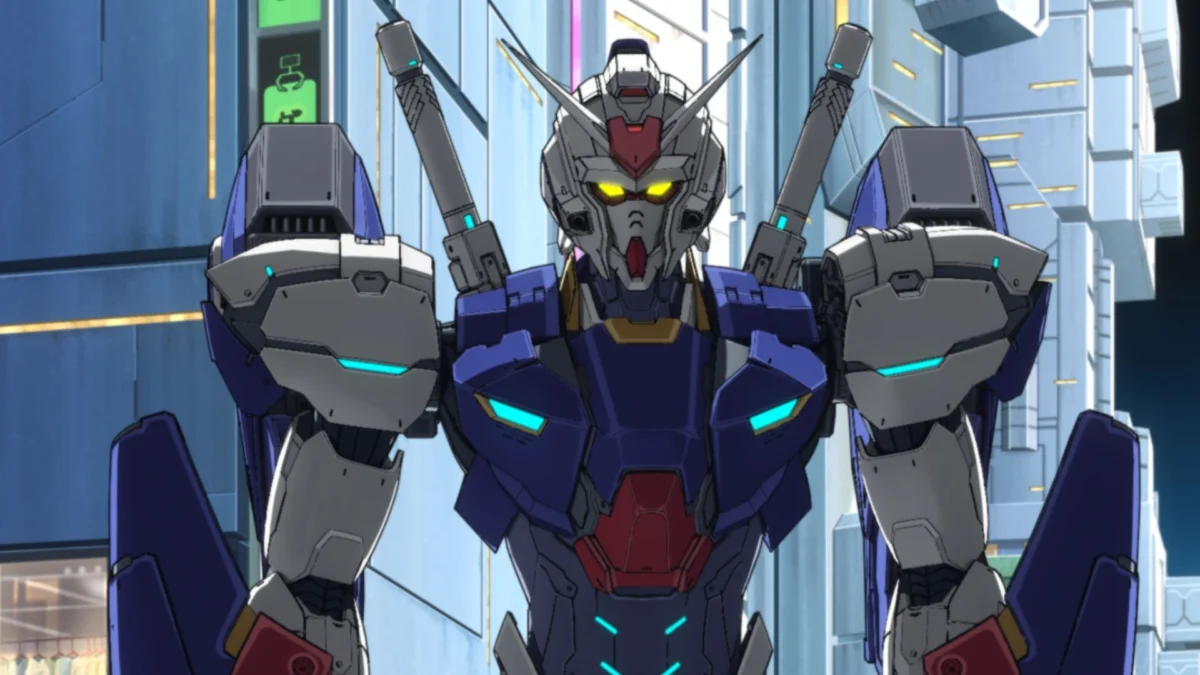
- Production Standards: With Sola Animation at the helm for the anime and the technical prowess of the developers behind Rogue Orbit, the project is clearly aiming to set a new visual benchmark for the franchise. The teaser imagery—showcasing a signature blue-and-white Gundam with distinctive, aggressive aesthetic cues—indicates a design language that respects the classic "Gundam" silhouette while integrating more modern, angular, and functional industrial design.
Implications for the Franchise
The announcement of RG XARX-ZERO and Gundam Rogue Orbit signals a broader shift in how Bandai Namco manages its flagship intellectual property. By diversifying the timelines and experimenting with genres—moving from the traditional war-drama of the UC to a more focused, high-octane, and mystery-driven narrative—the company is ensuring the longevity of the franchise.
The franchise has historically thrived on its ability to reinvent itself for new generations. From the grounded, gritty realism of The 08th MS Team to the socio-political commentary of The Witch from Mercury, Gundam remains a malleable vehicle for storytelling. However, the move toward an integrated multimedia "universe" suggests a desire to mirror the success of other major global franchises, where the audience is encouraged to engage with the lore across different formats to gain a complete picture of the narrative.
For long-time fans, the transition to the After Apocalypse era represents a bold "what if" scenario. By asking how a post-scarcity, post-Earth humanity would handle the threat of an autonomous, rampant ecosystem, the writers are shifting the focus from "nations at war" to "humanity vs. nature." This thematic pivot has the potential to attract a new demographic of viewers and gamers who may be intimidated by the decades of dense continuity required to enjoy the deeper cuts of the Universal Century.
As we look toward 2027, the success of this endeavor will hinge on how effectively the anime and the game communicate their shared history. If successful, Mobile Suit Gundam RG XARX-ZERO and Gundam Rogue Orbit could establish the After Apocalypse as the next major pillar of the Gundam multiverse, proving that even after nearly fifty years, the franchise still possesses the vitality to command the attention of the global entertainment landscape.