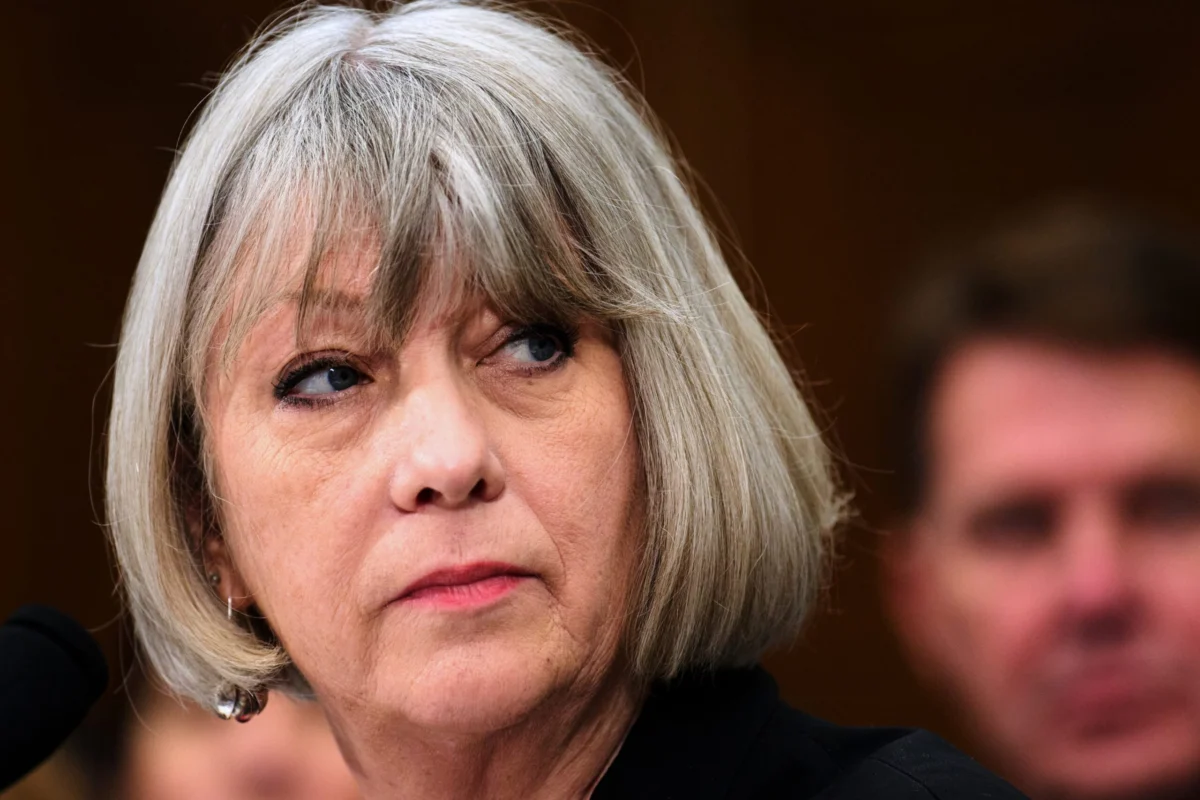
The hallowed halls of the Smithsonian Institution, often referred to as "the nation’s attic," have become the latest front in a deepening ideological conflict over the American story. On Tuesday, Anthea M. Hartig, the director of the Smithsonian’s National Museum of American History (NMAH), delivered a high-stakes testimony before a House Oversight subcommittee. Her appearance was a direct response to a scathing White House report that characterized the museum’s leadership as "radical activists" and accused the institution of subverting traditional American values in favor of a "woke" political agenda.
As the United States approaches its 250th anniversary in 2026, the dispute highlights a fundamental rift in how the country views its past. On one side, the executive branch and its allies argue for a celebratory, unifying narrative centered on the Founding Fathers; on the other, historians and curators advocate for a more inclusive, "bottom-up" approach that incorporates the struggles and contributions of marginalized groups.
Main Facts: A Museum Under Fire
The controversy reached a boiling point following the July 4th release of a report by the White House Domestic Policy Council. The document, timed for the anniversary of American independence, leveled a series of grave accusations against the National Museum of American History. It claimed the institution has "refused to celebrate the Nation" and argued that its current exhibits fail to present a narrative "worthy of our great republic."
During Tuesday’s hearing, Director Hartig—the first woman to lead the NMAH—categorically rejected these characterizations. "As we continue to fact-check the report, we unwaveringly attest that it does not fairly or accurately characterize the full body of work at the museum," Hartig told the subcommittee. While acknowledging that "there is always room for improvement," she defended the expertise of her staff and the integrity of the museum’s programming.
The Republican-led subcommittee echoed the White House’s sentiments, questioning Hartig on whether the museum had become a vehicle for "diversity, equity, and inclusion" (DEI) initiatives at the expense of historical accuracy and national pride. Representative Tim Burchett (R-Tenn.) was particularly blunt, stating that under current leadership, "history is just an ongoing power struggle between oppressors and the oppressed."
Chronology: The Escalation of the "History Wars"
The tension between the Smithsonian and the current administration did not emerge in a vacuum. It is the result of a multi-year effort by President Donald Trump to reshape the cultural and historical narratives produced by federally funded institutions.
- Early 2023 – Early 2024: The administration began a concerted push to "purge" DEI elements from federal agencies and cultural bodies. This period saw increased scrutiny of Smithsonian exhibits that touched on gender, race, and systemic inequality.
- The Departure of Kim Sajet: In a move that sent shockwaves through the museum community, Kim Sajet, the longtime director of the National Portrait Gallery, stepped down following public pressure from the White House. Although the Smithsonian operates as a trust and is technically independent of the executive branch, the political pressure proved insurmountable.
- May 2024: Anticipating the 250th anniversary, the NMAH opened a major exhibit titled "In Pursuit of Life, Liberty and Happiness." The exhibit was designed to showcase the complexity of the American experience through 250 iconic objects.
- July 4, 2024: The White House Domestic Policy Council released its report, "Restoring the Spirit of 1776," which specifically targeted the NMAH for its alleged "radicalism" and "anti-American" bias.
- July 2024: The House Oversight subcommittee called Hartig to testify, turning the debate into a televised public inquiry regarding the future of the museum’s leadership and its curatorial direction.
Supporting Data: Examining the Exhibits in Question
The debate centers on several specific exhibits and the philosophy behind them. Critics and defenders of the museum point to different sets of data and artifacts to support their claims.
The "In Pursuit of Life, Liberty and Happiness" Exhibit
The White House report claimed the museum had "not created any exhibit dedicated to presenting a general narrative of American history or telling the story of any of our Founding Fathers." However, Hartig pointed to the "In Pursuit of Life, Liberty and Happiness" exhibit as a direct counter-argument.
This exhibit features some of the most significant artifacts in American history, including:
- Thomas Jefferson’s Desk: The very portable mahogany desk on which he drafted the Declaration of Independence.
- The Gunboat Philadelphia: A Revolutionary War-era vessel that represents the military struggle for independence.
- The Star-Spangled Banner: The actual flag that inspired the national anthem.
Despite the presence of these items, Representative Michael Cloud (R-Texas) argued that the presentation was "hard to find" and lacked the prominence necessary to inspire patriotism. "I’m not saying it’s not there, but it’s hard to find," Cloud remarked, suggesting that the museum’s layout de-emphasized the traditional "Great Man" theory of history.
The "Girlhood (It’s Complicated)" Controversy
A significant portion of the hearing focused on an exhibit titled "Girlhood (It’s Complicated)," which ran from 2020 to 2023. The exhibit explored the diverse experiences of girls throughout American history, including their roles in social movements and labor.
Republicans took particular issue with the inclusion of a diary from a 13-year-old that discussed gender identity. Critics argued this was an example of "woke" indoctrination. Hartig defended the exhibit, noting it was grounded in sociological evidence and included a label indicating it was intended for older audiences, not young children. She argued that "girlhood" is a historically constructed and evolving concept that deserves academic study.
Official Responses: A Clash of Ideologies
The testimony revealed two diametrically opposed visions of what a national museum should be.
The Museum’s Defense:
Hartig framed the museum’s work not as "erasing" history, but as "expanding" it. "When historians talk about reframing a traditional narrative, we don’t mean erasing it," she explained. "We mean adding the evidence, the voices, the objects, that earlier tellings left out, so that more Americans can see themselves reflected in the national story." She maintained that the institution "does not take sides in America’s political debates" but rather follows the evolution of historical scholarship.
The Congressional Critique:
Republican lawmakers remained unconvinced. Representative Burchett questioned Hartig’s fitness for the role, asking why she should continue in her job given the findings of the White House report. Burchett characterized the museum’s leadership as being out of touch with the "average American" who views the country as a "shining city on a hill" rather than a site of perpetual conflict.
The White House Position:
The Domestic Policy Council’s report remains the administration’s primary weapon. It argues that the NMAH has a "duty" to foster national unity. By focusing on the struggles of marginalized groups—such as the labor movement, civil rights, and LGBTQ+ history—the report claims the museum is actively undermining the "unifying spirit" necessary for a stable republic.
Implications: The Future of Cultural Independence
The fallout from this hearing extends far beyond the walls of the Smithsonian. It signals a new era of political intervention in academic and cultural institutions that have historically enjoyed a degree of insulation from partisan shifts.
1. The Threat to Institutional Autonomy
The Smithsonian Institution was established by Congress as a "trust instrumentality," meaning it is not an executive branch agency. However, the recent pressure on directors like Hartig and the forced departure of Kim Sajet suggest that this independence is becoming increasingly fragile. If the White House can successfully dictate the content of exhibits through budgetary threats or public "branding" of leaders as radicals, the precedent for federal censorship is set.
2. The Semi-quincentennial Stakes
With the 250th anniversary of the United States approaching in 2026, the battle over the NMAH is a preview of the "America 250" celebrations. The administration is pushing for a "Great American Fair" and a curriculum that emphasizes American exceptionalism. If the Smithsonian—the premier historical authority in the country—is forced to align with this vision, it may alienate a younger generation of Americans who expect a more nuanced and inclusive version of history.
3. Professional Historiography vs. Political Narrative
The conflict highlights the widening gap between professional historians and political actors. Modern historiography has moved toward "social history," which looks at the lives of ordinary people to understand the past. Political actors, however, often prefer "narrative history" that serves a specific civic purpose. The tension between these two approaches is unlikely to be resolved by a House subcommittee; instead, it may lead to a bifurcated culture where different segments of the population visit different museums to have their own worldviews confirmed.
4. Leadership and Morale
The public interrogation of Director Hartig and the looming threat of dismissal may have a chilling effect on the broader museum community. Curators may begin to "self-censor" controversial topics to avoid political blowback, leading to a sanitized version of history that avoids the very complexities that make the American story compelling.
As the hearing concluded, Hartig remained steadfast. When asked by Burchett why she should remain in her post, she replied that serving the museum was "the honor of my career." Whether she will be allowed to continue that career through the 250th anniversary remains a central question in Washington’s ongoing culture wars. The outcome will likely determine whether the Smithsonian remains a place for all American voices, or if it becomes a mirror for the political priorities of whoever occupies the White House.