In an era defined by rapid technological shifts, economic uncertainty, and a pervasive sense of digital overload, the human psyche is increasingly drawn to narratives that address the "what-ifs" of existence. Two cultural touchstones have emerged in 2022 that, while seemingly disparate, speak to the same fundamental anxiety: the crushing weight of infinite choice and the paralyzing fear of living the "wrong" life. The cinematic phenomenon Everything Everywhere All at Once and the life-design methodologies pioneered by Stanford professors Bill Burnett and Dave Evans offer a symbiotic framework for navigating modern existence. By treating our lives as a series of design iterations rather than a fixed destiny, we may finally possess the tools to reconcile our inner nihilism with a meaningful, coherent reality.
The Cinematic Catalyst: Why We Are Obsessed
The film Everything Everywhere All at Once has transcended the typical boundaries of science fiction to become a modern philosophical touchstone. Directed by Daniel Kwan and Daniel Scheinert, the film functions as a bizarre, high-octane exploration of the multiverse, but at its core, it is a deeply intimate story about the immigrant experience, generational trauma, and the existential dread of the 21st century.
The plot follows Evelyn Wang, an overwhelmed laundromat owner whose life is a crumbling mosaic of failed business ventures, a fraying marriage, and a strained relationship with her daughter, Joy. During a mundane audit with the IRS, Evelyn is thrust into a conflict that spans parallel universes. She discovers that she is merely one iteration of herself, and that an omnipotent, nihilistic entity known as Jobu Tupaki threatens to unravel the entire multiverse.
For many viewers, the film’s resonance lies in its willingness to confront the "nihilistic nadir"—the realization that in an infinite multiverse, nothing we do truly matters. Yet, the film counters this darkness with the "Waymond philosophy": the radical act of choosing kindness in the face of meaninglessness. It is a cinematic Rorschach test; those who push past the film’s frantic, juvenile humor and chaotic editing discover a profound message about the agency of the individual.
Chronology of a Paradigm Shift
The convergence of these ideas—the multiverse as a metaphor for personal agency—did not happen in a vacuum. Throughout 2022, a variety of media reinforced the notion that our current reality is not a prison, but a choice.
- Early 2022: The publication and widespread discussion of Matt Haig’s The Midnight Library set the stage for a cultural conversation regarding the "many lives" we might have lived. The novel’s exploration of a woman trapped in a liminal space between life and death provided a fictional baseline for the multiverse concept.
- March 2022: The theatrical release of Everything Everywhere All at Once provided a visual, visceral manifestation of the theory, quickly gaining a cult following that championed it as a "must-watch" for the existential era.
- Mid-2022: As individuals began to reflect on the post-pandemic landscape, there was a measurable surge in interest regarding "life design"—the practical application of design thinking to personal career and lifestyle planning.
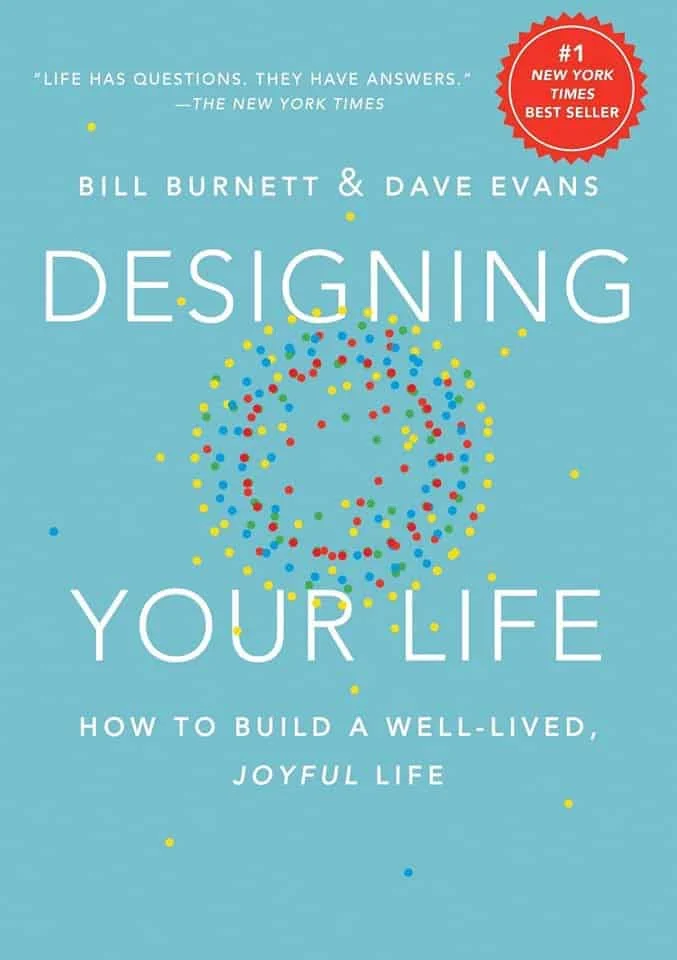
- Late 2022: The re-emergence of Designing Your Life by Bill Burnett and Dave Evans as a foundational text for those seeking to synthesize these philosophical musings into actionable, five-year "Odyssey Plans."
The Science of Design: Structuring the Infinite
While cinema offers the inspiration, the methodology of Stanford’s Life Design Lab offers the execution. Bill Burnett and Dave Evans, the architects behind the Designing Your Life curriculum, argue that "design thinking"—a methodology used to create everything from the original Apple laptop to complex video game systems—can be applied to the human experience.
The Five Disciplines of a Coherent Life
The authors posit that a "well-designed life" is one characterized by coherence. Coherence is achieved when three pillars of human existence align: who you are, what you believe, and what you do. To maintain this alignment, the authors prescribe five specific disciplines:
- Curiosity: Replacing judgment with an inquisitive approach to life.
- Bias to Action: Moving beyond rumination by engaging in small, experimental "prototypes."
- Reframing: Shifting one’s perspective on "gravity problems"—issues that cannot be changed—to focus on areas where real impact is possible.
- Awareness: Recognizing that life is a process, not a destination.
- Radical Collaboration: Seeking input and support from a community, as life design is rarely a solitary pursuit.
These disciplines are not merely theoretical; they are backed by the rigorous academic framework of the Stanford Design Program. By engaging in exercises like the "Workview" and "Lifeview" statements, individuals are forced to articulate their values, revealing where their daily grind might be clashing with their fundamental beliefs.
The Odyssey Plan: A Roadmap for Alternate Realities
Perhaps the most potent tool in the designer’s kit is the "Odyssey Plan." This exercise requires individuals to draft three distinct five-year trajectories for their lives, effectively mapping out potential versions of themselves in the multiverse.
Future #1: The Incremental Evolution
The first plan is built around the "current" trajectory. It represents the path of least resistance—the life one is already living, optimized. For many, this is the most grounding exercise, as it forces one to visualize a future where their current professional or personal goals are realized with absolute success and clarity.
Future #2: The Contingency Path
The second plan explores what happens if the "current" path disappears. It is a thought experiment in resilience. By imagining a future where one’s primary source of income or identity vanishes, individuals often uncover latent passions or suppressed talents. For many, this leads to a focus on service, legacy, or creative pursuits that were previously sidelined by the demands of the status quo.
Future #3: The "Pipe Dream"
The third plan removes all constraints of money, judgment, or social expectations. This is where the most profound self-discovery occurs. Whether it involves returning to art school, starting a webcomic, or pivoting to an entirely new industry, this plan serves as a compass for the user’s true north.
Implications for the Modern Professional
The implications of integrating these frameworks into our daily lives are significant. In a labor market that is increasingly volatile and a society that feels increasingly fragmented, the ability to "design" one’s life provides a psychological buffer against burnout.
When we view our careers not as a single, immutable ladder but as a portfolio of possibilities, the "failure" of a single project or the closure of a business venture ceases to be an existential catastrophe. Instead, it becomes a data point—a failed prototype that provides the information necessary to iterate toward a more coherent future.
Criticisms and Limitations: A Note on Execution
It is important to acknowledge that this approach is not without its detractors. Critics of the "design thinking" movement often point to the potential for excessive clinicalism—the idea that life can be "solved" like a software problem. There is a danger in treating human emotions and societal systemic issues as mere design hurdles.
Furthermore, as noted by those who have engaged deeply with the Designing Your Life text, even the most innovative frameworks can be hampered by poor design in their own delivery. The lack of an index in the popular edition of Designing Your Life, for example, is a frequent point of frustration for readers who wish to treat the book as a reference manual. It is a testament to the "do as I say, not as I do" irony that a book centered on usability would neglect one of the most fundamental tools of information architecture.
Conclusion: Designing Your Own Multiverse
Ultimately, the message is clear: you are not trapped by your current reality. Whether you are finding solace in the chaotic, kindness-driven narrative of a film like Everything Everywhere All at Once or sketching out an Odyssey Plan on a notepad, the goal is the same. We are all living in a multiverse of potential. By choosing to act with intention, by embracing curiosity, and by allowing ourselves the grace to "prototype" different versions of our future, we can transform the paralyzing anxiety of "everything" into the empowering opportunity of "anything."
The universe may be indifferent, and the future may be uncertain, but as the Waymond figures of the world know, that is precisely why we must be the architects of our own meaning. The next five years are not a destiny to be endured; they are a project to be designed.