WASHINGTON D.C. — In a move that has sent shockwaves through global financial markets and threatened to dismantle decades of North American economic integration, President Donald Trump announced on Monday the imposition of a 50% tariff on the vast majority of Canadian goods. The administration justified the aggressive measure by accusing Ottawa of "unfairly discriminating" against American interests, specifically targeting the automotive, alcohol, and dairy sectors.
The move, described by trade experts as a "nuclear option," marks a dramatic escalation in the President’s protectionist agenda. While the administration has framed the tariffs as a necessary tool to rectify trade imbalances and punish retaliation, critics warn of an impending wave of economic chaos, characterized by surging inflation and a potential breakdown of the diplomatic ties that have historically bound the two neighbors together.
I. Main Facts: The Scope and Mechanics of the Tariffs
The executive action, unveiled through three separate proclamations, utilizes Section 338 of the 1930 Trade Act—a rarely invoked and highly controversial legal provision. This section grants the President broad authority to impose additional duties on imports from countries that "discriminate in fact against the commerce of the United States."
Targeted Sectors and Exemptions
The 50% levy is designed to be broad but contains strategic exclusions. According to a White House fact sheet and a senior administration official who spoke on the condition of anonymity, the following parameters apply:
- Included Goods: Most manufactured products, including those previously protected under the United States-Mexico-Canada Agreement (USMCA). Specifically, the tariffs target Canadian-made automobiles, alcoholic beverages, and dairy products (notably cheese).
- Exemptions: Recognizing the U.S. economy’s dependence on certain raw materials, the order excludes energy products (oil and natural gas), potash (essential for fertilizers), fish, and critical minerals required for high-tech manufacturing and defense.
- Implementation Window: The tariffs are scheduled to take effect in 30 days. This "grace period" is viewed by many as a tactical maneuver, providing a window for Canada to offer concessions before the taxes are officially levied at the border.
The Legal Pivot
The invocation of Section 338 follows a significant legal setback for the administration. In February, the Supreme Court ruled that the President lacked the authority to impose tariffs by simply declaring an "economic emergency." By pivoting to the 1930 Trade Act, the administration is attempting to bypass recent judicial constraints, asserting that Canada’s specific regulatory and retaliatory actions constitute "discrimination" that justifies a statutory response.
II. Chronology: The Road to a Trade War
The current crisis did not emerge in a vacuum; it is the culmination of years of friction over the USMCA, retaliatory cycles, and personal animosity between leadership in Washington and Ottawa.
- 2020–2023: The USMCA Friction: Although the 2020 trade pact was intended to stabilize regional trade, the Trump administration grew increasingly dissatisfied with its implementation. Disputes over Canadian dairy quotas and American "rules of origin" for autos created a persistent undercurrent of tension.
- Late 2023: The Fentanyl Pretext: President Trump imposed a series of tariffs on Canada under the premise that the country was not doing enough to prevent fentanyl smuggling across the northern border. This move was met with immediate and sharp retaliation from Ottawa.
- January 2024: The Davos Confrontation: At the World Economic Forum, Canadian Prime Minister Mark Carney delivered a veiled critique of "coercive" economic policies by powerful nations. Trump responded shortly after, asserting that "Canada lives because of the United States."
- February 2024: Judicial Intervention: The U.S. Supreme Court ruled against the administration’s use of emergency powers for tariffs, forcing the White House to seek alternative legal justifications.
- April 2024: "Liberation Day" and Market Turmoil: Trump introduced "Liberation Day" tariffs, which triggered a sharp sell-off in financial markets due to recession fears. The President eventually walked those rates back to facilitate negotiations, a cycle many fear is repeating now.
- Sunday: The World Cup Meeting: President Trump and Prime Minister Carney sat together at the World Cup final. Despite the appearance of diplomacy, administration officials confirmed that no substantive trade discussions took place, setting the stage for Monday’s announcement.
III. Supporting Data: The Economic Backdrop
The decision to impose 50% tariffs comes at a precarious time for the American economy. While the President maintains that tariffs will force manufacturing to return to U.S. soil, current economic data presents a more complex picture.
The Inflation Factor
The U.S. annual inflation rate has shown signs of upward pressure in recent months. Economists attribute this to a combination of existing tariffs and rising global energy costs exacerbated by the ongoing conflict in Iran. Because tariffs are essentially taxes paid by domestic importers, historical data suggests these costs are frequently passed on to consumers.
In the automotive sector, where supply chains are deeply integrated across the border, a 50% tariff could add thousands of dollars to the price of a new vehicle. For example, many components for "American" cars cross the U.S.-Canada border multiple times during the assembly process.
Trade Volume and Retaliation
Canada remains one of the United States’ largest trading partners. The administration’s official noted that Canada was one of the few nations—aside from China—to aggressively retaliate against previous U.S. trade actions. In April 2025, Canada is set to maintain a 25% tariff on U.S. motor vehicles that do not meet preferential USMCA treatment. Furthermore, almost all Canadian provinces have halted the purchase of American alcohol in response to previous U.S. "taunts" regarding Canada’s sovereignty.
The "Wildfire" Variable
In an unconventional twist, the administration has also linked trade policy to environmental issues. President Trump has reportedly instructed aides to investigate additional tariffs based on the impact of Canadian wildfires on American air quality. While not yet formalized, this adds a layer of "environmental reparations" to the trade dispute.
IV. Official Responses: A Divided Continent
The announcement has elicited a range of reactions, from defiant vows of retaliation to warnings of systemic economic failure.
The Canadian Response
While the federal government in Ottawa has yet to release a formal comprehensive statement, regional leaders have been vocal. Ontario Premier Doug Ford, whose province is the heart of Canada’s manufacturing and auto industry, signaled a readiness for a full-scale trade war.
"If these tariffs proceed, Canada should respond tariff for tariff, dollar for dollar," Ford posted on social media, echoing the sentiment of a nation that feels increasingly cornered by its southern neighbor.
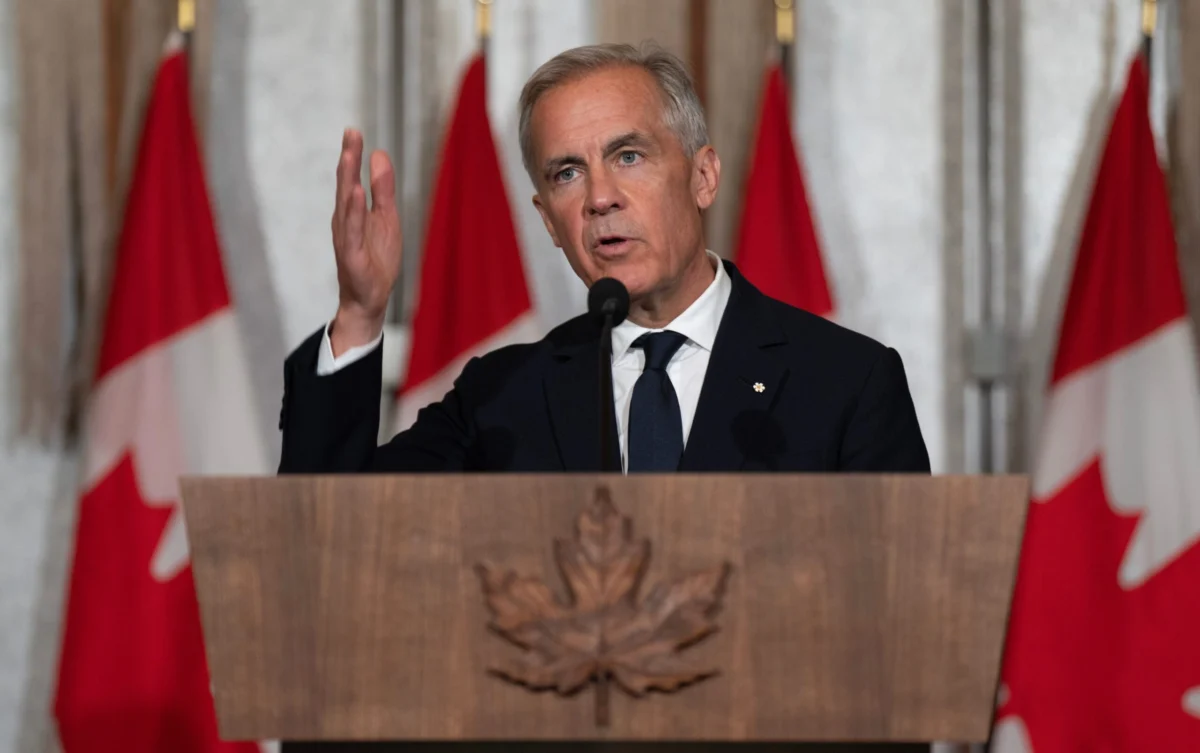
Prime Minister Mark Carney, a former central banker known for his measured but firm approach, has positioned himself as a defender of Canadian sovereignty. His previous comments at Davos regarding economic coercion suggest that Canada is unlikely to back down without significant concessions from Washington.
The View from Washington
The White House maintains that the move is a defensive measure to protect American workers. "Canada has unfairly discriminated against American autos, alcohol, and dairy products for too long," the President stated. The administration official argued that Canada must be "held accountable" for its history of retaliation.
However, Democratic lawmakers have expressed alarm. Last year, several members of Congress proposed repealing Section 338, arguing that it provides the executive branch with a "nuclear option" that could destabilize the global economy at a whim.
Expert Analysis
Scott Lincicome, Vice President of General Economics at the Cato Institute, offered a grim assessment of the situation. "We crossed the Rubicon," Lincicome said. "The invocation of 338 is the nuclear option for Trump tariffs. It injects massive uncertainty into the global economy and threatens the very foundation of North American trade."
V. Implications: Uncertainty and the Road Ahead
The long-term consequences of a 50% tariff on Canadian goods are multifaceted, affecting everything from domestic politics to the stability of the global supply chain.
1. Midterm Election Risks
The timing of the announcement is politically charged. With the November midterm elections approaching, the President is betting that a "tough on trade" stance will resonate with his base in manufacturing hubs. However, if the tariffs lead to a spike in consumer prices or a stock market downturn—similar to the "Liberation Day" meltdown—the move could backfire, damaging the GOP’s prospects for maintaining control of Congress.
2. The Future of the USMCA
The USMCA, once hailed as a triumph of modern trade negotiation, now appears to be in a state of terminal decline. With the U.S. declining to renew the pact, the region enters a period of "negotiation by fire." These discussions could theoretically last until 2036, leaving businesses in a state of perpetual limbo regarding tariffs and regulatory standards.
3. Supply Chain Realignment
While the President claims tariffs will bring manufacturing back to the U.S., economists warn that the more likely outcome is a "decoupling" that hurts both nations. The auto industry, in particular, may face an existential crisis as the cost of cross-border parts becomes prohibitive. Companies may look to source materials from outside North America entirely, undermining the goal of regional self-sufficiency.
4. Global Precedent
By using Section 338 against a close ally, the U.S. is signaling a shift in global trade norms. Other trading partners, particularly in Europe and Asia, are likely watching closely. If the "nuclear option" becomes a standard tool of American diplomacy, the post-WWII era of rules-based international trade may be effectively over, replaced by a system of transactional bilateralism.
As the 30-day clock begins to tick, the eyes of the financial world remain fixed on the border. Whether this move results in a negotiated settlement or a full-scale economic conflict will depend on the willingness of both Trump and Carney to blink in a high-stakes game of economic chicken.