July 17, 2026
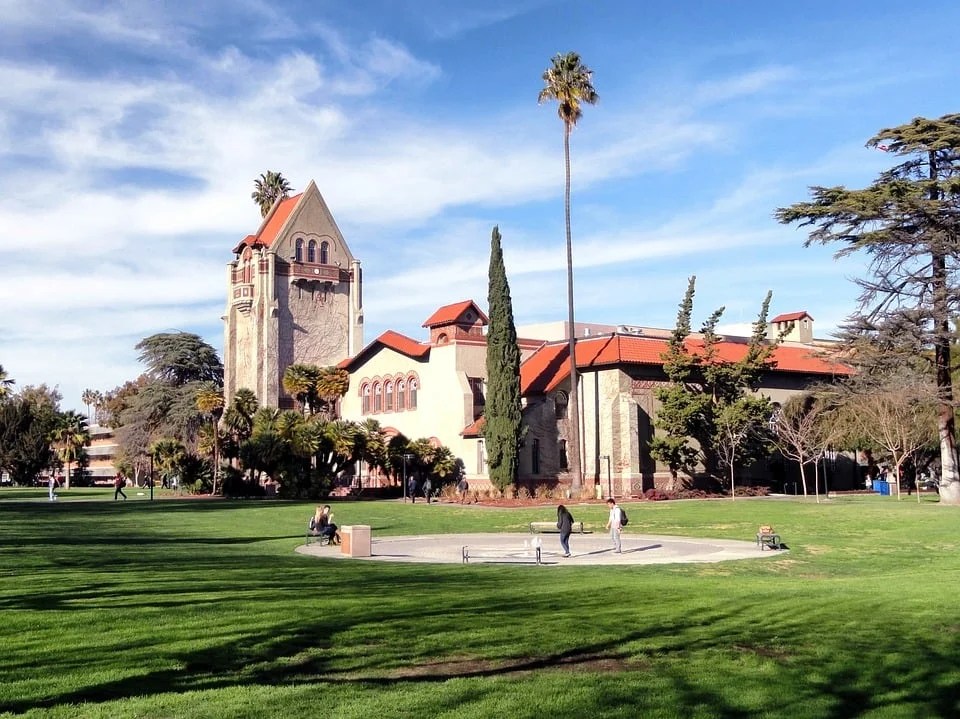
A disturbing chapter in the recent history of San Jose State University (SJSU) has reached a critical juncture. Federal authorities have formally charged a 30-year-old graduate student, Ziheng “Tony” Fang, in connection with a series of hateful, terror-inducing messages that paralyzed the campus community throughout the 2025–2026 academic year. The charges, which include counts of false information and hoaxes, bring to the forefront the harrowing reality of targeted intimidation and the toll that systemic threats take on an academic institution.
The Charges and the Discovery
The investigation into the activities at SJSU gained significant momentum following a discovery on November 5, 2025. According to a press release issued by the U.S. Department of Justice, a note was recovered from a restroom on the San Jose State campus that contained overtly violent and xenophobic language.
The note, which has been presented as evidence in federal court, featured hand-drawn swastikas and explicit declarations, including threats of a “mass bomb” and calls to “kill all Muslims,” accompanied by the inflammatory assertion that “this is a white nation.”
Law enforcement officials utilized forensic analysis to tie the note to the suspect. Fingerprint evidence recovered from the paper matched that of Ziheng Fang. Following his arrest on May 20, 2026, Fang appeared in a San Jose federal court to face the allegations. If convicted on the federal charges of providing false information and perpetrating a hoax, Fang faces a maximum sentence of five years in a federal penitentiary.
A Chronology of Intimidation
The incident discovered in November was not an isolated event but rather the climax of a sustained campaign of harassment that had been plaguing the SJSU campus for months. Records from the SJSU Police Department indicate that since October 2024, more than 20 distinct incidents of “hateful and threatening” graffiti have been reported across campus facilities.
The pattern of the messages was systematic and calculated to induce maximum psychological distress. Many of the notes included specific, imminent dates for alleged future attacks, as well as references to the types of weaponry that would be utilized. These threats created a climate of instability, forcing the university administration to grapple with the logistics of safety versus the necessity of maintaining an open educational environment.

Investigators utilized digital breadcrumbs to track the movements of the suspect. Electronic access logs showed that Fang utilized his university key card to enter the buildings where the messages were later discovered in the days preceding their discovery. Furthermore, surveillance footage obtained by campus security corroborated these findings, capturing images of Fang entering and exiting the specific restrooms where the graffiti was found, often just hours before the messages were brought to the attention of authorities.
The Impact on the Academic Community
The presence of these threats had tangible, disruptive consequences for the student body and faculty. On multiple occasions throughout the academic year, the university was forced to cancel classes, as the administration and law enforcement worked to assess the credibility of the threats and ensure the safety of the campus population.
Beyond the physical disruption, the emotional and psychological toll on the SJSU community has been profound. The messages, which targeted specific religious and racial identities—most notably Jewish and Muslim students—functioned as a direct attack on the inclusive values the university seeks to uphold.
"The incidents of graffiti containing threats of violence, along with antisemitic, Islamophobic, racial and other discriminatory slurs against members of our campus community, caused real fear and harmed every member of the San Jose State Spartan community," said Michelle Smith McDonald, a spokesperson for SJSU, in an interview with KQED.
She emphasized that the harm was not merely institutional but deeply personal. "Our Jewish and Muslim students, faculty and staff experienced these hateful acts in deeply personal ways. These were not just scrawls on a wall; they were direct attacks on their safety and their right to exist and learn in a supportive environment."
Implications for Campus Safety Protocols
The case of Ziheng Fang has triggered a wider conversation regarding the vulnerability of modern university campuses to targeted harassment. SJSU, like many large urban universities, operates on an open-access model that facilitates the movement of thousands of students, faculty, and staff daily. Balancing this accessibility with the need for high-level security has become an increasingly complex challenge for university administrators.
Enhanced Surveillance and Security
In response to the spree of graffiti, SJSU had to significantly enhance its security footprint. This included increased patrols by the SJSU Police Department, a review of restroom access policies, and an expansion of the campus-wide surveillance network. These measures, while necessary to ensure the safety of the community, have sparked debates among students and civil liberties advocates about privacy and the “militarization” of the college experience.

The Rise of Hate-Motivated Hoaxes
Legal experts note that the case of “false information and hoaxes” is a particularly serious category of crime. Because the threats were designed to look like legitimate plans for mass violence, they triggered expensive and resource-heavy responses from local and federal law enforcement agencies. Every time a note was discovered, the university was required to treat it as a credible, life-threatening situation, leading to the deployment of bomb squads, evacuation protocols, and forensic teams.
The legal proceedings against Fang will likely serve as a litmus test for how federal prosecutors handle hate-motivated hoaxes on educational property. While the threats were found to be hoaxes—meaning there was no evidence of an actual “mass bomb”—the criminal intent to terrorize a specific demographic and disrupt a public institution remains the focal point of the prosecution.
Looking Forward: Healing and Dialogue
As the legal process moves forward, San Jose State University faces the long-term task of repairing the social fabric of its campus. The university has committed to ongoing dialogues, support services for impacted students, and programs aimed at addressing the roots of the bigotry expressed in the graffiti.
The incident highlights a broader societal trend where campus environments are becoming flashpoints for national and international tensions. The use of swastikas and anti-Muslim rhetoric suggests that the perpetrator was leveraging high-profile geopolitical animosities to create a atmosphere of fear on a local level.
For the SJSU community, the coming semesters will be defined by a concerted effort to move past the shadow of these events. The arrest of Fang provides a measure of closure regarding the identity of the individual responsible, but the university’s leadership acknowledges that the work of fostering a truly safe and inclusive environment is far from complete.
As the case makes its way through the federal court system, the SJSU administration remains focused on its primary objective: ensuring that students, regardless of their religious, ethnic, or racial backgrounds, can pursue their academic ambitions without the looming threat of hatred or violence. The events of 2025–2026 will undoubtedly serve as a case study for university security departments across the country, underscoring the vital importance of vigilance, rapid inter-departmental communication, and a community-wide commitment to rejecting hate in all its forms.