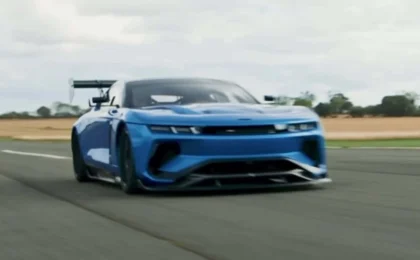
The hallowed asphalt of the Circuit de la Sarthe has long been the ultimate proving ground for automotive innovation, and Ford Racing is once again preparing to test its mettle against the titans of global endurance racing. With a singular, ambitious goal—to etch its name into the history books at the 24 Hours of Le Mans—Ford’s engineering division is deep in the trenches, meticulously crafting a race machine designed to dominate the hybrid era.
In a significant milestone that signals the program is moving from digital design to mechanical reality, Ford recently achieved a critical benchmark: the initial "fire-up" of its proprietary 5.4-liter V8 engine. This heartbeat of the new car, rooted in the DNA of the celebrated Coyote architecture, represents the cornerstone of a sophisticated hybrid powertrain. As the team prepares for the grueling WEC (World Endurance Championship) calendar, the automotive world is watching, eager to see if this marriage of American muscle and cutting-edge hybrid technology can overcome the stiffest competition in motorsport.
The Core of the Beast: Engineering the Coyote-Derived V8
At the center of this project lies a 5.4-liter V8 engine that bridges the gap between Ford’s legendary road-car pedigree and the extreme demands of endurance racing. By leveraging the modular versatility of the Coyote engine—a powerplant that has defined Ford’s performance output for over a decade—the engineering team has created a unit that is both reliable enough to withstand 24-hour stints and potent enough to contend with the blistering pace of the Hypercar and GT classes.
The decision to utilize a V8 configuration is a strategic one. While many competitors have pivoted toward smaller displacement, turbocharged V6 configurations to optimize fuel efficiency and packaging, Ford has opted for a displacement-heavy approach. The result is not just a strategic performance profile, but an auditory experience that pays homage to the raw, visceral power of the Ford racing heritage.
A Chronology of Development: From CAD to Circuit
The path to Le Mans is paved with thousands of hours of painstaking preparation. Ford’s development cycle has been characterized by a methodical, multi-phase approach:
- Phase I: Concept and Simulation: The initial development phase focused heavily on computational fluid dynamics (CFD) and virtual track simulations. Using sophisticated driver-in-the-loop (DIL) rigs, Ford’s roster of factory drivers spent months "racing" at Le Mans before a single chassis was completed.
- Phase II: The Powerplant Integration: With the engine finalized, the team moved into the dyno-testing phase. The successful fire-up of the 5.4-liter V8 signifies the transition from stationary testing to powertrain integration. This phase ensures that the electrical hybrid components and the internal combustion engine can communicate in real-time under extreme thermal loads.
- Phase III: European Shakedown: The upcoming weeks will see the car depart from the controlled environment of the laboratory for its first true on-track evaluations in Europe. These sessions are intended to calibrate the aerodynamic balance and mechanical grip on circuits that mimic the high-speed requirements of the French endurance classic.
- Phase IV: Domestic Refinement: Following the European test program, the team will relocate operations to North American facilities. This shift allows for endurance-focused testing, pushing the car toward its mechanical limits in a controlled, private environment before the start of the competitive season.
- Phase V: The WEC Campaign: The culmination of these efforts will be the full-season entry into the World Endurance Championship, serving as the final preparation for the 24 Hours of Le Mans.
Technical Specifications and Strategic Implications
The choice of an Oreca-supplied chassis is a tactical masterstroke. Oreca, a titan in endurance racing design, provides a platform that is not only proven in terms of reliability but also highly adaptable to varying technical regulations. By pairing this world-class chassis with a bespoke Ford powertrain, the team is effectively "buying" reliability while "building" performance.
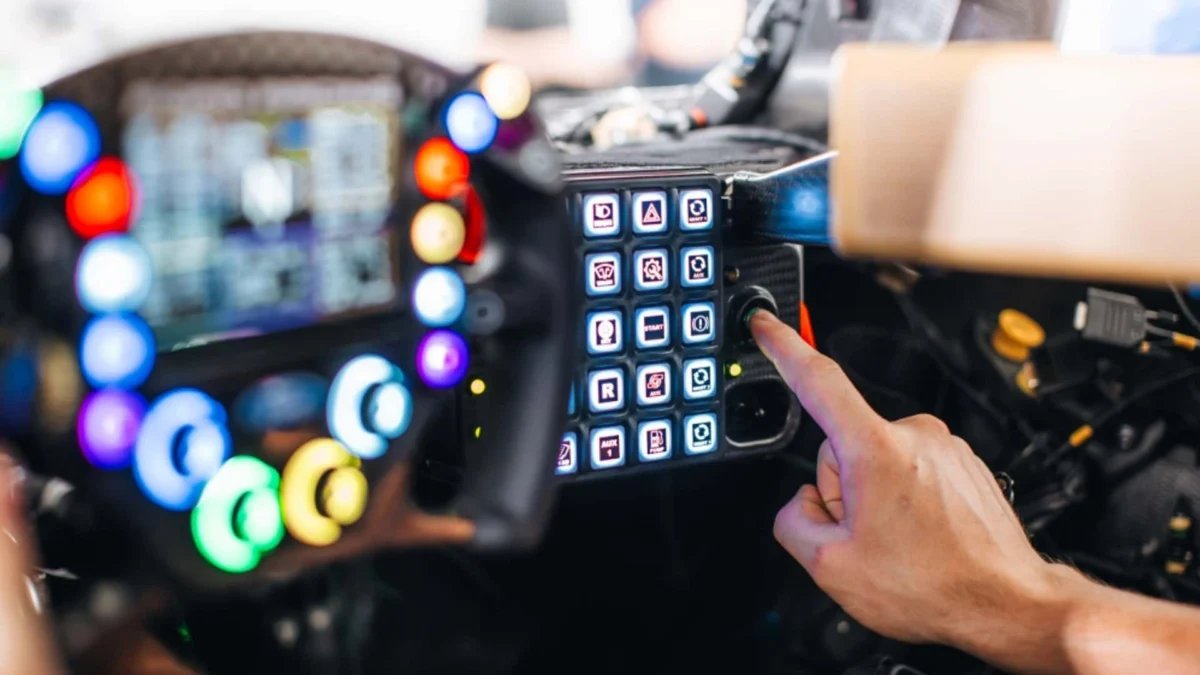
The hybrid integration is perhaps the most complex hurdle. Managing energy deployment—harvesting energy under braking and deploying it via the electric motor during acceleration—requires a software suite of immense sophistication. Ford’s engineers are tasked with balancing the aggressive power delivery of the Coyote V8 with the delicate state-of-charge requirements of the battery system. If the team can find the "sweet spot" in energy management, they will possess a car capable of both blistering qualifying laps and fuel-efficient, triple-stint race strategies.
Official Stance and Team Philosophy
Ford Racing has remained characteristically tight-lipped regarding the specific performance numbers, but the sentiment emanating from the paddock is one of quiet confidence. Ford Racing representatives have emphasized that the current priority is not raw speed, but "operational maturity."
"We are building for the long game," one lead engineer noted during the recent engine test. "At Le Mans, you don’t win by being the fastest car in the first hour; you win by being the most consistent car in the twenty-fourth hour. Our focus remains on the integration of the hybrid system and ensuring that our drivers feel comfortable pushing the platform to its limits without compromising the structural integrity of the drivetrain."
This philosophy underscores a shift in how legacy manufacturers approach endurance racing. Rather than chasing the ephemeral glory of single-lap speed, Ford is building an ecosystem that prioritizes the interface between human, machine, and strategy.
The Competitive Landscape
Entering the WEC is not a task for the faint of heart. Ford will be competing against established giants, including Toyota, Porsche, and Ferrari—manufacturers who have spent years perfecting their current hybrid platforms. The competition is fierce, and the margins for error are non-existent.
The "teething problems" mentioned by industry analysts are inevitable. No car, regardless of the budget or expertise behind it, arrives at the starting grid fully optimized. The true measure of Ford’s success will be the rate of evolution. How quickly can the team analyze data from the European shakedown? How effectively can they translate those findings into software updates and mechanical adjustments? The team that wins at Le Mans is often the one that learns the fastest.
Why Le Mans Still Matters
For the uninitiated, the obsession with the 24 Hours of Le Mans can seem disproportionate. However, it remains the ultimate crucible for the automotive industry. It is the only place where the world’s best engineers are forced to solve the contradiction of "maximum speed" versus "maximum durability."
When Ford takes to the track, they aren’t just racing for a trophy; they are racing for technical validation. The lessons learned in the pursuit of a podium finish at Le Mans are almost always filtered down into the consumer vehicles of tomorrow. Advances in hybrid cooling, material science, and fuel efficiency—all honed on the track—eventually find their way into the Ford Mustangs and F-150s of the future.
Looking Ahead: The Road to the Podium
As the team prepares to transport its hardware across the Atlantic, the air in the Ford Racing garage is thick with anticipation. The fire-up of the V8 was merely the opening note of a much longer symphony. The real work begins now, in the rain-slicked curves of European tracks and the scorching heat of American testing grounds.
For Ford, the objective is clear: to prove that the spirit of American innovation can thrive on the world’s most demanding stage. With an Oreca chassis beneath them and a Coyote-derived heartbeat driving them forward, Ford Racing is not just participating; they are preparing to challenge the status quo.
The countdown to the green flag has begun. For the enthusiasts and the engineers alike, the journey toward the next great Ford chapter at Le Mans promises to be as thrilling as the race itself. Whether they find themselves on the top step of the podium in their inaugural season or are forced to fight through the adversity that defines endurance racing, one thing is certain: Ford Racing is back, and they are bringing the thunder.