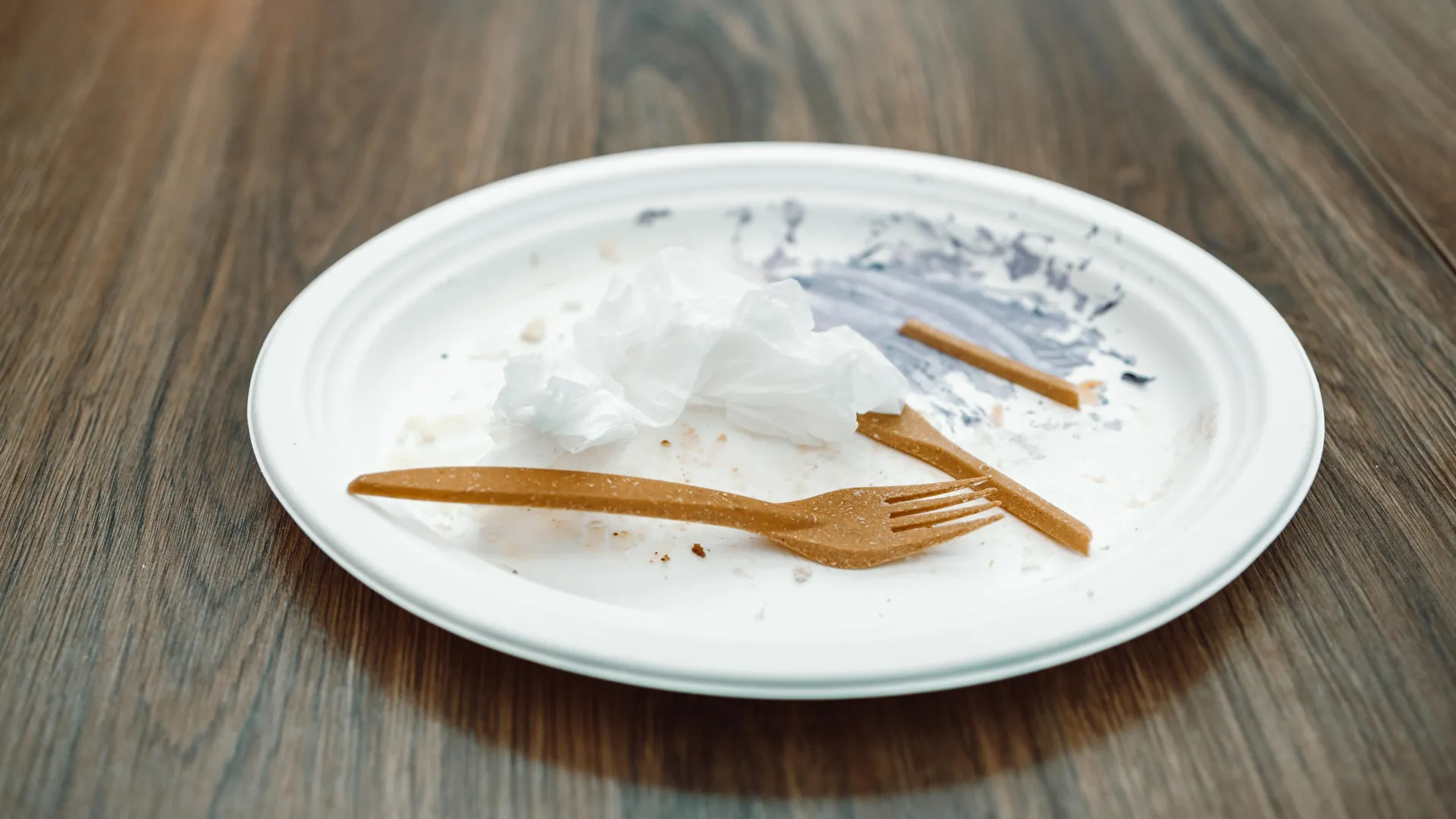
For decades, the convenience of plastic has been shadowed by a catastrophic environmental legacy. Designed for durability, the material that defines modern life—from grocery bags to medical equipment—defies the natural cycle of decomposition. While a single-use container might serve its purpose for a mere twenty minutes, its physical footprint can persist for centuries, choking ecosystems and fragmenting into insidious microplastics that infiltrate the global food chain.
However, a breakthrough in synthetic biology may have finally tipped the scales. Researchers have unveiled a revolutionary class of "living plastics" that contain dormant, encapsulated microbes capable of self-destructing the material upon command. This development represents a paradigm shift: instead of viewing plastic as an inert, eternal pollutant, scientists are reimagining it as a programmable, ephemeral tool that leaves no trace behind.
The Core Innovation: Engineering a Biological Disposal System
The challenge of plastic pollution is fundamentally a problem of design. We have spent the last century perfecting polymers that resist heat, moisture, and chemical breakdown. To reverse this, a team of researchers led by Zhuojun Dai, Jin Geng, and Dianpeng Qi has turned to nature’s most efficient recyclers: microorganisms.
As detailed in their recent study published in ACS Applied Polymer Materials, the team successfully engineered Bacillus subtilis—a common, hardy bacterium—to act as an internal "suicide squad" for plastic. By embedding dormant spores of these bacteria directly into the polymer matrix, the researchers created a material that remains stable and structurally sound during its useful life but can be triggered to digest itself once discarded.
How the Microbes Work
The genius of the design lies in a two-stage enzymatic attack. Previous iterations of biodegradable plastics often relied on a single enzyme, which frequently proved inefficient, leading to incomplete breakdown and the formation of persistent microplastic fragments.
The new approach utilizes a synergistic, two-pronged strategy:
- The Cleaver: The first enzyme functions like a pair of molecular scissors, randomly cutting the long, tangled polymer chains into smaller, more manageable sections.
- The Processor: The second enzyme acts from the ends of those fragments, systematically stripping them down until they are reduced to their original, individual monomer building blocks.
This sequential process is critical. By ensuring that the polymer is broken down at the molecular level rather than just fragmented, the researchers have effectively bypassed the microplastic problem entirely.
Chronology of a Breakthrough
The journey toward this living material was not instantaneous. It required a rigorous, multi-year approach to synthetic biology and material science.
- Initial Conception: The research began with a philosophical pivot. Rather than asking how to clean up plastic after it enters the environment, the team asked: "Could we build degradation directly into the material’s life cycle?"
- Engineering the Spores: The researchers selected Bacillus subtilis for its resilience. By engineering these bacteria to express specific polymer-degrading enzymes, they created a biological system that could remain inactive while trapped in a solid state.
- The Polymer Integration: The team successfully combined the bacterial spores with polycaprolactone (PCL), a biodegradable polyester widely utilized in 3D printing, medical sutures, and packaging.
- Testing Mechanical Integrity: A primary concern was whether the inclusion of biological agents would compromise the plastic’s utility. Testing confirmed that the living plastic possessed mechanical properties indistinguishable from traditional PCL, proving that durability and biodegradability could coexist.
- The Six-Day Decomposition: In laboratory trials, the researchers triggered the spores by exposing them to a nutrient broth heated to 122°F (50°C). The transition from dormant spore to active enzyme factory was rapid. Within just six days, the plastic film had vanished, leaving behind only basic organic components.
Supporting Data and Technical Efficacy
The data provided in the ACS Applied Polymer Materials report suggests a high degree of efficiency. In the test cases, the material remained functional under normal environmental conditions, effectively shielding the bacteria from premature activation.
The activation process, while currently requiring a specific temperature and nutrient environment, provides a "fail-safe" mechanism. The material does not begin to decay until the user decides it is time. This offers a level of control that current biodegradable plastics—which often start degrading as soon as they are exposed to sunlight or moisture—lack.
Furthermore, the "real-world" application test involving a wearable plastic electrode proved that the material is more than a laboratory curiosity. The electrode functioned as a high-performance device for the duration of its required use and subsequently dissolved within two weeks of activation. This demonstrates the potential for the technology to serve high-tech sectors where waste is a significant concern.
Official Responses and Researcher Perspectives
Zhuojun Dai, the corresponding author of the paper, emphasizes that this technology is about changing the definition of "durability."
"By embedding these microbes, plastics could effectively ‘come alive’ and self-destruct on command," Dai noted. "We are turning durability from a structural problem into a programmable feature."
The research team is transparent about the current limitations. The transition from a controlled lab environment to the unpredictable realities of waste management is the next great hurdle. The team is already working on the next phase of the project: creating a trigger mechanism that works in water. Given that a vast majority of plastic waste ends up in marine environments, developing a bacterial strain that can be activated by the ambient conditions of a river or ocean is the "holy grail" of the research.
Implications for the Future of Materials Science
The implications of this technology are vast, spanning industries from consumer electronics to global healthcare.
1. The Death of Single-Use Waste
If this technology can be scaled, it could fundamentally disrupt the manufacturing of single-use items. Packaging that is designed to disappear after a pre-set timeframe could eliminate the need for traditional recycling, which is currently plagued by low participation rates and economic inefficiencies.
2. A Revolution in Medical Waste
Medical equipment, such as surgical sutures and disposable diagnostics, often presents a challenge because of the need for sterility and durability during use, followed by high-volume disposal. A material that can be safely discarded and then dissolved in a specialized facility could drastically reduce the burden of hospital waste.
3. Adapting the Strategy
While the initial research focused on polycaprolactone, the fundamental strategy—embedding a dormant, enzyme-producing biological agent into a polymer matrix—is highly adaptable. The team believes this architecture could be applied to other common plastics used in bottles, electronics, and construction.
The Path Forward: Scaling and Sustainability
As the team looks toward commercialization and broader application, they acknowledge the support of several prestigious institutions, including the National Key Research and Development Program of China, the Shenzhen Medical Research Fund, and the National Natural Science Foundation of China.
However, scaling such a project requires more than just funding; it requires a paradigm shift in how we regulate and categorize "living" materials. The introduction of synthetic biological agents into consumer products will necessitate rigorous safety testing to ensure that the engineered B. subtilis spores pose no threat to local ecosystems.
Nevertheless, the progress made by Dai and his colleagues provides a glimmer of hope in a world drowning in plastic. By borrowing from the blueprint of nature, we may finally be able to manufacture products that fulfill the needs of the present without robbing the future of a clean environment. The era of "living plastics" is not just a scientific novelty; it is a necessary evolution of human industry, moving us toward a future where our materials are as fleeting as the convenience they provide.