The year 2026 will be etched into the annals of automotive history as a definitive turning point for Bugatti. It is a year defined by profound transition: the marque is charting a new course independent of the Volkswagen Group, and more significantly, it is closing the book on one of the most audacious engineering achievements of the 21st century—the quad-turbocharged 8.0-liter W16 engine.
The delivery of the 99th and final Bugatti Mistral, aptly christened "The Last of Its Kind," marks the conclusion of a powertrain journey that began with the groundbreaking Veyron in 2005. As the final roadster rolls out of the Molsheim atelier, it signals the end of an era for the internal combustion engine in its most extreme, multi-cylinder configuration.
A Legacy Built on Excess and Excellence
To understand the magnitude of this retirement, one must appreciate what the W16 represented. Developed under the stewardship of the Volkswagen Group, the engine was a masterclass in brute force and thermal management. By merging two V8 engines into a unique "W" configuration, Bugatti engineers created a powerplant capable of propelling a luxury vehicle into the realm of hyper-performance.
From the original 1,001-horsepower Veyron to the record-shattering Chiron and the track-focused Bolide—the latter of which concluded its 40-unit production run in November 2025—the W16 became the heartbeat of the brand. It was a defiant statement against the trend of downsizing and hybridization, a testament to what is possible when engineering resources are essentially limitless.
The Final Masterpiece: "The Last of Its Kind"
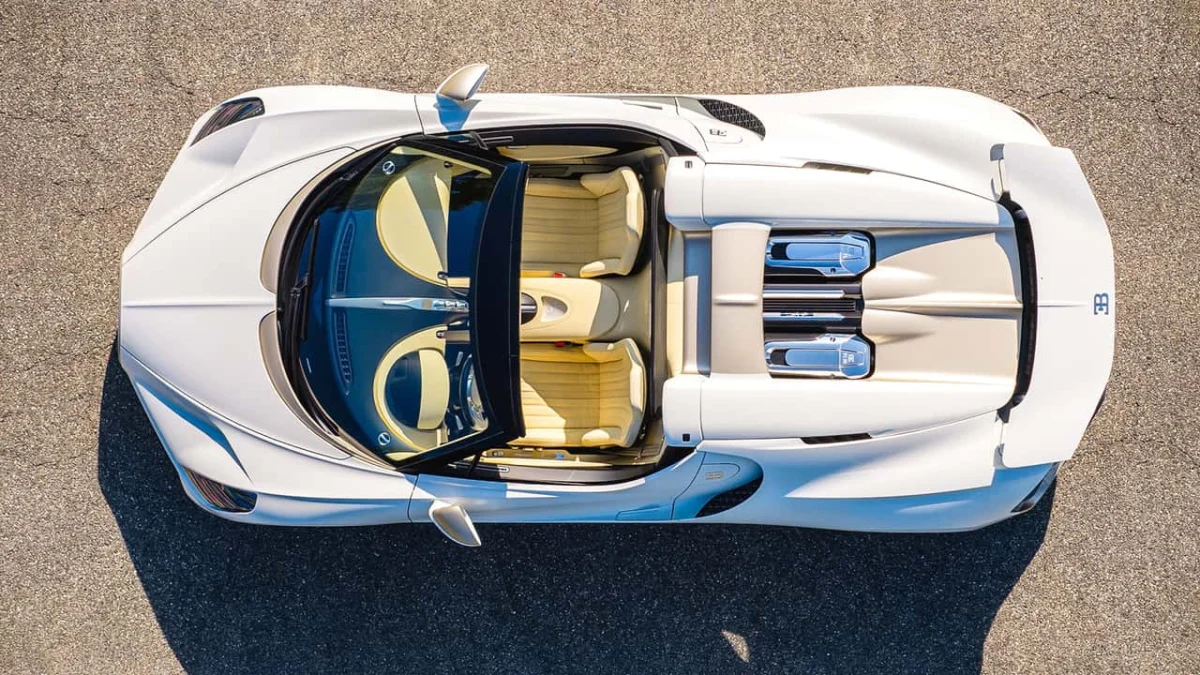
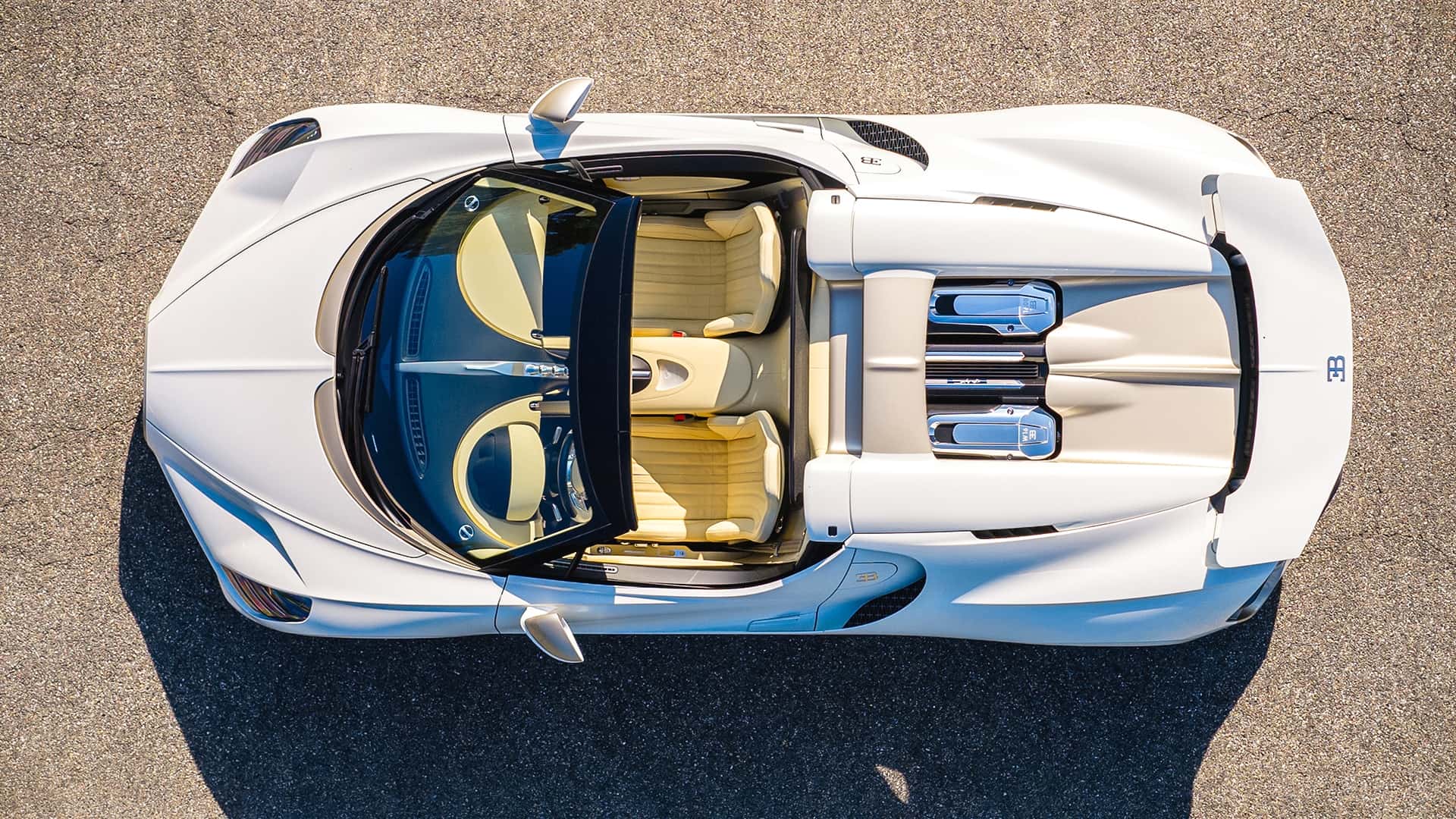
The final Mistral, a bespoke masterpiece, reflects the hyper-personalization that has become a hallmark of the modern Bugatti ownership experience. Finished in a dual-tone Pearl and Sparkle livery, the car is a rolling gallery of artisanal craftsmanship.
Inside the cabin, the attention to detail is obsessive. The interior is finished with Magnolia and Grey Carbon Matt accents, a sophisticated palette that highlights the vehicle’s architectural lines. Subtle yet profound tributes to the brand’s founder, Ettore Bugatti, are embedded throughout the vehicle, appearing on the headrests, the aluminum door sills, and even the internal trim of the engine cover, ensuring that the final W16-powered roadster is a permanent monument to the marque’s heritage.
The Rigorous Path to Delivery
Bugatti’s commitment to quality remains unyielding, even for its final production models. Every Mistral, including the 99th example, underwent a grueling 248.5-mile (400-kilometer) shakedown protocol before delivery.
This process is not merely a test drive; it is a validation of mechanical integrity. Each car was pushed to 186 mph (300 km/h) on the runways of Colmar Airport in northeastern France. Only after passing the scrutiny of three hand-selected, master test drivers—who ensure the vehicle meets the exacting standards of the Molsheim workshop—is the car deemed worthy of its owner. This process serves as a final "rite of passage" for a machine that spent two decades pushing the boundaries of physics.
Chronology of the W16 Era
The W16 engine did not merely exist; it dominated the conversation for two decades. Its timeline is a chronicle of record-breaking speed:
- 2005: The Bugatti Veyron 16.4 enters production, stunning the world with its 1,001-horsepower output and a top speed exceeding 250 mph.
- 2010: The Veyron Super Sport arrives, pushing the engine to 1,200 horsepower and setting a new benchmark for production car velocity.
- 2016: The Chiron replaces the Veyron, featuring an evolved version of the W16 that pushes output to 1,500 horsepower.
- 2019: The Chiron Super Sport 300+ breaks the 300-mph barrier, cementing the W16’s legacy as the most powerful production engine in history.
- 2024: The Mistral makes history as the world’s fastest open-top production car, clocking 282 mph (453.91 km/h) at the ATP Automotive Testing Papenburg facility, driven by the legendary Andy Wallace.
- 2026: The final production W16 engine is completed, closing a chapter that defined the "Golden Age" of hypercars.
Implications for the Future: The Rimac Era
The transition away from the W16 is not an end, but a metamorphosis. With Bugatti now operating under the visionary leadership of Mate Rimac, the brand is pivoting toward the future of high-performance electrification and hybrid technology.
The unveiling of the Tourbillon, the W16’s spiritual successor, offers a glimpse into this new philosophy. The Tourbillon eschews the quad-turbo setup for a naturally aspirated V16 paired with a sophisticated hybrid system. This shift represents a move toward greater efficiency, instantaneous torque, and the integration of advanced battery technology, while still maintaining the emotional, mechanical soul that defines a Bugatti.
Furthermore, the recent inauguration of "La Manufacture," a state-of-the-art facility designed to handle an annual capacity of 200 units, indicates that the brand is scaling for a broader future. While the Tourbillon is limited to a run of 250 units, the infrastructure is now in place for a diverse range of future projects that will move beyond the constraints of the old Volkswagen-era platforms.
The Programme Solitaire: A Window for the Ultra-Rich
While volume production of the W16 has ceased, the spirit of the engine will not vanish entirely. Through the "Programme Solitaire," Bugatti’s most discerning collectors can still commission one-off or limited-run vehicles based on existing chassis.
This program serves as a bespoke atelier for the world’s elite, allowing for creations like the "Brouillard" or the Veyron-inspired "FKP Hommage." By limiting these projects to just two vehicles per year, Bugatti ensures that the legacy of the W16 remains exclusive and highly sought after, much like the rare, collectible instruments or watches of the horological world.
A Final Reflection: The Motor1 Perspective
Looking back at the past 28 years under the Volkswagen Group, it is easy to view the W16 as a mechanical anomaly—a beautiful, thunderous contradiction in a world moving toward minimalism. Yet, the W16 was essential. It bridged the gap between the mechanical purity of the 20th century and the digital, electrified precision of the 21st.
The transition to the Tourbillon and the new independent structure of the company feels, for the first time in nearly three decades, like a new chapter written by an enthusiast. Mate Rimac’s influence is clear: the focus is no longer just on chasing top-speed records, but on the marriage of art, extreme performance, and future-proof technology.
As the last Mistral finds its way into a private collection, we acknowledge that the "W16 era" was more than just a specification sheet. It was a symbol of ambition, a defiance of the impossible, and a testament to the fact that when engineers are given the freedom to dream, they can change the world. The W16 may be retired, but the fire in Molsheim is burning brighter than ever.