The automotive landscape has shifted dramatically over the past three years. While full-size trucks continue to dominate the American sales charts, a new, agile category has emerged from the shadows to capture the hearts of suburban commuters and weekend adventurers alike: the unibody compact pickup. At the center of this revolution is the Ford Maverick, a vehicle that has proven, with staggering clarity, that there is a massive, underserved market for smaller, more efficient, and highly affordable trucks.
Despite the undeniable success of the Maverick—and the clear shift in consumer appetite—the industry has remained surprisingly hesitant to jump into the fray. However, whispers from within the halls of Toyota suggest that the world’s largest automaker is no longer just observing from the sidelines. New commentary from Toyota’s engineering leadership indicates that the company is more intrigued than ever by the prospect of launching a competitor to the Ford Maverick.
The Case for a Unibody Truck: Engineering Perspectives
The conversation regarding a potential Toyota compact truck has gained renewed momentum following recent remarks from Yoshinori Futonagane, the chief engineer behind the globally successful Toyota RAV4. Speaking with the Australian automotive publication Drive, Futonagane offered a rare, candid glimpse into the internal discussions happening at Toyota headquarters.
According to Futonagane, the concept of a pickup truck built on a monocoque platform—the same structural architecture that underpins the RAV4—has been a subject of internal debate. By utilizing a unibody platform rather than a traditional body-on-frame chassis, a vehicle can offer a smoother, car-like ride, better fuel economy, and a lower entry price.
"The market for a monocoque pickup truck is quite appealing," Futonagane noted. "Deep in our heart of hearts, we all think, ‘wouldn’t that be fun?’"
While he was quick to temper expectations by confirming that Toyota currently has "no official plans" to put such a vehicle into production, the acknowledgment that the concept is being actively discussed at the highest levels of engineering is a significant departure from the company’s previously tight-lipped stance. It suggests that while the "green light" has not yet been given, the project is moving beyond the realm of theoretical doodles and into serious feasibility studies.
The Maverick Effect: A Study in Market Disruption
To understand why Toyota is reconsidering its product strategy, one must look at the numbers. In 2025, the Ford Maverick cemented its status as a juggernaut, moving 155,051 units in the United States alone. Its success is not merely a result of being "first to market," but a reflection of its versatility. By offering a standard hybrid powertrain and a price point that undercuts almost every other new vehicle on the market, Ford tapped into a demographic that was being priced out of the midsize and full-size truck segments.
The contrast is stark when compared to the Hyundai Santa Cruz. The Santa Cruz, which also occupies the compact unibody space, moved only 25,499 units in 2025. Following this disparity, Hyundai has signaled a shift in strategy, opting to discontinue the Santa Cruz to pursue a larger, more traditional body-on-frame truck capable of challenging the midsize Ford Ranger. This leaves the Maverick in a near-monopoly, a vacuum that Toyota—a brand synonymous with truck reliability—is uniquely positioned to fill.
Why the Delay? The Shadow of the Tacoma
The primary obstacle preventing Toyota from rushing a Maverick-fighter to market is the overwhelming success of its own midsize champion: the Toyota Tacoma. In 2025, the Tacoma moved an impressive 274,638 units, maintaining its iron-clad grip on the midsize segment.
Toyota’s corporate strategy has always been built on the foundation of protecting its "golden geese." The fear, naturally, is cannibalization. If Toyota were to introduce a cheaper, more fuel-efficient, unibody truck, would it tempt existing Tacoma buyers to trade down? Or, more importantly, would it dilute the rugged brand identity that the Tacoma has spent decades cultivating?
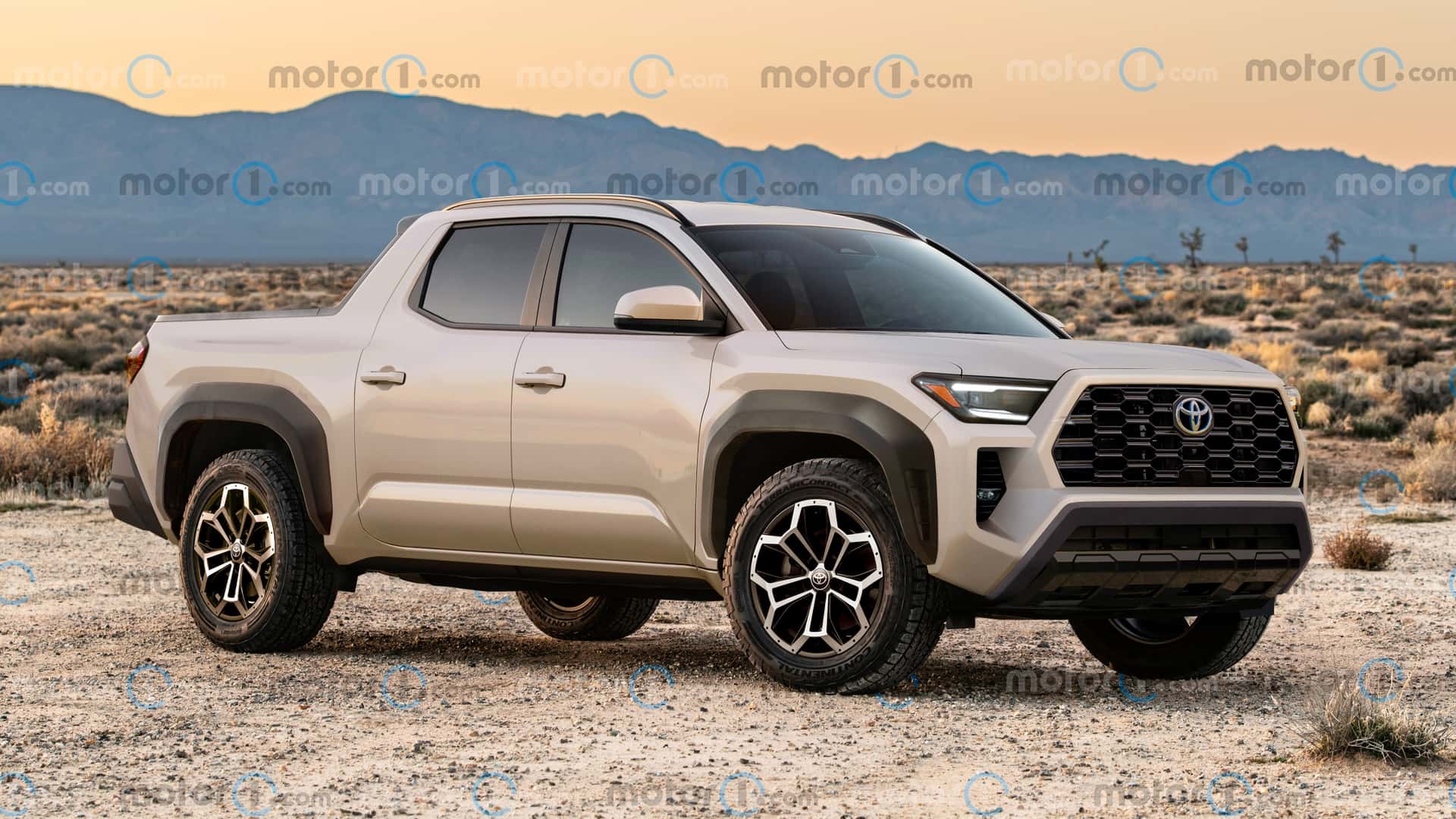
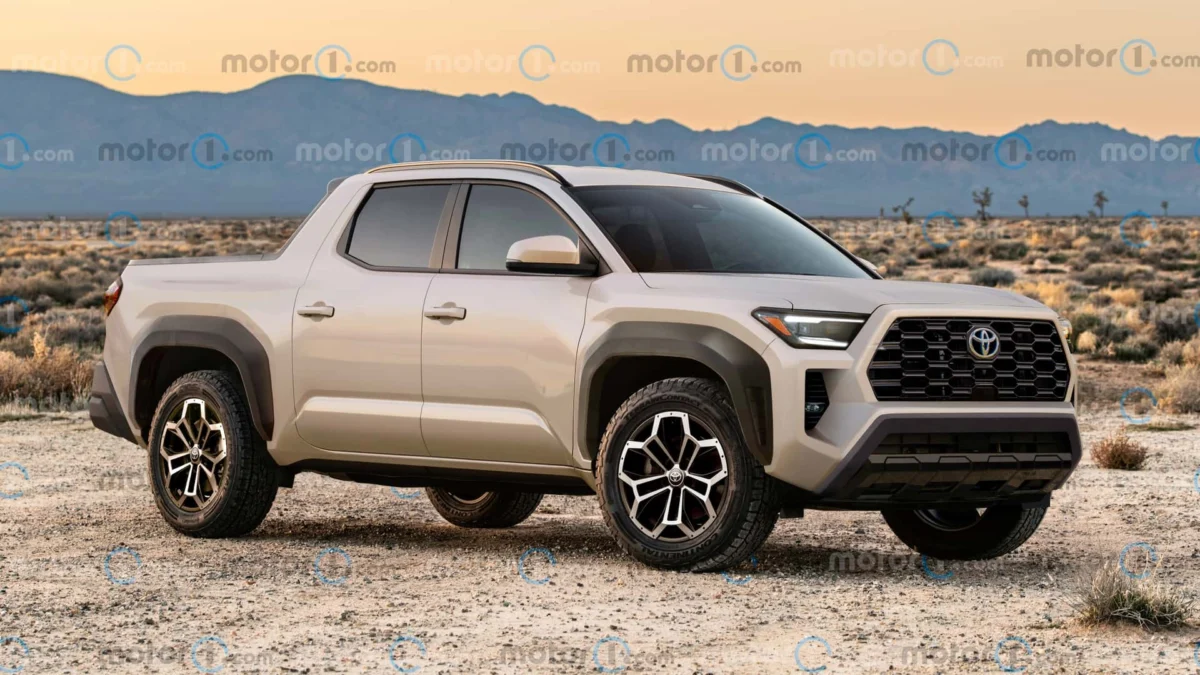
However, the market data suggests that the two segments cater to fundamentally different buyers. The Tacoma buyer is often seeking off-road capability, towing power, and the status associated with a "real" truck. The Maverick buyer, by contrast, is looking for a vehicle that can carry a bicycle or a load of mulch on Saturday and commute to an office on Monday without guzzling fuel. There is a strong argument that a RAV4-based truck would capture an entirely new customer base—one currently buying Honda CR-Vs or RAV4s—rather than stealing sales from the Tacoma.
The Global Context: Australia and Beyond
While the conversation often centers on the American market, it is important to recognize the global perspective. Australia, a country with a deeply ingrained "ute" culture, serves as a primary litmus test for truck viability. However, the scale of the Australian market is vastly different from that of the US.
In 2025, the Ford Ranger stood as the best-selling vehicle in Australia with 56,555 units sold. To put that in perspective, the Ford F-Series sold over 828,000 units in the US during the same period. Even the Ranger, which is the "king" of the Australian market, finds its highest volume in the United States.
Toyota’s internal discussions, therefore, must balance the high-volume, low-margin nature of the North American compact segment with the rugged, high-durability requirements of the global market. A vehicle that works in the US suburbs might need significant modifications to survive the harsh realities of the Australian outback or the rugged terrain of the Middle East.
Implications for the Future: What Could it Look Like?
If Toyota were to proceed, the blueprint is already sitting in their inventory. The RAV4 is one of the most reliable and efficient platforms in automotive history. Leveraging its hybrid powertrain—which is already a benchmark for efficiency—would give a Toyota compact truck an immediate, massive advantage over the competition.
Speculation has already begun regarding naming conventions. Enthusiasts have pointed to the "Stout," a nameplate from Toyota’s history, as a perfect candidate for a retro-styled compact pickup. Others suggest that reviving the "Hilux" branding in certain markets could provide immediate recognition, though the Hilux name is typically associated with the much tougher body-on-frame platform.
Regardless of the name, the market will likely embrace it. The appetite for a "Toyota-tough" compact truck is immense. Consumers have been asking for a spiritual successor to the original Toyota pickups of the 80s and 90s—vehicles that were simple, durable, and right-sized for the average person.
The Road Ahead
Toyota is known for being methodical, sometimes to the point of perceived slowness. They do not enter a segment until they are certain they can dominate it. While the Ford Maverick has had a multi-year head start, Toyota is in a position to learn from Ford’s initial stumbles and successes. They have the manufacturing capacity, the hybrid technology, and the brand loyalty to make a massive impact.
The internal sentiment expressed by Futonagane serves as a signal. The desire is there, the engineering capability is there, and the market is screaming for an alternative. Now, it is simply a matter of whether Toyota’s executives decide that the potential for growth outweighs the risk of internal cannibalization.
As the industry pivots toward electrification and high-efficiency platforms, a unibody pickup is not just a "fun" project—it is a logical evolution of the crossover segment. If Toyota decides to pull the trigger, the compact truck segment will cease to be a "niche" experiment and will instead become one of the most hotly contested categories in the global automotive market. For now, the waiting game continues, but the signs are pointing toward a future where the Toyota badge is once again represented in the small-truck segment.