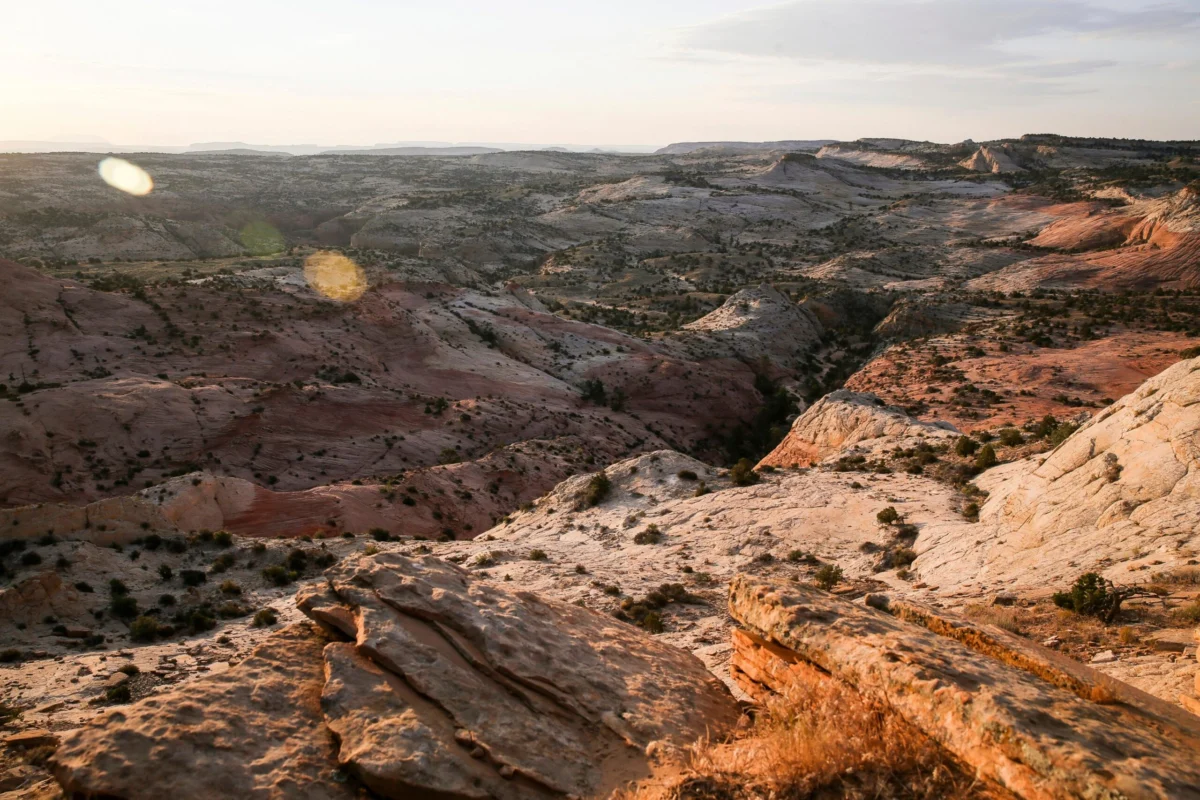
In a move that has reignited one of the most contentious environmental and cultural debates in American history, President Donald Trump has signed executive proclamations to drastically reduce the size of two massive national monuments in southern Utah. The decision effectively strips federal protections from millions of acres of public land, opening the door for potential mining, drilling, and commercial development on landscapes that are considered sacred by several Native American tribes and vital by conservationists.
The action targets the Bears Ears and Grand Staircase-Escalante national monuments, two of the crown jewels of the American West’s "Red Rock" country. By slashing their boundaries by approximately 90%, the Trump administration has signaled a decisive shift in federal land management policy—prioritizing state-level control and industrial utility over the preservationist legacy of his Democratic predecessors.
Main Facts: A Radical Reshaping of Public Lands
The executive orders signed on Monday represent an unprecedented contraction of federal land protection. Under the new proclamations, the combined area of the two monuments will be reduced from more than 3.2 million acres—an expanse nearly the size of the state of Connecticut—to less than 303,000 acres.
Specifically, the Grand Staircase-Escalante National Monument, which previously spanned roughly 1.87 million acres, and the Bears Ears National Monument, which covered 1.36 million acres, have been fragmented into smaller, non-contiguous units. This reduction is even more severe than the cuts Trump implemented during his first term in office.
The move is rooted in the administration’s interpretation of the Antiquities Act of 1906. While the Act allows presidents to designate federal lands as monuments to protect "historic landmarks, historic and prehistoric structures, and other objects of historic or scientific interest," it also specifies that such designations should be confined to the "smallest area compatible" with the proper care and management of the objects to be protected. President Trump and Utah’s Republican leadership argue that previous Democratic administrations ignored this "smallest area" clause, engaging in what they describe as "federal overreach" and "land grabs."
Chronology: A Decades-Long Tug-of-War
The history of these monuments is a timeline of shifting political ideologies and legal battles:
- 1996: The Genesis of Grand Staircase. President Bill Clinton established the Grand Staircase-Escalante National Monument using his authority under the Antiquities Act. The move was met with immediate and fierce local opposition in Utah, as state officials complained they were not consulted before the 1.7-million-acre designation.
- 2016: The Birth of Bears Ears. In the waning days of his administration, President Barack Obama designated 1.35 million acres as Bears Ears National Monument. Unlike previous monuments, this was the first created at the specific request of a coalition of five Native American tribes—the Navajo, Hopi, Zuni, Ute Mountain Ute, and Uintah-Ouray Ute—who sought to protect ancestral burial grounds and archaeological sites from looting and energy development.
- 2017: Trump’s First Intervention. Within his first year in office, President Trump ordered a review of dozens of national monuments. He subsequently signed proclamations to cut Bears Ears by 85% and Grand Staircase-Escalante by nearly half.
- 2021: Biden’s Restoration. Upon taking office, President Joe Biden issued an executive order restoring the original boundaries of both monuments, citing the need to protect cultural heritage and combat the climate crisis.
- 2024–2025: The Current Rollback. Following his re-election, President Trump made the reduction of these monuments a priority of his "energy dominance" agenda, leading to the Monday signing ceremony at the White House.
Supporting Data: Resources, Geography, and the "Smallest Area" Debate
The drive to downsize these monuments is not merely ideological; it is deeply tied to the physical resources located within their original boundaries.
Mineral and Energy Wealth
Grand Staircase-Escalante sits atop the Kaiparowits Plateau, which contains one of the largest coal deposits in the United States. Estimates suggest billions of tons of low-sulfur coal lie beneath the surface, though the economic viability of extracting it remains a subject of debate. Similarly, the original Bears Ears boundary encompasses areas with known uranium deposits, a critical mineral for nuclear energy and national defense.
The Scale of Reduction
The data reveals the sheer scale of the current administration’s rollback:
- Combined Original Size: ~3.23 million acres.
- Combined New Size: ~302,500 acres.
- Total Percentage Lost: Approximately 90.6%.
The Legal Context of the Antiquities Act
Since 1906, the Antiquities Act has been used by 18 presidents to protect hundreds of sites. However, the law is silent on whether a president has the legal authority to reduce or abolish a monument created by a predecessor. This legal gray area has been the foundation of multiple lawsuits. Proponents of the reduction point to the "smallest area" requirement, while opponents argue that only Congress has the power to rescind or significantly alter monument boundaries under the Federal Land Policy and Management Act of 1976.
Official Responses: A Divided Nation
The reactions to the President’s proclamations highlight a profound divide between federal ambitions, state rights, and indigenous sovereignty.
The Trump Administration’s Stance
At the signing event, President Trump framed the move as a victory for the "common man" and local residents. "They took the land from the people quite honestly," Trump said, referring to the Clinton and Obama administrations. "We’re giving it back. You can now use it, you can enjoy it, and you can protect it in your own way." He also claimed, erroneously according to conservationists, that monument status prevented citizens from hunting, fishing, or even walking on the land.
Utah State Leadership
Utah Governor Spencer Cox, a vocal supporter of the reduction, stood alongside the President. "This is a big day for Utah," Cox stated. He argued that the previous "massive" designations hindered the state’s ability to manage its own resources and provide for local economies. Utah officials have long contended that monument status is a "restrictive" designation that bypasses the democratic process.
Tribal Nations and the "Heartbreak" of Erasure
For the Inter-Tribal Coalition, the reduction is viewed as a direct assault on their heritage. Davina Smith-Idjesa, a citizen of the Navajo Nation and co-chair of the Bears Ears Inter-Tribal Coalition, expressed deep grief. "From a Navajo perspective, Bears Ears is not simply a piece of federal public land," she said. "This is a living cultural site that holds our histories, our ceremonies, our traditional foods and medicines and our ancestors’ footprints." She further accused the administration of violating its legal trust responsibility to consult with sovereign tribal nations.
The Democratic and Conservationist Backlash
Democratic lawmakers and environmental groups have vowed to fight the decision in court. Senator Martin Heinrich (D-N.M.) described the action as "another chapter in this administration’s war on the West," accusing Trump of "turning the Antiquities Act on its head." Steve Bloch, legal director for the Southern Utah Wilderness Alliance, noted that the President’s justifications were based on "falsehoods," clarifying that recreation like hunting and fishing were never banned under the monument designations.
Implications: Legal Battles and Environmental Risks
The implications of this decision stretch far beyond the borders of Utah, setting a precedent for the future of all federally protected lands.
The Looming Legal Quagmire
Legal experts anticipate a flurry of lawsuits from tribal nations, environmental NGOs like the Sierra Club and Earthjustice, and potentially Democratic-led states. The central question—whether a president can shrink a monument—may eventually reach the U.S. Supreme Court. A ruling in favor of the Trump administration could jeopardize dozens of other national monuments across the country, making them subject to the whims of changing political administrations.
Environmental and Archaeological Consequences
Conservationists warn that removing protections will lead to habitat fragmentation for species like the desert bighorn sheep and the Mexican spotted owl. Perhaps more critically, the reduction leaves thousands of archaeological sites—including ancient cliff dwellings and petroglyphs—vulnerable to vandalism and looting. Without the specialized management and increased law enforcement presence that comes with monument status, these "outdoor museums" are at significant risk.
Economic Shifts: Tourism vs. Extraction
While the administration argues that mining and drilling will boost local economies, critics point to the booming outdoor recreation industry that has grown around these monuments. Towns like Escalante and Kanab have transitioned from extraction-based economies to tourism hubs. A return to industrial activity could threaten the very scenic beauty that draws millions of visitors and billions of dollars in revenue to the region each year.
The Future of Federal Land Management
This move is part of a broader Republican strategy to reshape the management of the 640 million acres of land owned by the federal government, particularly in the West. By prioritizing "Energy Dominance," the administration is signaling that conservation will take a backseat to resource extraction. As the dust settles on this latest proclamation, the "Red Rock" country of Utah remains the primary battlefield for the soul of the American wilderness.