As humanity stands on the precipice of a new era of deep-space exploration, the prospect of retrieving extraterrestrial samples from the Moon, Mars, and the icy moons of the outer solar system has transitioned from science fiction to a tangible logistical goal. However, this scientific ambition brings with it an unprecedented biological dilemma: How do we bring the cosmos home without risking the integrity of Earth’s own fragile ecosystem?
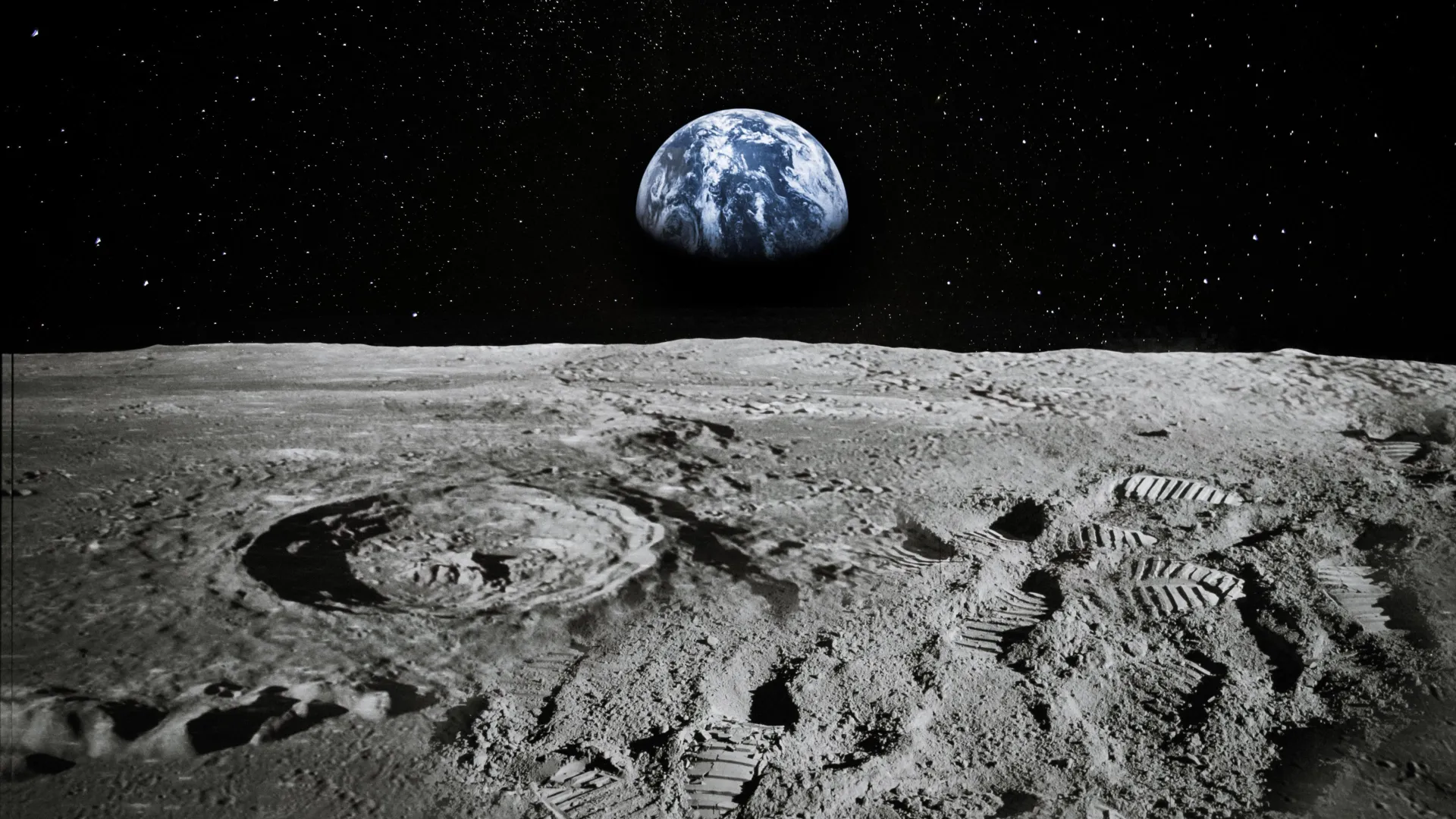
A provocative new policy paper, published in the journal Ambio, argues that the solution lies not on Earth, but on our closest celestial neighbor. The authors propose the construction of a specialized, high-security biocontainment facility on the Moon, designed to act as a permanent "firewall" between Earth and any potentially hazardous biological materials recovered from space.
The Core Proposal: A Lunar Biological Shield
The study, authored by Frederick I. Moxley, Director of Strategic Threat Analysis and Research Laboratories, and Anthony Ricciardi, a James McGill Professor of Biology at McGill University, posits that current planetary protection protocols are woefully outdated. As government agencies and private aerospace giants ramp up missions to return physical samples to Earth, the risk of "biological back-contamination"—the accidental introduction of extraterrestrial organisms—has increased exponentially.
"Humanity is entering a new era of space exploration, but our planetary protection strategies have not kept pace with the risks associated with returning extraterrestrial samples to Earth," Moxley explains. The proposed lunar facility would serve as the primary processing hub for all incoming extraterrestrial matter. Rather than direct transit to Earth-based laboratories, all samples would be routed to this lunar outpost, where they would be subjected to rigorous robotic examination and decontamination processes. By handling these materials entirely via advanced, automated systems in a vacuum-sealed lunar environment, the risk of human exposure—or accidental release into the terrestrial environment—is effectively neutralized.
Chronology of a Shifting Space Paradigm
To understand the urgency of this proposal, one must examine the evolution of space exploration over the last half-century.
The Apollo Era and Initial Caution
During the Apollo missions, NASA employed basic quarantine protocols for astronauts returning from the Moon. While the risk of lunar life was deemed statistically negligible, the agency remained cautious, keeping astronauts in the Mobile Quarantine Facility (MQF) for days. However, these measures were largely symbolic compared to the rigorous standards required for potential samples from Mars or Europa, where the chemical signatures of life are more plausible.
The Modern Gold Rush (2010–2024)
The current decade has seen a radical shift in the space sector. The proliferation of private launch providers, such as SpaceX and Blue Origin, combined with the renewed international focus on the Artemis program, has led to a "crowded" operating environment. Missions are no longer limited to national agencies with strict oversight; the commercialization of space has decentralized the risk profile.
The Call for a Paradigm Shift (2025–Present)
The publication of the Ambio study marks a turning point in policy discourse. The authors argue that the transition from exploratory "flags and footprints" missions to sustained sample-return operations necessitates a "Moon-first" safety strategy. The timeline for this shift is critical; as Mars Sample Return missions approach their operational phase, the window for establishing an off-world containment infrastructure is rapidly closing.
Supporting Data: The Precedent of Invasive Species
The scientific foundation for the authors’ alarm lies in the study of terrestrial ecology. Professor Anthony Ricciardi, a world-renowned expert on biological invasions, notes that the history of Earth’s own ecosystem provides a cautionary tale for the risks of introducing "alien" biology.
Ecological Disruption
"Decades of research on invasive species have demonstrated how an organism introduced to the wrong place at the wrong time can spread uncontrollably with potentially devastating and irreversible long-term impacts on ecosystems," Ricciardi states. The introduction of non-native species—ranging from the cane toad in Australia to zebra mussels in North American waterways—shows that even microscopic organisms can trigger total ecological collapse when they enter an environment without natural predators or checks.
The "Unknown Unknowns"
The primary concern regarding extraterrestrial life is not necessarily that it would be "hostile" in a cinematic sense, but that it would be fundamentally incompatible with Earth’s biological norms. If an extraterrestrial microorganism were to integrate into Earth’s nutrient cycles or interact with terrestrial microbes, the results could be catastrophic. Because Earth’s biosphere has evolved in total isolation from the rest of the solar system for billions of years, it lacks any evolved immune response to non-terrestrial biological entities.
Official Responses and Scientific Skepticism
The proposal for a lunar base has sparked intense debate within the scientific community and among policy experts at space agencies like NASA and the European Space Agency (ESA).
The Agency Perspective
While NASA maintains strict Planetary Protection protocols (managed by the Office of Planetary Protection), the prospect of building a full-scale containment facility on the Moon is seen by many as a massive financial and logistical burden. Critics argue that existing Earth-based BSL-4 (Biosafety Level 4) laboratories are already equipped to handle the world’s most dangerous pathogens. However, the Ambio authors contend that these facilities are designed for known terrestrial viruses, not the potentially radically different biochemistry of an alien organism.
The Logistical Challenge
Critics also point to the high cost of maintaining a robotic, high-security lab on the lunar surface. The energy requirements, the need for constant maintenance of automated systems, and the difficulty of transmitting high-resolution data back to Earth create a significant barrier to entry. "A lunar facility would be the most expensive research station ever constructed," says one anonymous policy advisor. "The question is whether the risk justifies the cost, or if we should focus on perfecting containment on Earth."
Implications for Future Exploration
The debate over the "Lunar Firewall" touches on the fundamental ethics of human expansion into the stars. If we decide that the risk is too high to bring samples to Earth, does that effectively end our ability to study them in detail?
The Technological Leap
Implementing a lunar-based quarantine would require a quantum leap in robotics. If we are to rely on machines to examine extraterrestrial life, we must develop AI capable of identifying and characterizing life forms that do not resemble DNA-based organisms. This would push the boundaries of astrobiology and robotics simultaneously, potentially accelerating the development of technologies that would be beneficial for other missions.
Global Cooperation
The scale of this project implies a necessity for international cooperation. No single nation possesses the resources to build and secure a lunar containment facility in isolation. Such an endeavor would require a "Global Space Accord," setting aside geopolitical competition in favor of planetary safety. This could, in theory, foster a new era of diplomacy, where the protection of Earth’s biosphere becomes the unifying goal of all space-faring nations.
The Existential Calculus
Ultimately, the proposal forces us to weigh the existential value of discovery against the existential risk of contamination. If we discover life on Mars, the desire to bring that life to Earth for study will be overwhelming. However, if that sample contains a pathogen capable of outcompeting terrestrial life, the decision to bring it home could be the last mistake humanity ever makes.
Conclusion: The Moon as Earth’s Guardian
The Ambio paper is not merely a technical proposal; it is a wake-up call. It suggests that our future as a multi-planetary species must be predicated on the understanding that we are the stewards of Earth’s biological legacy. The Moon, once considered a dead, desolate rock, may well become the most vital piece of real estate in the solar system—not for its minerals or its strategic position, but for its role as a biological buffer.
As we look toward the return of the first samples from the Martian surface, the proposal for a lunar biocontainment facility serves as a stark reminder: exploration is not just about moving forward; it is about ensuring that what we bring back does not destroy what we have. By treating the Moon as our first line of defense, we acknowledge that while we are eager to reach for the stars, we must be careful not to let the stars reach back and dismantle the very world that gave us the tools to explore them. The lunar firewall may be the most important infrastructure project in the history of the human race—a small step for the Moon, but a necessary safeguard for the survival of Earth.