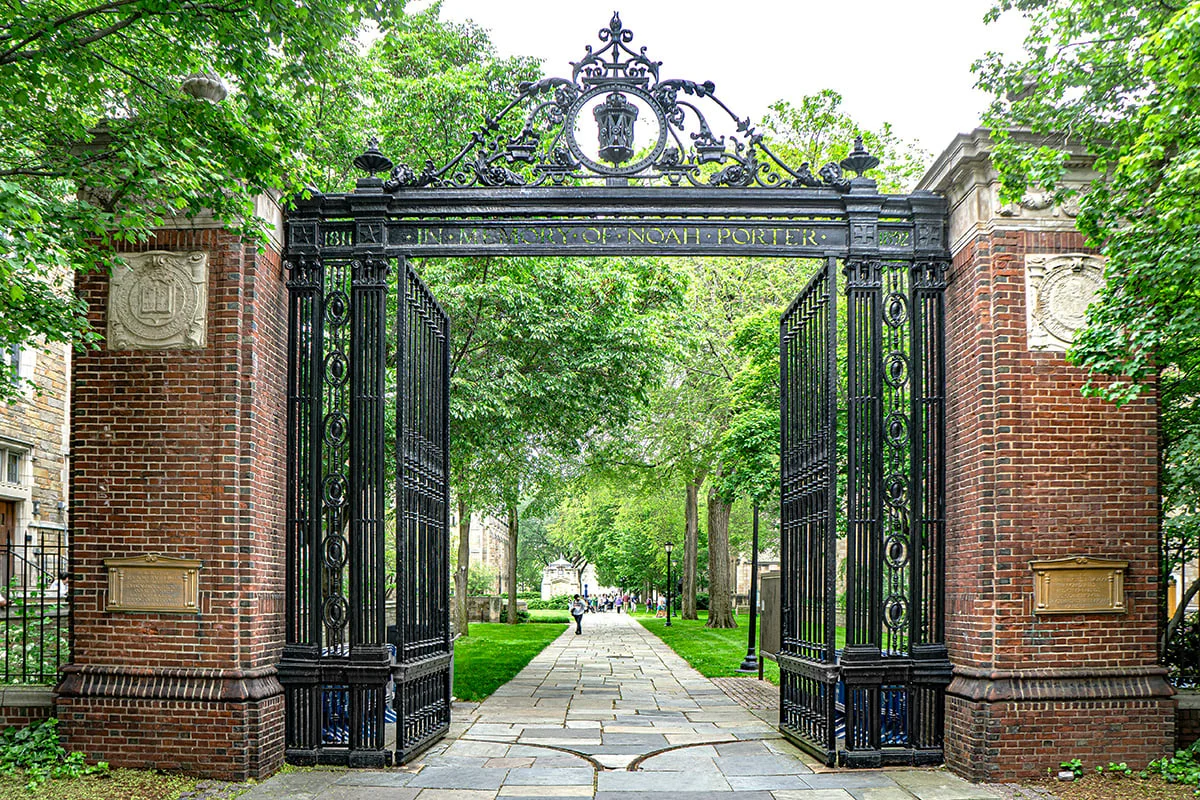
The hallowed halls of Yale University, long considered a bastion of intellectual inquiry and academic independence, have become the latest frontline in a high-stakes struggle between elite higher education and the federal government. As the U.S. Department of Justice (DOJ) intensifies its investigation into Yale’s admissions practices—specifically targeting alleged discrimination against white and Asian applicants—a growing coalition of students, faculty, and alumni is demanding that the university leadership resist the urge to settle, characterizing the federal inquiry as a campaign of political intimidation.
At the heart of the controversy is a fundamental disagreement over the role of race in admissions and the extent of federal authority over institutional autonomy. As Yale navigates this legal and political minefield, the university’s decision will likely set a precedent for how higher education institutions across the United States respond to government oversight in an era of heightened political scrutiny.
The Chronology of Confrontation
The tension between the Trump administration and elite universities has been simmering for over a year and a half. Since late 2024, the DOJ has launched a series of investigations into dozens of institutions, probing whether their admissions policies violate civil rights laws in the wake of the Supreme Court’s landmark ruling in Students for Fair Admissions (SFFA) v. Harvard. That decision effectively ended the use of race-conscious admissions, forcing universities to pivot toward race-neutral holistic review processes.
The DOJ’s scrutiny of Yale, however, has proven particularly aggressive. In May 2026, the department issued a six-page letter alleging that the Yale School of Medicine had continued to discriminate in favor of Black and Hispanic applicants, even after the Supreme Court’s prohibition. The DOJ’s findings were primarily based on a comparative analysis of standardized test scores and grade point averages, suggesting that the university was maintaining "preferred" racial categories through its evaluation metrics.
As the investigation expanded to include Yale’s law school and undergraduate college, the university’s administrative response signaled a potential pivot toward negotiation. The New York Times reported that Yale had retained McGuireWoods—the same law firm that facilitated a settlement for the University of Virginia (UVA) with the Justice Department last year. For many in the Yale community, this move was not seen as a routine legal precaution, but as a precursor to capitulation.
Analyzing the DOJ’s Factual Basis
The core of the government’s argument against Yale rests on a statistical comparison of admitted students. The DOJ noted that for the 2025 entering class at the School of Medicine, white and Asian students matriculated with median test scores in the 100th percentile. In contrast, Black and Hispanic students possessed scores in the 95th and 94th percentiles, respectively. The government views this delta as evidence of a systemic preference that bypasses the constitutional mandate for colorblind admissions.
However, critics of the DOJ’s investigation argue that these findings are intellectually dishonest and statistically insufficient. Legal experts representing the Yale chapter of the American Association of University Professors (AAUP) have characterized the government’s evidence as "cherry-picked" and "statistically weak."
"The DOJ’s factual findings are bogus," the law firm Sher Tremonte LLP stated in a recent missive to Yale President Maurie McInnis. They argue that the government has failed to provide necessary context, such as the qualitative assessments used in holistic review processes—including leadership experience, socioeconomic background, and distance traveled—which have historically allowed elite institutions to build diverse, high-achieving cohorts. By focusing exclusively on numerical percentiles, critics contend the DOJ is stripping away the nuance required for elite academic selection.
Official Responses and the Push for Resistance
The atmosphere on the New Haven campus has become increasingly combative. An online petition, which has garnered more than 4,000 signatures from students, faculty, and alumni, calls on the Yale administration to stand firm against what it labels a "politically-motivated" inquiry.
"This is not civil rights enforcement," the petition states. "This is an effort to chill lawful efforts to build a diverse academic community, to undermine Yale’s academic independence, and to intimidate every institution watching this spectacle."

On Tuesday, the AAUP and the American Federation of Teachers (AFT) issued a joint letter to President McInnis and the Board of Trustees, elevating the stakes from a legal dispute to a defense of academic freedom. The letter urged the administration to recognize that the choice before them is not merely about settling a specific case, but about participating in a "broader campaign to turn civil rights enforcement into a mechanism of political control over higher education."
Muneer Ahmad, a law professor and general counsel for the Yale AAUP, reinforced this stance during a press briefing on Thursday. He challenged the DOJ’s leverage, noting that even if the government were to prevail in a legal challenge, their punitive power is legally restricted. "At most, they could withdraw funds that are related to the admissions office and not withdraw funds from the university as a whole," Ahmad noted. He warned that if Yale chooses to settle rather than litigate, the university’s own chapter of the AAUP is prepared to initiate its own legal action.
Implications for Higher Education
Yale’s predicament serves as a microcosm for the broader challenges facing American universities. The "settlement culture" that has emerged—seen in the actions of Columbia, the University of Pennsylvania, and Brown—has left many observers concerned that higher education is losing its nerve. By opting for settlements, these institutions have avoided the volatility of public litigation but have also, according to critics, legitimized the government’s aggressive interpretation of civil rights law.
The Erosion of Institutional Autonomy
The primary fear among faculty is that a settlement would create a binding precedent that limits how Yale and other institutions define "merit." If the government successfully dictates that admissions must strictly adhere to standardized test percentiles, the traditional model of holistic review—the bedrock of American elite education—could be effectively dismantled.
The Political Climate
The investigation is occurring against a backdrop of intense national polarization. Many academics view the DOJ’s focus on elite universities as a populist attempt to delegitimize institutions that are often perceived as hubs of progressive ideology. By framing admissions policies as "discriminatory" against specific groups, the administration creates a narrative that resonates with a base critical of affirmative action and institutional elitism.
The Future of Public Trust
As Professor Ahmad noted, "For Yale to cave in the face of baseless factual allegations and unfounded legal claims risks further erosion of public trust in Yale and in higher education at large." The argument is that silence or compliance in the face of what the university deems "baseless" will not satisfy the government, but will instead embolden further intrusions into faculty governance and curriculum development.
Conclusion: A Test of Institutional Resolve
Yale University now faces an inflection point. The university must weigh the pragmatic risks of a prolonged, expensive, and potentially damaging legal battle against the existential risk of surrendering its autonomy to federal oversight.
If Yale chooses to settle, it will likely gain short-term regulatory peace at the cost of its reputation among a significant portion of its academic community. If it chooses to fight, it risks a direct confrontation with the executive branch, potentially jeopardizing federal research funding and inviting years of litigation.
The eyes of the academic world remain fixed on New Haven. Whether Yale emerges as a defender of the traditional, holistic academic ideal or as the latest institution to bow to the pressures of federal oversight will be determined in the coming months. For now, the sentiment among a large contingent of its stakeholders is clear: the university’s independence is not a commodity to be traded for a quiet resolution. The fight, they argue, is not just for Yale, but for the very future of independent inquiry in the United States.