In a move that signals a significant evolution in India’s industrial landscape, the Indian government has officially approved a manufacturing joint venture between Chinese smartphone giant Vivo and the homegrown electronics powerhouse, Dixon Technologies. This strategic partnership, which received the green light on Thursday, is poised to become a litmus test for how global technology firms navigate the increasingly complex intersection of international geopolitics and India’s domestic "Make in India" initiative.
The approval, which follows a period of rigorous scrutiny under the Press Note 3 (2020) investment regulations, marks the end of a long-delayed process first set in motion in December 2024. By establishing a structure where Dixon holds a majority 51% stake and Vivo retains 49%, the venture provides a blueprint for how Chinese brands—which have historically dominated the Indian consumer market—can harmonize with New Delhi’s push for increased local control and value addition.
The Core Facts: A Strategic Pivot
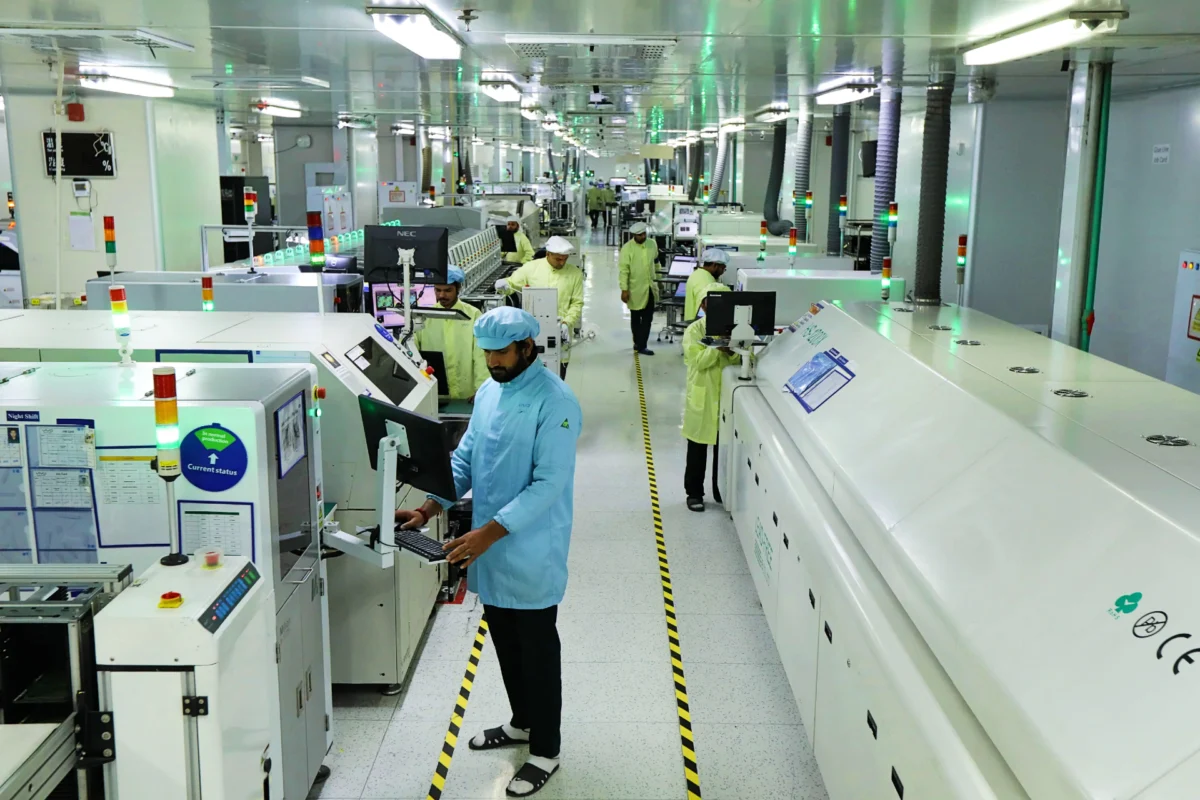
The joint venture is more than a simple assembly agreement; it is a structural realignment of supply chain responsibilities. Under the terms of the agreement, the new entity will acquire specific manufacturing assets from Vivo India. Beyond simply churning out Vivo-branded smartphones, the facility is empowered to manufacture electronic products for other brands, effectively positioning the venture as a scalable contract manufacturing hub.
For Dixon Technologies, the Noida-based electronics manufacturing services (EMS) giant, this deal is a major win. Managing Director Atul Lall has indicated that the partnership could add an annualized manufacturing volume of approximately 20 million to 22 million units. Given that Vivo remains the market leader in India—commanding a 23% shipment share as of the first quarter—this influx of production volume is expected to significantly bolster Dixon’s top-line growth and solidify its status as the premier partner for both domestic and international electronics companies.
Chronology: From Stagnation to Strategic Alignment
The journey to this approval reflects the broader cooling of economic relations between India and China since 2020.
- June 2020: Following border skirmishes, the Indian government amended its Foreign Direct Investment (FDI) policy. The new rules mandated that any investment from countries sharing a land border with India must receive prior government clearance.
- 2021–2023: During this period, several Chinese firms, including Xiaomi, Oppo, and Vivo, faced heightened regulatory pressure, including tax investigations and inquiries into financial remittances. These headwinds made it increasingly difficult for these firms to operate with the same autonomy they enjoyed in the previous decade.
- December 2024: Vivo and Dixon officially announced their intent to form a joint venture, acknowledging that a partnership with a local player was the most viable route to clearing regulatory hurdles.
- Early 2025: Throughout the initial months of the year, government authorities conducted an exhaustive review of the proposed structure, focusing on security implications and the potential for domestic capacity building.
- March 2025: The final approval is granted, clearing the path for the integration of assets and the start of large-scale production.
Supporting Data: The Manufacturing Gap
India’s emergence as a global manufacturing hub has been undeniably spurred by Apple. According to recent industry reports, Apple now produces one in four iPhones in India, and the company is responsible for 57% of the nation’s total smartphone exports by volume.
The contrast between the "Apple model" and the "Chinese brand model" is stark:
- Market Share: Chinese smartphone brands collectively hold a 72% share of the Indian domestic market.
- Export Contribution: Despite their market dominance, these same brands contribute less than 10% to India’s total smartphone exports.
This massive delta—72% market presence versus 10% export contribution—highlights the "upside on the table." The Indian government is clearly signaling that it expects foreign players to move beyond just selling to Indian consumers and start utilizing the country as a global export base, mirroring the strategy Apple has successfully executed through partners like Foxconn and the Tata Group.
Official Perspectives and Industry Analysis
Tarun Pathak, Research Director at Counterpoint Research, describes the approval as a "win-win" scenario. In an interview with TechCrunch, Pathak emphasized that the 51/49 ownership structure is the "new normal."
"The approval of this joint venture creates a win-win for both players," Pathak noted. "The majority-Indian-owned structure provides Vivo with greater policy alignment and a more stable operating environment, while simultaneously giving Dixon the scale to deepen local value addition and pursue international export markets."
From the government’s perspective, this deal validates its policy of "controlled engagement." By allowing Chinese technology, capital, and expertise to enter the ecosystem—provided it is filtered through an Indian-majority controlled entity—the government is ensuring that the intellectual property and manufacturing benefits remain anchored within the country.
Implications for the Future
The Vivo-Dixon partnership is expected to have far-reaching implications for the electronics sector:
1. A New Template for Market Access
Industry analysts believe this deal will serve as a template for other firms currently under regulatory pressure. By ceding majority control to an Indian partner, foreign companies can mitigate the risks associated with the 2020 FDI regulations, effectively trading autonomy for operational sustainability.
2. Deepening the Supply Chain
The focus is no longer just on "assembly" (SKD – Semi Knocked Down). The government is pushing for deeper "localization" of components. As Dixon expands its manufacturing capacity, it is expected to leverage its scale to bring in secondary suppliers—companies that manufacture camera modules, batteries, and printed circuit boards (PCBs)—further reducing dependence on imports from China.
3. Broadening the "Make in India" Narrative
While Apple has put India on the map for high-end, premium smartphone manufacturing, the Vivo-Dixon deal expands the story to include the mid-range and budget segments. This is crucial for India’s economic goals, as these segments account for the highest volume of consumption globally. If the Vivo-Dixon venture succeeds in exporting millions of devices annually, it would prove that India can compete in the global market across all price tiers, not just the premium segment.
4. Regulatory De-escalation
For Chinese firms, this model offers a path to normalization. Companies like Xiaomi and Oppo, which have previously faced significant scrutiny, are closely watching the implementation of this joint venture. If it succeeds, it could lead to a thawing of relations between these firms and Indian regulators, provided the partnerships remain transparent and adhere to the "Indian-majority" spirit of the law.
Conclusion
The approval of the Vivo-Dixon joint venture marks a turning point for India’s smartphone industry. It signifies the maturity of the Indian manufacturing ecosystem—a transition from a phase of simple inward-looking assembly to a more sophisticated, globally integrated production model.
While geopolitical tensions remain a backdrop to these developments, the pragmatic approach taken by both the Indian government and the corporate sector suggests a future where economic synergy takes precedence. As Dixon ramps up production and Vivo recalibrates its Indian operations, the world will be watching to see if this partnership can truly transform the "Make in India" slogan into a dominant force in the global smartphone export market.
For the Indian consumer, this likely means more stable supply chains and, potentially, more competitive pricing. For the industry, it is a clear signal: to thrive in India’s next decade of growth, global players must embrace local partnership, transparency, and a commitment to transforming India into a global manufacturing export powerhouse.