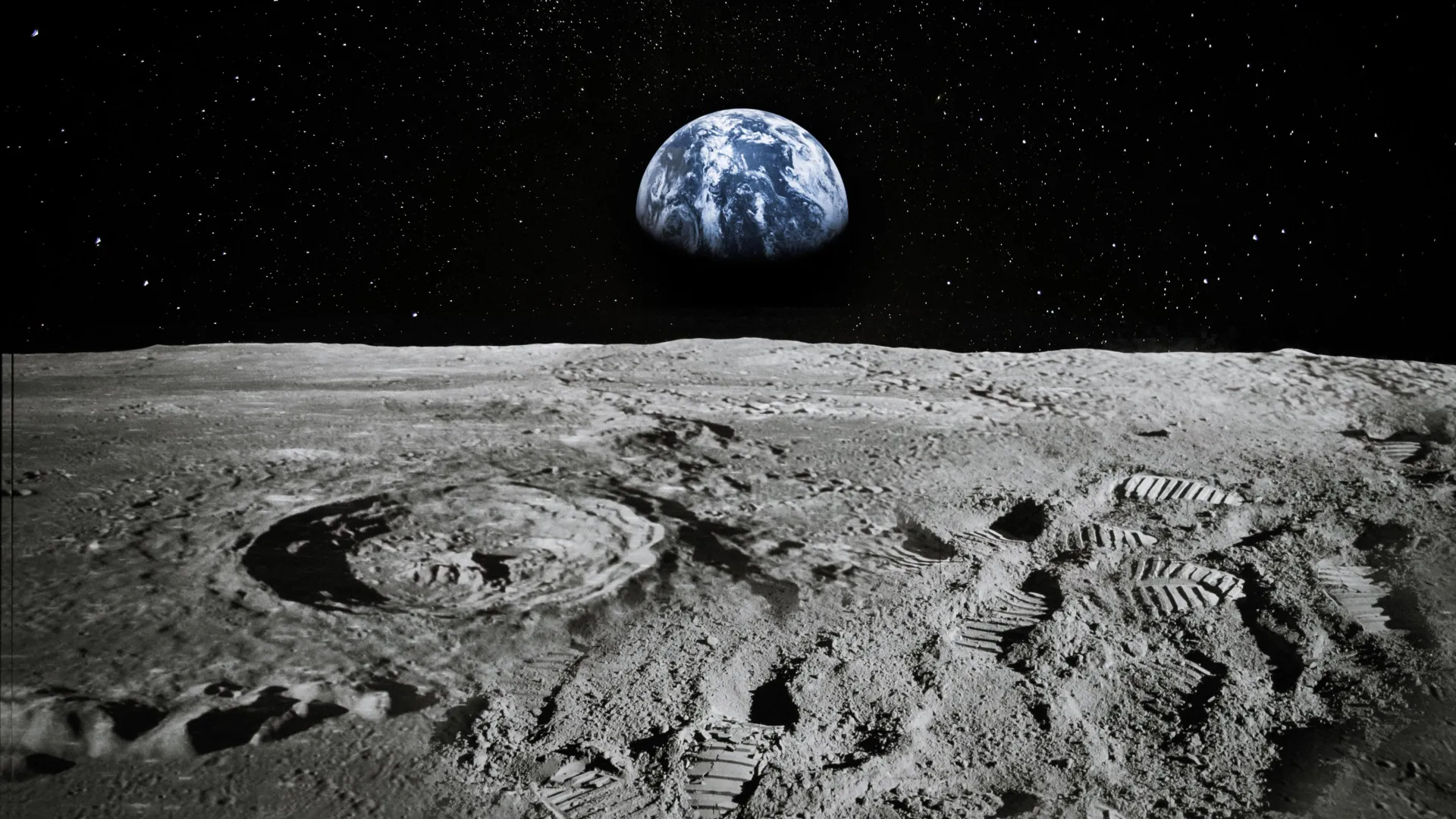
As humanity stands on the precipice of a new, ambitious era of deep-space exploration, the scientific community is confronting an age-old question with renewed urgency: What if we find life, and what if that life poses a threat to our own? A provocative new policy paper, published in the journal Ambio, argues that the solution to protecting Earth from potential extraterrestrial pathogens may lie not on our own soil, but on the surface of the moon.
The study, co-authored by Frederick I. Moxley of the Strategic Threat Analysis and Research Laboratories and Anthony Ricciardi of McGill University, advocates for the construction of a specialized, roboticized biocontainment facility on the lunar surface. This base would serve as a high-security “firewall,” intercepting samples—and potentially human explorers—returning from Mars, the moon, and beyond, before they ever make contact with Earth’s fragile ecosystem.
The Main Facts: A Paradigm Shift in Planetary Protection
The core proposal is both simple and daunting: move the “first line of defense” for Earth’s biosphere off-planet. Current planetary protection protocols, largely established during the Apollo era, were designed for an age of infrequent, state-led missions. However, the current landscape of space exploration is characterized by a rapid influx of private aerospace companies, international government agencies, and increasingly complex mission architectures.
The Lunar Quarantine Proposal
Under the Moxley-Ricciardi framework, all geological and biological samples harvested from extraterrestrial environments would be diverted to a lunar-based facility. This facility would operate under the following mandates:
- Total Isolation: No sample, regardless of origin, would be cleared for transport to Earth until it has undergone rigorous, multi-stage decontamination and analysis.
- Robotic Autonomy: To eliminate the risk of human error or accidental exposure, the entire handling process would be conducted by advanced, AI-driven robotic systems within hermetically sealed, high-containment laboratories.
- The Firewall Principle: The facility would act as an orbital gatekeeper, ensuring that any “bio-hazard potential” is identified, neutralized, or permanently stored off-world.
Chronology: From Apollo to the New Space Race
To understand the necessity of this proposal, one must look at the evolution of planetary protection, a discipline that has historically oscillated between extreme caution and pragmatic optimism.
The Apollo Era (1969–1972)
When the Apollo 11 astronauts returned to Earth, they were placed in a Mobile Quarantine Facility (MQF) on the deck of the recovery ship. While this was largely a theatrical show of caution for the public, it represented the first institutional attempt to mitigate the risk of “back-contamination.”
The Mars Sample Return (MSR) Ambition (2000s–Present)
As NASA and the European Space Agency (ESA) began planning for a Mars Sample Return mission, the debate over biosafety moved from the theoretical to the engineering phase. Scientists realized that a simple quarantine container might not be enough to prevent a microscopic breach if a crash occurred during re-entry into Earth’s atmosphere.
The Commercialization Explosion (2020–Present)
The rise of companies like SpaceX, Blue Origin, and various international lunar programs has fundamentally changed the risk profile. With multiple launch sites and varying levels of regulatory oversight, the centralized, state-controlled planetary protection strategies of the 20th century are now viewed by many experts as insufficient. The Ambio study is a direct response to this rapid, uncoordinated expansion.
Supporting Data: The Precedent of Invasive Species
One of the most compelling arguments presented by Professor Anthony Ricciardi—a renowned expert on biological invasions—is rooted in terrestrial history. Ricciardi argues that we do not need to look at alien biology to understand the risks of biological introduction; we only need to look at our own planet’s history of ecological catastrophe.
The Ecology of Risk
"Decades of research on invasive species have demonstrated how an organism introduced to the wrong place at the wrong time can spread uncontrollably," Ricciardi notes. The study highlights several key data points:
- Irreversibility: Once a non-native, opportunistic organism establishes a foothold in a new ecosystem, the rate of successful eradication is near zero.
- Unpredictable Interaction: Alien biology might thrive in Earth’s environment in ways that are currently impossible to model. Even if an extraterrestrial life form is not “pathogenic” in the traditional sense, it could act as a competitor, a parasite, or a disruptor of foundational microbial processes, leading to the collapse of local food webs.
- The “Unknown Unknowns”: Unlike terrestrial invasive species, we have zero genetic or evolutionary data on potential extraterrestrial organisms. This lack of data makes the "precautionary approach" the only scientifically responsible path forward.
Official Responses and Scientific Skepticism
The proposal has ignited a fierce debate within the planetary science community. While few experts deny the theoretical risk, the logistical and financial hurdles are monumental.
The NASA/ESA Perspective
Current official policies, such as those from the Committee on Space Research (COSPAR), focus on “containment upon arrival.” Agencies are currently developing high-security laboratories on Earth—designed to be the most secure facilities in existence—to receive Mars samples. Moving this facility to the moon would add tens of billions of dollars to the cost of any mission, potentially delaying sample return by decades.
The Industry Counter-Argument
Private aerospace advocates argue that the moon is a harsh, unpredictable environment. Powering a state-of-the-art, high-containment biological laboratory on the lunar surface requires a level of infrastructure that does not yet exist. Some critics argue that building a lunar facility might actually increase the risk, as the logistical complexity of maintaining a base in the lunar vacuum creates more points of failure than a terrestrial lab would.
Implications: A New Era of Responsibility
The implications of the Moxley-Ricciardi paper extend far beyond the technicalities of laboratory design. They touch on the philosophical, legal, and ethical frameworks of human expansion into the cosmos.
The Ethical Imperative
The authors argue that discovering life—or even just evidence of past life—would be the greatest discovery in human history. However, they caution that our curiosity must not override our duty of care to the Earth. If we were to accidentally introduce a foreign microbe, the consequences could be catastrophic for the human race and the global ecosystem.
The Legal Framework
Current international law, particularly the Outer Space Treaty, requires countries to avoid “harmful contamination” of space, but it is notoriously vague regarding the protection of Earth itself from extraterrestrial contamination. The proposal for a lunar base could serve as a catalyst for a new “Lunar Biosecurity Treaty,” establishing international standards for how extraterrestrial materials must be handled before they are cleared for terrestrial transit.
A Long-Term Vision for Lunar Infrastructure
If adopted, this policy would transform the moon into more than just a refueling station or a base for exploration. It would become a guardian, a necessary checkpoint for a civilization that is finally leaving its cradle. The moon would be, in the words of the authors, “humanity’s first line of biological defense.”
Conclusion: The Path Forward
As the Artemis missions draw closer to landing humans back on the moon, and as plans for Mars missions transition from drawings to hardware, the window for implementing a comprehensive biosafety strategy is narrowing. The proposal for a lunar biocontainment facility may seem extreme, but as history has shown, when it comes to the preservation of an entire planet, extreme caution is often the most pragmatic choice.
Whether or not the international community moves to build this lunar firewall, the Ambio study has succeeded in forcing a critical conversation. It forces us to acknowledge that in the rush to explore the stars, we must not forget the biological integrity of the only home we have ever known. The next great era of discovery will be defined not just by how far we can go, but by how safely we can return.