Date: July 6, 2026
Report by: International Desk
As Europe grapples with yet another summer of unprecedented meteorological volatility, a quiet industrial revolution has taken hold across the continent. With temperatures consistently breaching the 40°C threshold in regions once considered temperate, European households and businesses have turned en masse to a singular solution to survive the "new normal": Chinese-manufactured air conditioning units.
What was once viewed as a luxury item—or even an environmental faux pas—in Northern and Western Europe has rapidly transitioned into an essential piece of critical infrastructure. As the latest heatwave looms over the continent, the dominance of Chinese firms in the HVAC (Heating, Ventilation, and Air Conditioning) market has become a defining feature of Europe’s climate adaptation strategy.
The Main Facts: A Market Transformation
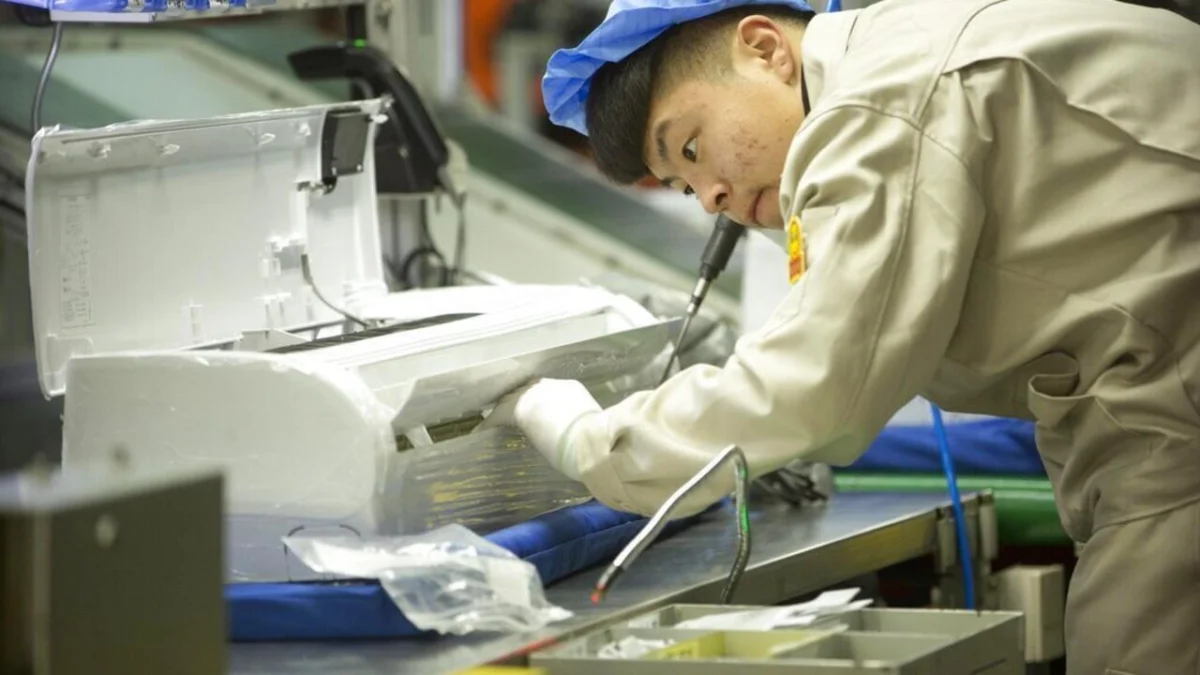
The shift in consumer behavior is staggering. Industry analysts report that imports of air conditioning systems from China have surged by nearly 140% over the last three years. Leading Chinese manufacturers—such as Midea, Gree, and Haier—have effectively cornered the European market, leveraging economies of scale, aggressive pricing, and a rapid pivot toward energy-efficient inverter technology.
For decades, the European air conditioning market was fragmented, dominated by high-end Japanese brands or specialized local players. However, as the frequency of heatwaves increased, the demand for affordable, readily available cooling solutions skyrocketed. Chinese manufacturers, already masters of the global supply chain, filled the void with remarkable speed, providing units that are not only cost-effective but also increasingly compliant with stringent EU eco-design regulations.
Chronology: From Luxury to Necessity
The Pre-2020 Context: The "Non-Essential" Era
Prior to the start of this decade, air conditioning in many parts of Northern Europe was largely restricted to commercial office buildings and high-end hotels. Residential cooling was viewed as unnecessary, and many European building codes actively discouraged the installation of units due to energy consumption concerns.
2021–2023: The Awakening
The record-breaking heatwaves of 2021 and 2022 served as a wake-up call for the continent. The "heat-death" of thousands of vulnerable citizens, particularly in France, Spain, and Italy, forced a policy rethink. By the summer of 2023, the surge in consumer demand began to outstrip the inventory capacity of traditional European retailers. This was the moment Chinese firms accelerated their European expansion, utilizing localized distribution networks and e-commerce platforms to bypass traditional retail bottlenecks.
2024–2026: The Normalization of Cooling
By early 2026, the installation of AC units became a standard feature in property renovations across the UK, Germany, and the Benelux countries. The market has moved from "emergency purchase" to "integrated climate control," with Chinese brands now accounting for an estimated 65% of the total units sold in the EU market during the current quarter.
Supporting Data: The Scale of the Surge
The economic and technical data supporting this shift paints a clear picture of a continent in transition.
- Import Volume: According to recent trade data, Chinese exports of AC units to the EU reached a record high in May 2026, totaling over 4.2 million units for the first five months of the year.
- Energy Efficiency Metrics: Contrary to the popular belief that imported units are energy-inefficient, the latest generation of Chinese ACs arriving in Europe boasts SEER (Seasonal Energy Efficiency Ratio) ratings that frequently outperform older legacy units installed in the early 2000s.
- Market Share: While European manufacturers struggle with high production costs and supply chain constraints, Chinese entities have managed to maintain a price point roughly 30–40% lower than their domestic competitors, even after accounting for import tariffs and shipping.
- Demographic Shift: Survey data indicates that the highest adoption rates are among middle-income families, who previously relied on portable fans—a segment that has seen its market share collapse as split-system, wall-mounted units become more affordable.
Official Responses and Regulatory Tensions
The rapid influx of Chinese technology has prompted a complex response from European policymakers.

The Brussels Dilemma
The European Commission is currently caught between two competing priorities: public health and industrial protectionism. On one hand, the health imperative is clear—heat-related mortality is a growing drain on public healthcare systems. On the other, the European Union’s commitment to "Strategic Autonomy" makes officials uncomfortable with the continent’s total reliance on a foreign power for a technology now deemed "critical infrastructure."
"We are witnessing a paradox," says Dr. Elena Rossi, an energy policy researcher. "We need the cooling to survive the summers, but by importing millions of units from a single geopolitical bloc, we are creating a new form of energy-infrastructure dependency."
Industry Skepticism
European manufacturers, represented by trade groups like the European Heat Pump Association (EHPA), have called for greater subsidies to support domestic innovation. They argue that while Chinese units are currently meeting the demand, they may not be as easily integrated into the "Smart Grid" systems that Europe is developing to manage renewable energy loads.
Implications: The Long-Term Impact
The reliance on Chinese ACs has far-reaching implications for Europe’s future, spanning from grid stability to social inequality.
1. The Energy Grid Challenge
The sudden, massive adoption of air conditioning puts an unprecedented strain on Europe’s aging electrical grids. As millions of units turn on simultaneously during a heat spike, grid operators in countries like Germany and France are struggling to prevent blackouts. This has accelerated the need for "smart-grid" technology, where AC units are programmed to communicate with the grid to throttle energy consumption during peak demand hours.
2. The Socio-Economic Divide
While AC units are becoming more affordable, they remain a barrier for lower-income households, particularly those living in older, poorly insulated social housing. This has led to the emergence of "cooling poverty," where the gap between those who can afford a comfortable indoor environment and those who cannot is widening. Activists are now lobbying for government subsidies to treat air conditioning as a basic utility, similar to heating in the winter.
3. Urban Heat Islands and Environmental Impacts
Critics argue that while ACs cool the interior of a home, they expel heat into the outdoor environment, exacerbating the "urban heat island" effect. This creates a negative feedback loop: the hotter the city gets, the more people run their ACs, which in turn makes the city hotter. Urban planners are now being forced to rethink city designs, incorporating more green spaces and reflective materials to mitigate this cycle.
4. Geopolitical Vulnerability
Finally, the reliance on Chinese manufacturing for a essential climate-adaptation technology introduces a new geopolitical risk. Should trade tensions escalate between the EU and China, the supply of replacement parts or software updates for millions of households could be leveraged as a diplomatic tool. Brussels is already looking into incentivizing "near-shoring" or "friend-shoring" of HVAC manufacturing to mitigate this risk by the end of the decade.
Conclusion: A Cool Future with Hot Challenges
As the summer of 2026 intensifies, the image of a European home is changing. The once-standard radiator, a symbol of the continent’s battle against the cold, now sits alongside the sleek, white wall-mounted AC unit—a symbol of the battle against the heat.
Europe’s rapid embrace of Chinese air conditioning is a testament to the urgency of climate change. It is a pragmatic, immediate response to an existential threat. However, as the continent adapts to these warmer realities, it must also grapple with the complex web of dependency, grid instability, and social equity that this technological shift has wrought. The "cool revolution" has arrived, but maintaining that cool will require far more than just importing hardware; it will require a fundamental redesign of how Europe powers, houses, and protects its citizens in an increasingly volatile world.