The automotive landscape in the United States is currently undergoing a period of profound recalibration. As the industry navigates the transition toward electrification, General Motors (GM)—long a bellwether for the American automotive sector—has released its sales figures for the second quarter (Q2) of 2026. The report paints a complex picture: while the company maintains its position as the top automaker by volume in the U.S. market, it is simultaneously grappling with an industry-wide slowdown in electric vehicle (EV) adoption and a tightening consumer market.
For the second quarter of 2026, General Motors reported total sales of 714,896 vehicles. While this figure secures the Detroit-based manufacturer’s status as the leading domestic automaker, it represents a 4.2 percent decline compared to the same period in 2025, during which the company delivered 746,588 units. Looking at the first half of 2026 in totality, the trend remains consistent: GM has delivered 1,341,325 vehicles year-to-date, a 6.8 percent contraction from the 1,439,951 units recorded during the first six months of 2025.
A Chronological Shift in Momentum
To understand the current state of General Motors, one must examine the timeline of these developments. The first half of 2025 was defined by a specific set of market conditions, including the availability of robust federal incentives that effectively subsidized the entry price for many consumers looking to transition from internal combustion engines to battery-electric vehicles.
The landscape shifted dramatically following the expiration of the $7,500 federal EV tax credit. This policy sunset served as a catalyst for a cooling effect across the entire EV segment. As the artificial price support vanished, the market revealed a stark reality: demand for many electric models was more price-sensitive than manufacturers had anticipated. Throughout late 2025 and into the first half of 2026, the absence of these incentives left a void, particularly for entry-level and mid-range electric vehicles that previously relied on credit-assisted affordability to compete with traditional gas-powered counterparts.
By the second quarter of 2026, the cumulative impact of these economic headwinds became undeniable. While legacy internal combustion engine (ICE) vehicles continue to provide a floor for GM’s volume, the company’s aggressive push into electrification has met a wall of market resistance, resulting in the year-over-year declines now visible in the quarterly ledger.
Dissecting the Data: The EV Portfolio Breakdown
The core of GM’s current narrative lies in its electric vehicle lineup, which currently comprises 11 distinct models, including the legacy BrightDrop commercial van operations. A granular analysis of the sales data reveals a highly bifurcated performance.
Performance Table: Q2 2026 vs. Q2 2025
| Model | 2026 Sales | 2025 Sales | % Change |
|---|---|---|---|
| Cadillac Escalade IQ/IQL | 3,203 | 3,766 | -14.9% |
| Cadillac Lyriq | 7,578 | 9,317 | -18.7% |
| Cadillac Optiq | 7,083 | 4,940 | +43.4% |
| Cadillac Vistiq | 3,903 | 1,745 | +123.7% |
| Chevrolet Blazer EV | 3,166 | 12,736 | -75.1% |
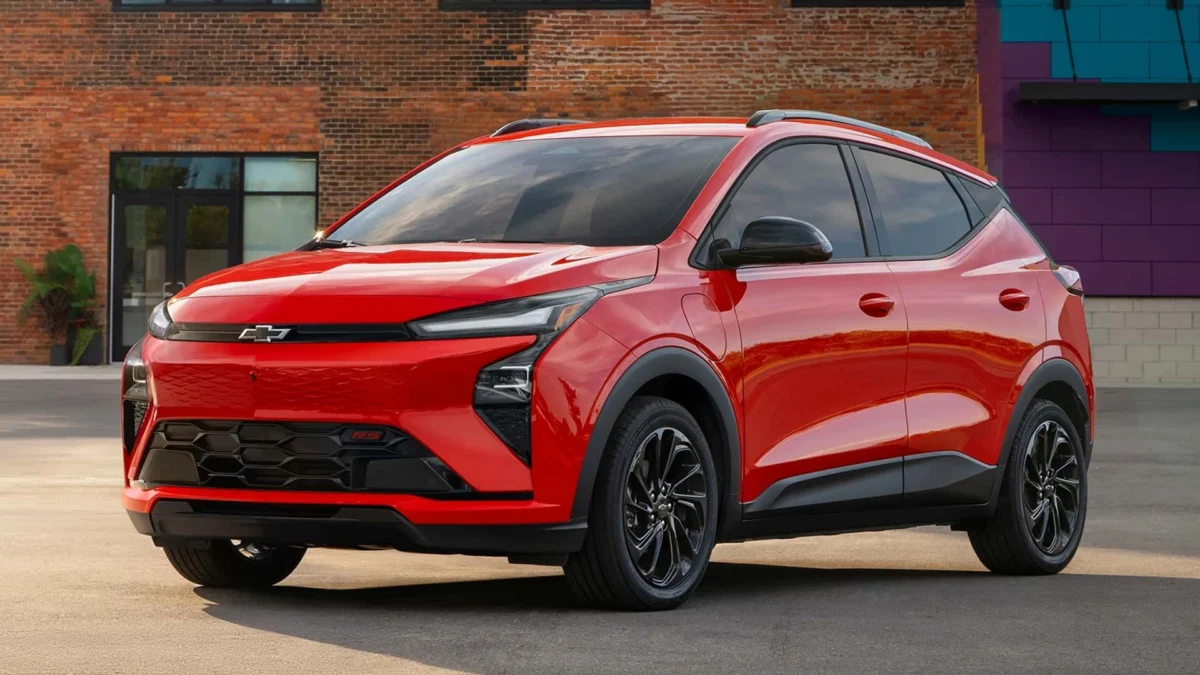
| Chevrolet Bolt | 4,224 | 123 | +3,334.1% |
| BrightDrop 400/600 | 956 | 1,592 | -39.9% |
| Chevrolet Equinox EV | 16,249 | 27,749 | -41.4% |
| Chevrolet Silverado EV | 3,672 | 5,439 | -32.5% |
| GMC Hummer EV (SUV/Pickup) | 3,601 | 7,987 | -54.9% |
| GMC Sierra EV | 3,044 | 2,773 | +9.8% |
Outliers and Anomalies
The data includes significant statistical outliers that require contextualization. The Chevrolet Bolt, for instance, shows a staggering 3,334.1 percent increase. This figure is misleading, as the model was effectively absent from the market during the first half of 2025, creating a low baseline that makes any current sales volume appear gargantuan. Similarly, the Cadillac Vistiq’s 123.7 percent growth reflects its recent launch cycle rather than a sudden surge in market-wide demand.
Conversely, the Chevrolet Blazer EV suffered the most severe decline, with a 75.1 percent drop in sales. This highlights the challenge of maintaining momentum in the mid-size electric crossover segment, which is currently the most crowded and competitive space in the EV market. The GMC Hummer EV also saw a significant retraction, dropping by nearly 55 percent, suggesting that the "early adopter" phase for high-end, luxury electric trucks may be nearing its saturation point.
Official Stance and Market Implications
General Motors has officially acknowledged these trends, attributing the softer numbers to a broader contraction in the EV market. The company remains the second-largest EV seller in the United States, with 56,679 units sold so far in 2026. However, this is a 32.6 percent decrease from the 2025 year-to-date figure, a gap that underscores how significantly the competitive environment has shifted against the Detroit giant.
The "Puzzling" Automotive Paradox
Industry analysts and observers at Motor1 have characterized the current data as "puzzling." Conventional economic theory suggests that rising gasoline prices should drive consumers toward electric alternatives. However, the current reality suggests that without the "nudge" of federal tax credits, consumers are opting for the lower upfront costs of traditional ICE vehicles, even if it means higher long-term fuel expenditure.
Furthermore, the disparity between light-duty trucks and consumer pickups adds another layer of complexity. While Chevrolet Silverado sales are down by 4.6 percent, the GMC Sierra—a higher-priced, premium counterpart—has seen a marginal increase of 0.90 percent. This suggests that the current economic pressure is affecting the mass-market consumer more heavily than the premium buyer, a trend that could influence GM’s future manufacturing and pricing strategies.
Looking Ahead: The Road to 2027
As General Motors enters the second half of 2026, the company faces a critical juncture. The discontinuation of the BrightDrop commercial line in late 2025 was a tactical retreat from a niche market, but the core retail portfolio must now prove its viability without the crutch of government subsidies.
The primary challenge for GM will be twofold:
- Cost Optimization: Can GM bring down the manufacturing costs of the Equinox EV and Blazer EV to a point where they are profitable and attractive to the average consumer without tax incentives?
- Brand Differentiation: In a market where Tesla remains the dominant force, GM must articulate why its growing stable of luxury EVs (such as the Escalade IQ and Vistiq) provides a superior ownership experience.
The data from the first half of 2026 serves as a sobering reminder that the transition to an electric future is neither linear nor guaranteed. While GM maintains the infrastructure and the product diversity to lead the American market, the road ahead requires a delicate balance between ambitious electrification goals and the pragmatic demands of a price-sensitive consumer base. Whether the second half of 2026 brings a rebound or further stabilization remains to be seen, but one thing is certain: the era of easy growth for EVs has passed, replaced by an era that demands efficiency, innovation, and a keen understanding of the shifting American buyer.