By Chuck Booth
Updated: July 5, 2026, 1:22 PM ET
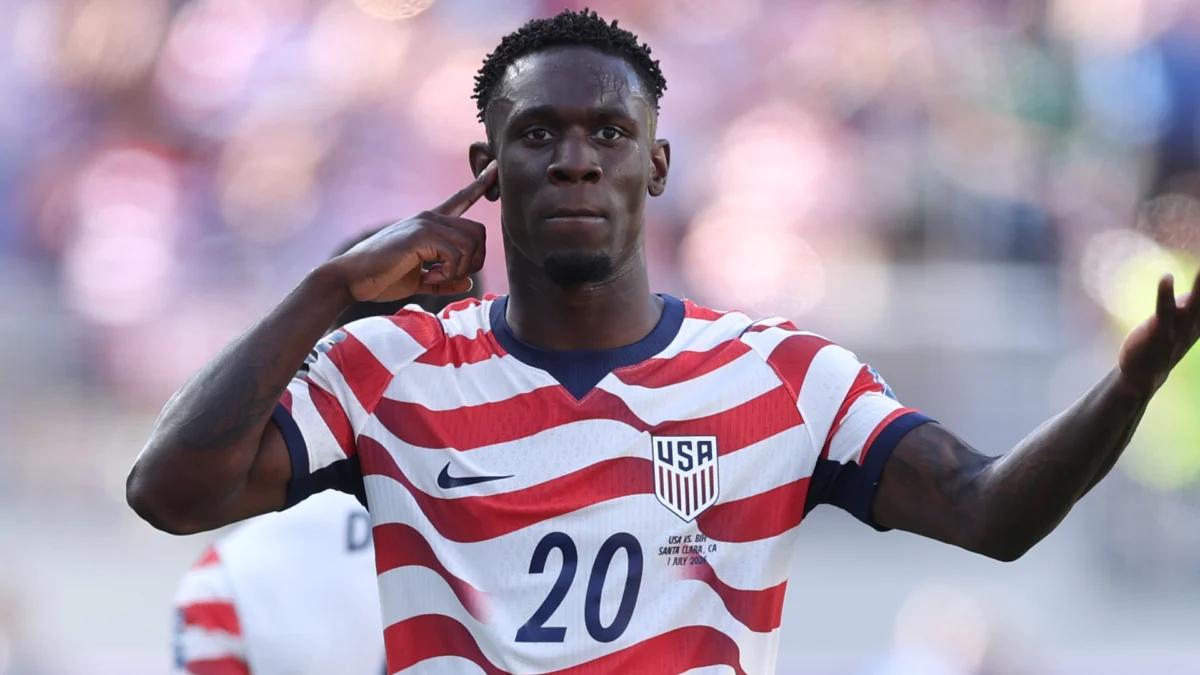
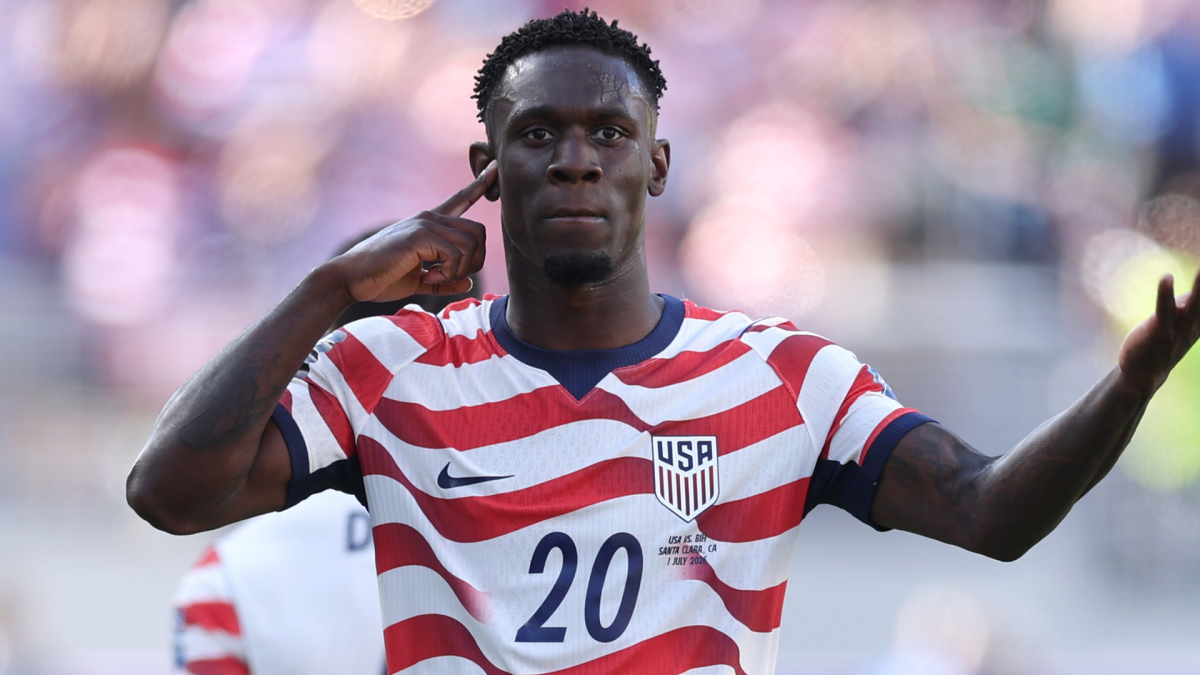
In a dramatic development that has sent ripples of relief through the United States Men’s National Team (USMNT) camp, FIFA has officially overturned the one-game suspension handed to star striker Folarin Balogun. The decision, announced Saturday morning, clears the path for the prolific forward to spearhead the American attack in their high-stakes Round of 16 clash against Belgium in Seattle.
The ruling comes as a massive tactical victory for the U.S. side, which had been bracing for the absence of their primary offensive threat. With three goals already to his name in the 2026 World Cup, Balogun’s availability is arguably the most significant pre-match variable in what promises to be a defining moment for American soccer on the global stage.
The Anatomy of the Controversy
The saga began during the final minutes of the United States’ hard-fought victory over Bosnia and Herzegovina. In a moment that sparked intense debate among pundits and fans alike, Balogun was involved in a physical challenge with an opposing defender. Initially, the referee on the pitch did not deem the contact worthy of a caution, allowing play to continue.
However, the intervention of the Video Assistant Referee (VAR) system shifted the narrative. After a lengthy review of slow-motion footage, the referee upgraded the incident to a straight red card. The decision forced the U.S. to finish the match a man down and triggered an automatic one-game suspension, casting a long shadow over the team’s preparations for the knockout stage.
For the USMNT, the red card felt particularly harsh given the subjective nature of the contact. The subsequent appeal—or, more accurately, the engagement with FIFA’s disciplinary hierarchy—was launched immediately, as the team sought to rectify what they viewed as a disproportionate punishment for a routine footballing action.
A Procedural Precedent: How the Ruling Works
The mechanism used by FIFA to restore Balogun to the lineup is a nuanced application of the FIFA Disciplinary Code. According to the official statement released by the governing body, the suspension has not been "vacated" in the sense of declaring the referee’s decision objectively wrong, but rather "suspended" under a probationary framework.
"In line with Article 27 of the FIFA Disciplinary Code, the implementation of the match suspension is suspended for a probationary period of one year," the FIFA statement read. "If Folarin Balogun commits another infringement of a similar nature and gravity during the probationary period, the suspension shall be revoked and the sanction enforced without prejudice to any additional sanction imposed for the new infringement."
This administrative maneuver allows FIFA to maintain the authority of match officials while offering a "common sense" path for players who have clean disciplinary records. This is not unprecedented in World Cup history; it mirrors the logic applied to Cristiano Ronaldo during his tenure with Portugal, where a similar red-card suspension was effectively shelved to allow the superstar to participate in a tournament opener.
Chronology of the Decision
- Wednesday, July 1: Balogun is issued a red card via VAR review against Bosnia and Herzegovina.
- Thursday, July 2: US Soccer formally engages with FIFA’s disciplinary arm to review the incident.
- Friday, July 3: Intense lobbying and technical analysis take place behind closed doors at FIFA headquarters.
- Saturday, July 4 (Morning): CBS Sports’ Pardeep Cattry confirms that US Soccer was notified of the decision via phone call.
- Saturday, July 4 (Midday): The USMNT squad is informed during a team meeting, sparking a morale boost ahead of travel to Seattle.
- Saturday, July 4 (Afternoon): FIFA releases the public statement confirming the probationary suspension.
Official Responses and Team Morale
The atmosphere within the U.S. camp has shifted from anxiety to focused determination. U.S. Soccer issued a concise, professional statement acknowledging the outcome while quickly pivoting to the upcoming challenge.
"We accept the decision of the Disciplinary Committee and are pleased that Folarin Balogun is eligible to compete tomorrow," the federation stated. "Our full attention is focused on the Round of 16 match against Belgium in Seattle, and we look forward to the continued support of our amazing fans."
For the players, the news was received with a collective sigh of relief. Sources close to the team suggest that the mood during the Saturday morning meeting was electric, as the return of their leading scorer provided a much-needed psychological lift. The uncertainty of the last 48 hours had been a distraction, but with the "Balogun question" settled, the coaching staff can now finalize their tactical blueprint for neutralizing the Belgian defense.
Tactical Implications: Why Balogun Matters
Folarin Balogun’s importance to the current U.S. squad cannot be overstated. With three goals in the group stage, he has emerged as the spearhead of the American attack. His ability to hold up play, exploit space behind high defensive lines, and provide a clinical finishing touch has made him the focal point of head coach Bruce Arena’s offensive system.
Against a disciplined and physically imposing Belgian side, the U.S. needs a player of Balogun’s profile to occupy central defenders and create gaps for attacking midfielders. Without him, the U.S. would have been forced to adopt a more defensive, counter-attacking posture. With him, the Americans have the confidence to play on the front foot and challenge Belgium’s backline.

This match represents a historic opportunity. The U.S. has not reached the quarterfinals of the World Cup since 2002. That year, a famous victory over Mexico in the Round of 16 solidified the team’s legacy. Nearly a quarter-century later, the current generation is looking to replicate that feat in front of a raucous home crowd in Seattle.
Looking Ahead: The Belgium Challenge
The Round of 16 match in Seattle is expected to be one of the most-watched sporting events of the year. Belgium, a perennial powerhouse of European football, presents a formidable tactical challenge. Their squad, brimming with technical talent and tactical discipline, will look to control the tempo of the game through superior midfield possession.
The American strategy will likely involve high-intensity pressing, utilizing the energy of the home crowd to disrupt Belgium’s rhythm. Balogun will be expected to act as the primary outlet for quick transitions. If the U.S. is to secure a place in the quarterfinals, they will need their star striker to be at his clinical best.
The FIFA decision to clear Balogun has essentially leveled the playing field. While the probationary period serves as a stern warning, the immediate relief is that the best players are on the pitch where they belong. As the countdown to kickoff in Seattle begins, the focus shifts entirely back to the beautiful game—and the potential for a historic American victory.
The narrative of this 2026 World Cup has been defined by moments of controversy and brilliance alike. By allowing one of the tournament’s standout performers to play, FIFA has ensured that the Round of 16 clash between the United States and Belgium will be a contest decided by the players on the field, rather than by administrative technicalities. For the fans in Seattle and across the nation, that is the most important result of all.