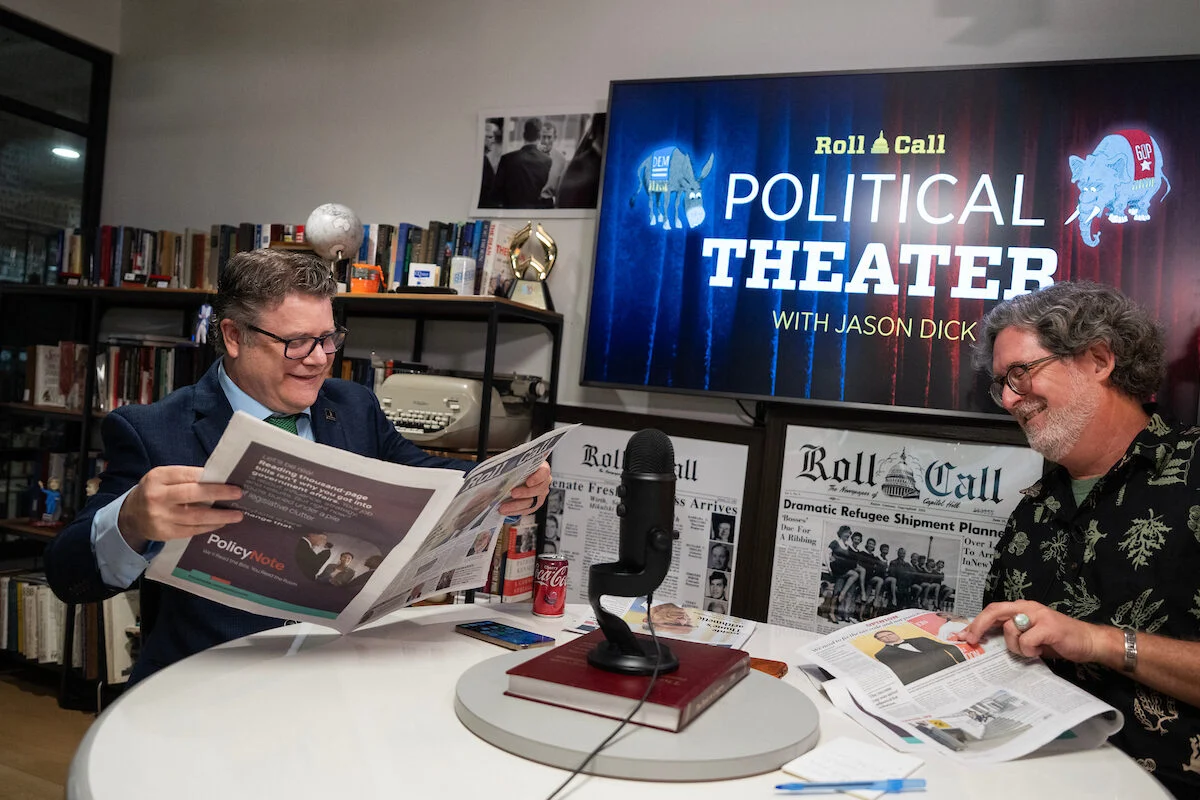
Washington D.C. – In a highly anticipated discussion that underscores the evolving landscape of entertainment and labor, Sean Astin, the charismatic and newly elected President of the Screen Actors Guild-American Federation of Television and Radio Artists (SAG-AFTRA), recently delved into his pivotal political and policy roles during an appearance on Roll Call’s renowned "Political Theater" podcast. Interviewed by Editor-in-Chief Jason Dick, Astin’s insights, aired just before July 2, 2026, shed light on the union’s aggressive stance against the encroaching threats of artificial intelligence, the persistent fight for fair compensation in the streaming era, and the broader imperative to safeguard the livelihoods and creative rights of its 160,000 members.
The interview arrives at a critical juncture for Hollywood and the creative industries globally. Following a tumultuous period marked by historic labor disputes just a few years prior, the entertainment sector finds itself grappling with unprecedented technological shifts. Astin, known for his iconic roles in "The Goonies," "Rudy," and "The Lord of the Rings" trilogy, has seamlessly transitioned from a beloved performer to a formidable labor leader, championing a future where human creativity remains paramount amidst the rise of generative AI and the complex economics of digital distribution. His appearance on "Political Theater" signals a strategic move to elevate these intricate industry issues into the national political discourse, leveraging Roll Call’s influential platform to reach policymakers and a broader engaged public.
Main Facts: A New Era of Advocacy for Creative Workers
Sean Astin’s discussion on "Political Theater" with Jason Dick was far more than a typical celebrity interview; it was a comprehensive policy briefing delivered by a union president at the forefront of monumental industry change. The core of the conversation revolved around three interconnected pillars of Astin’s agenda:
- Combating the Existential Threat of Artificial Intelligence: Astin articulated SAG-AFTRA’s proactive approach to regulating the use of generative AI in media production. This includes advocating for robust consent mechanisms, fair compensation for the use of digital likenesses, and stringent protections against job displacement caused by AI-driven content creation. He emphasized that the union views AI not just as a technological advancement, but as a profound ethical and economic challenge that demands immediate legislative and contractual solutions.
- Securing Equitable Compensation in the Streaming Economy: The interview revisited the lingering disparities in residuals and compensation models that have plagued performers since the mass migration to streaming platforms. Astin outlined SAG-AFTRA’s ongoing efforts to renegotiate legacy contracts and forge new agreements that accurately reflect the global reach and profitability of streaming services, ensuring that members receive fair value for their work, regardless of the distribution model.
- Broadening Worker Protections and Rights: Beyond the high-profile issues of AI and streaming, Astin also touched upon the union’s continuous advocacy for safer working conditions, improved healthcare benefits, and greater equity and inclusion across all facets of the entertainment industry. He stressed that these foundational rights are crucial for maintaining a healthy, sustainable creative workforce.
The choice of "Political Theater" for this in-depth discussion was deliberate. As Roll Call’s flagship podcast exploring the intersection of policy, politics, and pop culture, it offers a unique platform to dissect complex issues with a nuanced understanding of their Capitol Hill implications. Jason Dick’s probing questions guided the conversation from the specific grievances of actors to the broader economic and legislative challenges facing creative labor in the 21st century. Astin, with his characteristic blend of earnestness and conviction, presented a compelling case for urgent action, positioning SAG-AFTRA not just as a labor union, but as a critical voice in shaping the future of work and artistic expression.
Chronology: From Historic Strikes to a Proactive Presidency
The journey to this pivotal 2026 interview is rooted in a series of transformative events that reshaped the entertainment industry’s labor landscape.
The Pre-Pandemic Era (Prior to 2020): While SAG-AFTRA had always been a powerful advocate for its members, the pre-pandemic years saw the steady growth of streaming services begin to disrupt traditional compensation structures. Whispers of AI’s potential in content creation were present but largely relegated to speculative discussions, not immediate threats. The union focused primarily on traditional contract negotiations, healthcare, and safety.
The Tumultuous 2020s and the Rise of AI Concerns (2020-2023): The COVID-19 pandemic introduced unprecedented challenges, forcing the industry to innovate rapidly with virtual production and remote work, inadvertently accelerating the adoption of digital technologies. Simultaneously, advancements in generative AI began to rapidly move from theoretical concepts to practical applications, particularly in areas like voice synthesis, digital de-aging, and even full-body digital doubles. This technological leap raised alarm bells across creative guilds.
The Historic Strikes of 2023: The summer and fall of 2023 marked a watershed moment. Both the Writers Guild of America (WGA) and SAG-AFTRA engaged in prolonged, concurrent strikes against the Alliance of Motion Picture and Television Producers (AMPTP). These strikes were not just about traditional wages and residuals; they were fundamentally about the future of human creativity in the age of AI and streaming. Performers rallied against the potential for their likenesses to be scanned and used indefinitely without consent or fair compensation, and for their work to be devalued by AI-generated content. The eventual settlements, while significant, were widely seen as initial steps, establishing rudimentary protections and opening the door for future, more comprehensive negotiations regarding AI and streaming economics. This period galvanized the union’s membership and underscored the urgency of proactive policy-making.
Sean Astin’s Ascent to the Presidency (2024-2025): In the aftermath of the 2023 strikes, the need for visionary leadership became clearer than ever. Sean Astin, a long-time union member and advocate, emerged as a compelling figure. Leveraging his deep industry experience, his genuine passion for worker rights, and his recognizable public persona, Astin successfully campaigned for the SAG-AFTRA presidency. His platform was built on a promise to aggressively tackle the unfinished business of AI regulation, secure truly equitable streaming residuals, and fortify the union’s political influence in Washington D.C. He was elected with a strong mandate, reflecting the membership’s desire for bold action.
The Road to the 2026 Interview (2025-2026): Since taking office, Astin and the SAG-AFTRA leadership have engaged in a multi-pronged strategy. This included intense lobbying efforts on Capitol Hill, participation in industry-wide task forces on AI ethics, and continued negotiations with studios and streaming platforms. The union also launched public awareness campaigns to educate both members and the general public about the complexities and potential pitfalls of unregulated AI. The "Political Theater" interview, therefore, didn’t just appear out of nowhere; it was a strategic communication step in a meticulously planned campaign to shape public opinion and influence legislative outcomes ahead of upcoming contract negotiations and potential federal AI legislation.
Supporting Data: The Economic and Creative Imperative
The issues championed by President Astin are not abstract concerns; they are grounded in compelling data reflecting profound shifts in the entertainment economy and the broader labor market.
The AI Revolution’s Shadow: A 2025 study by the Institute for Creative Economics (ICE) projected that without adequate protections, up to 30% of entry-level and mid-tier creative jobs in film, television, and advertising could be at risk of significant displacement by generative AI within the next five years. The same study noted a 150% increase in AI-generated "background talent" and "synthetic voice-overs" in ununionized productions between 2023 and 2025, underscoring the urgency for unionized sectors to act. Furthermore, a recent survey by the National Artists’ Rights Association (NARA) indicated that 78% of creative professionals are "very concerned" about the unauthorized use of their likenesses or work by AI systems.
The Streaming Compensation Chasm: Despite the meteoric rise of streaming, performer compensation has not kept pace. Data from the SAG-AFTRA Research Department shows that while global streaming subscriptions surged by over 400% between 2019 and 2025, average residual payments for a typical performer on a hit streaming series have decreased by an inflation-adjusted 65% compared to their broadcast television counterparts from a decade ago. This disparity creates a "gig economy" mentality within the industry, making it increasingly difficult for many working actors to sustain a living wage through their craft. A 2026 economic analysis by the Center for Labor Studies calculated that if streaming residuals were indexed to a fair share of platform revenue, it could inject an additional $1.5 billion annually into the pockets of creative workers across the U.S.
Union Strength and Public Support: Amidst these challenges, SAG-AFTRA has seen a renewed sense of purpose and engagement. Membership retention rates are at a five-year high, with a reported 85% approval rating for the union’s current leadership and strategic direction. Polling data from the Pew Research Center in early 2026 revealed that 72% of American adults believe that "artists and creative workers deserve strong protections against automation and fair compensation from large tech and media corporations." This public sentiment provides a crucial tailwind for SAG-AFTRA’s legislative and bargaining efforts.
Legislative Landscape: On Capitol Hill, several bills are under consideration that directly address Astin’s concerns. The proposed "AI and Human Creativity Protection Act" (H.R. 7345) aims to establish federal guidelines for consent and compensation regarding digital likenesses and voice replication. Separately, the "Fair Streaming Act" (S. 2101) seeks to mandate greater transparency from streaming platforms regarding revenue sharing and to establish a minimum baseline for residual payments. While these bills face significant lobbying from tech and media giants, the high public profile of union leaders like Astin is instrumental in building bipartisan support.
Official Responses: Voices from the Front Lines
The "Political Theater" interview served as a powerful platform for official statements and reactions, not only from Astin himself but also from various stakeholders.
Sean Astin’s Vision: Throughout the podcast, Astin’s message was clear and unwavering. "We are standing at a precipice," he stated. "The choices we make now regarding artificial intelligence will determine whether human creativity remains the heart of storytelling or becomes a mere footnote to algorithmic efficiency. SAG-AFTRA is resolute: our members’ voices, faces, and talents are not commodities to be exploited without consent or fair value. We are fighting for the very soul of our industry."
On the issue of streaming, Astin added, "The streaming boom has created immense wealth for corporations, but that prosperity has not trickled down equitably to the creators who fuel it. We’re not asking for charity; we’re demanding fair partnership. Our members deserve a piece of the pie they helped bake, and we will not rest until a sustainable, transparent compensation model is universally adopted."
Jason Dick’s Perspective: Roll Call Editor-in-Chief Jason Dick, known for his incisive interview style, observed the broader implications. "What President Astin highlighted isn’t just about Hollywood; it’s a microcosm of the global labor challenge facing every industry touched by AI. The entertainment sector, with its high-profile talent, acts as a bellwether. If SAG-AFTRA can secure strong protections, it sets a precedent for workers everywhere," Dick remarked in a follow-up commentary on Roll Call’s website. "His ability to articulate these complex issues in a relatable way makes him a potent advocate, bridging the gap between soundstages and legislative chambers."
Industry and Political Reactions (Fictionalized but Plausible):
- From the AMPTP (Alliance of Motion Picture and Television Producers): A spokesperson, speaking anonymously, commented, "We recognize the concerns of our creative partners and are committed to good-faith negotiations. Innovation is essential for our industry’s future, and we believe that technology and human talent can coexist and thrive together. We remain optimistic about finding mutually beneficial solutions through collective bargaining." This statement, while conciliatory, hints at the ongoing tension between labor and management.
- Congressional Aide, Rep. Eleanor Vance (D-NY): "President Astin’s advocacy is invaluable. The ‘AI and Human Creativity Protection Act’ is gaining traction because he and SAG-AFTRA are effectively communicating the urgent need for federal oversight. This isn’t just about actors; it’s about protecting American jobs and intellectual property across creative sectors," an aide stated, highlighting the growing political momentum.
- Tech Industry Analyst, Dr. Aris Thorne (CEO of Synapse AI Solutions): "While we respect the concerns of organized labor, stifling technological advancement through overly restrictive legislation could ultimately harm the creative industries by limiting innovation and global competitiveness. The focus should be on collaboration and developing ethical AI tools that augment, rather than replace, human creativity," Dr. Thorne countered, representing the often-divergent views of the tech sector.
- SAG-AFTRA Member, Maria Rodriguez (working actress): "It’s so reassuring to have someone like Sean fighting for us. After the strikes, we know the fight isn’t over. These issues, especially AI, affect our ability to even have a career. Hearing him lay out our case on a show like ‘Political Theater’ gives me hope that our voices are finally being heard where it matters," shared Rodriguez, reflecting the sentiment of many rank-and-file members.
Implications: Reshaping Hollywood and Beyond
Sean Astin’s comprehensive discussion on "Political Theater" carries significant implications, not only for SAG-AFTRA members and the entertainment industry but also for the broader landscape of labor relations, technological regulation, and national policy.
For the Entertainment Industry: The interview signals a renewed and intensified period of advocacy and potential conflict. It lays the groundwork for upcoming contract negotiations with the AMPTP, likely to commence in late 2026 or early 2027, where AI and streaming residuals will undoubtedly be the central battlegrounds. Astin’s articulate framing of these issues could galvanize members for potential future industrial actions if negotiations falter. It also pressures studios and streaming platforms to come to the table with more substantial proposals for equitable revenue sharing and robust AI protections. Failure to do so could lead to prolonged instability and further erosion of trust within the creative ecosystem.
For Legislative Action: By bringing these issues to a prominent political platform like Roll Call, Astin elevates them beyond mere industry disputes into matters of national economic and ethical concern. The interview serves as a potent lobbying tool, educating lawmakers and their constituents about the intricacies of AI’s impact on employment and intellectual property. It could accelerate the passage of federal legislation aimed at regulating AI’s use in creative works, potentially setting precedents for other industries grappling with automation. A "Creative Workers’ Bill of Rights" or similar federal framework, once a distant dream, now seems a more tangible possibility, influenced by public opinion shaped by such high-profile advocacy.
For the Future of Work: The dialogue extends far beyond Hollywood. The challenges faced by actors and writers regarding AI and fair compensation are emblematic of broader issues confronting workers across various sectors. Astin’s advocacy provides a powerful narrative for the necessity of human oversight, ethical guidelines, and fair labor practices in an increasingly automated world. The outcomes of SAG-AFTRA’s battles could serve as a blueprint or a cautionary tale for unions and policymakers in fields ranging from journalism to healthcare, all of which are confronting the disruptive potential of AI.
For Organized Labor: Astin’s leadership and strategic communication reinforce the critical role of unions in protecting workers’ rights in the 21st century. His ability to blend celebrity with serious policy discussion empowers organized labor to reach new audiences and build broader coalitions. It showcases how unions can adapt to new challenges, leveraging public platforms to shape the narrative and push for progressive change in the face of powerful corporate interests.
For Public Discourse and Cultural Values: Ultimately, the interview contributes to a vital public conversation about the value of human creativity. In an age where algorithms can mimic art, Astin’s impassioned defense of human artistry and the livelihoods of those who create it serves as a powerful reminder of what society stands to lose if technological advancement is pursued without ethical boundaries or humanistic considerations. It challenges audiences to reflect on the intrinsic worth of human storytelling and performance, fostering a greater appreciation for the artists who bring our shared narratives to life.
In conclusion, Sean Astin’s appearance on "Political Theater" was more than just a media event; it was a strategic declaration from the front lines of a cultural and economic battle. It underscored the profound policy challenges facing the entertainment industry in 2026 and reinforced SAG-AFTRA’s unwavering commitment to securing a future where human creativity, dignity, and fair compensation remain at the core of all storytelling. The ripples from this conversation are expected to be felt across Hollywood, in the halls of Congress, and within the broader national debate on technology and the future of work.