For millions of people worldwide, the spectrum of treatment for chronic knee pain has historically felt like a binary choice: manage symptoms with physical therapy and medication, or commit to the life-altering recovery of total knee replacement surgery. For those caught in the "middle ground"—patients who have exhausted conservative measures but are either medically ineligible for or unwilling to undergo invasive surgery—the options have remained frustratingly limited.
However, a revolutionary, minimally invasive procedure known as Genicular Artery Embolization (GAE) is beginning to change that narrative. By targeting the source of inflammation through precise, image-guided intervention, GAE offers a compelling alternative, providing significant pain relief with a recovery time measured in days rather than months.
The Middle Ground: Filling a Critical Treatment Gap
"For treating osteoarthritis in the knees, we often think of medications, physical therapy, maybe a steroid injection, and then on the far end of the spectrum is a total knee replacement," explains Dr. Leigh Casadaban, MD, MS, an assistant professor of radiology at the University of Colorado Anschutz School of Medicine. "There really hasn’t been anything for patients in between. GAE is a promising minimally invasive procedure that may fill that spot for people who have failed conservative treatments but are not yet ready to have a major surgery."
Dr. Casadaban, a vascular interventional radiologist, notes that the procedure is particularly transformative for those who previously felt they had run out of options. By addressing the biological roots of pain—specifically the abnormal blood vessels that proliferate in inflamed joint tissues—GAE provides a localized solution that avoids the systemic side effects of long-term pain medication or the high-risk nature of total joint arthroplasty.
A Patient’s Perspective: Cynthia Schraf-Fletcher’s Journey
For 74-year-old Cynthia Schraf-Fletcher, the decision to undergo GAE was prompted by a desire to reclaim her mobility without repeating the taxing experience of major surgery. Having previously undergone a total knee replacement on her left knee, she was intimately familiar with the rigors of post-operative rehabilitation.
"I couldn’t be more pleased," says Schraf-Fletcher, reflecting on her recovery. Nearly a year after receiving GAE on her right knee, she reports that her quality of life has improved drastically. Her pain reduction is, by her account, remarkably comparable to the results she achieved with her surgical knee replacement.
For Schraf-Fletcher, the success of the procedure isn’t measured just in clinical scores, but in the return of everyday joys. Activities that once felt like chores—gardening and riding a stationary bicycle—have become sources of pleasure again. After experiencing complications from her previous knee replacement, Schraf-Fletcher views her decision to pursue GAE not just as a medical choice, but as a lifestyle reclamation.
The Mechanism: How GAE Works
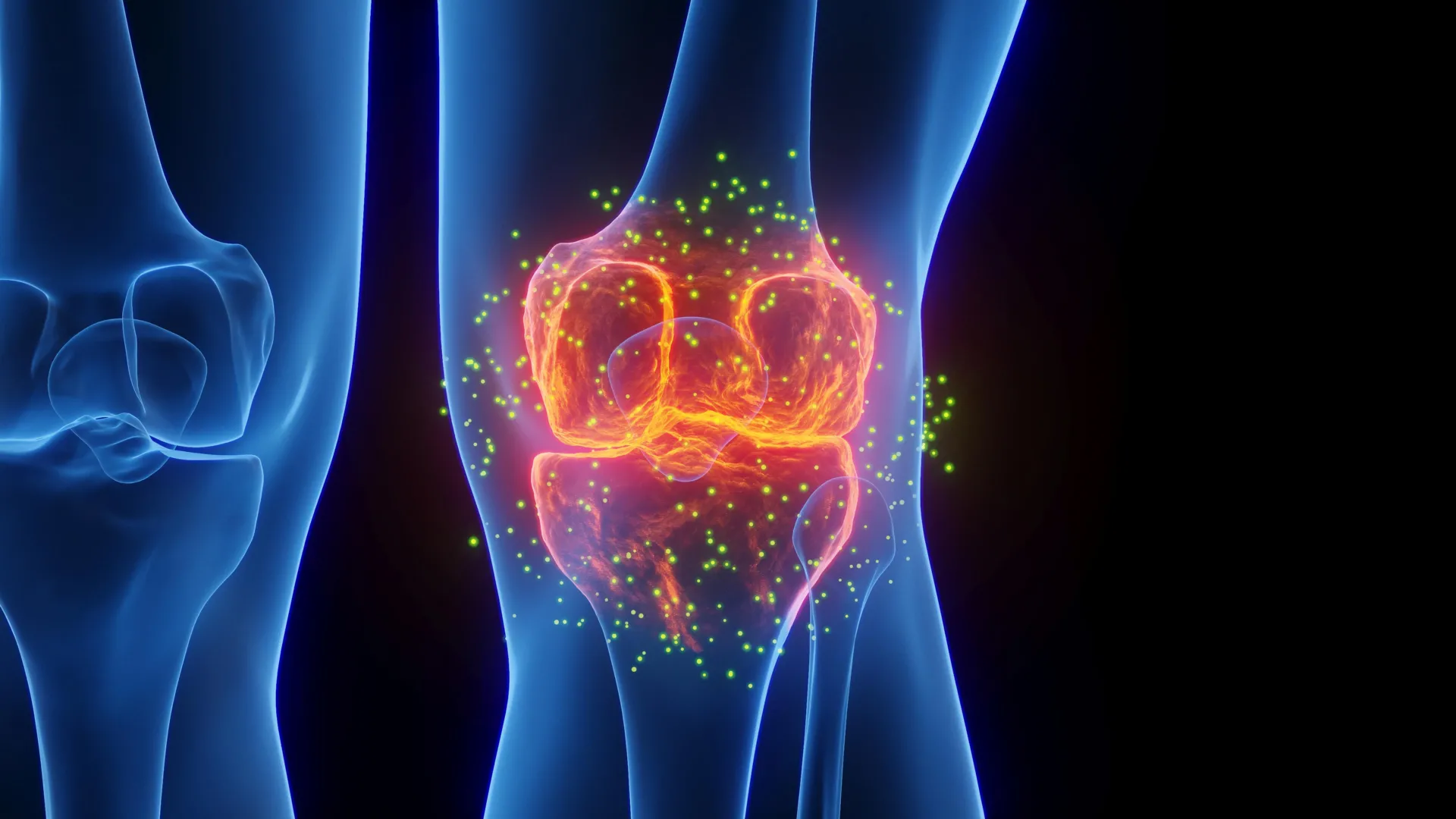
The logic behind Genicular Artery Embolization is rooted in the pathology of osteoarthritis. As the joint wears down, the body initiates an inflammatory response, which includes the growth of abnormal, tiny blood vessels (neovasculature) around the joint. These vessels carry nerve fibers that contribute significantly to the sensation of pain.
GAE functions by interrupting this cycle. During the outpatient procedure, which typically lasts between one and two hours, the patient remains under conscious sedation. An interventional radiology team makes a small incision near the crease of the leg. Using advanced X-ray imaging and contrast dye for guidance, the physician advances a microscopic catheter through the femoral artery until it reaches the genicular arteries surrounding the knee.
Once the target vessels are identified, the team releases microscopic embolic beads. These beads effectively block the blood flow to the abnormal vessels, depriving the inflamed areas of the nutrients required to sustain the pain-signaling nerves. The result is a reduction in swelling and a marked decrease in chronic pain. Patients are typically monitored for a few hours before being discharged, with a recovery period requiring only a few days of reduced activity.
Chronology of an Innovation: From Japan to the Global Stage
The development of GAE is a testament to the speed of modern medical innovation. The procedure was first pioneered in Japan a little more than a decade ago, where early results showed significant promise in managing pain for patients with degenerative joint disease.
As the technique gained traction, global medical communities took notice. The clinical success observed in Japan triggered a wave of international research. In the United States, the procedure’s momentum has been validated by the U.S. Food and Drug Administration (FDA). Since 2021, the FDA has granted "breakthrough device status" to multiple technologies and devices associated with GAE, signaling a federal recognition of the procedure’s potential to address an unmet clinical need.
Supporting Data: Long-Lasting Relief
One of the most frequent questions from patients is the longevity of the results. Current data suggests that GAE is not merely a temporary "fix," but a durable intervention.
"The theory is that GAE reduces inflammation inside the knee joint, and symptom relief can last years," Dr. Casadaban explains. "Four-year data published in Japan shows that if you have one outpatient procedure, your pain relief can last for those four years. In the U.S., we now have two-year data, which shows that if you have a good response, pain relief can last two years."
The statistics surrounding the procedure are robust. Dr. Casadaban notes that approximately 70% of patients report "phenomenal" outcomes. "They cut their pain scores in half, sometimes more," she says. "We have a few patients with no pain at all after the procedure."
While results are most consistent in patients with mild to moderate osteoarthritis, those with advanced disease may still see benefits, though the duration of relief may be shorter. This tiered response underscores the importance of patient selection, a process that is currently being refined through ongoing clinical research.
Official Responses and Current Clinical Research
The medical community is currently in the midst of a data-gathering phase that will likely solidify GAE’s place in standard orthopedic care. Dr. Casadaban is spearheading two major clinical trials at the University of Colorado Anschutz School of Medicine to further refine the procedure.
The first study is examining changes in the chemical composition of knee fluid following GAE, aiming to identify biomarkers that correlate with pain relief. The second study is evaluating the effectiveness of a temporary arterial treatment device known as Nexsphere-F. This device is designed to target the specific small blood vessels that contribute to inflammation, potentially allowing for even more precise intervention.
These trials represent the transition of GAE from a novel, anecdotal treatment to a standardized, evidence-based medical procedure. By focusing on the biological mechanisms of inflammation, these researchers are paving the way for more personalized, less invasive orthopedic care.
Implications: A New Frontier in Musculoskeletal Health
The success of GAE in treating knee osteoarthritis has opened the door to broader applications. Osteoarthritis is a systemic issue, and while the knee is the most common site of pain, the same principles of arterial embolization are being explored for other joints.
Physicians and researchers are currently investigating the potential of GAE and similar embolization techniques for:
- Frozen Shoulder (Adhesive Capsulitis): Addressing the inflammatory blood flow in the shoulder capsule.
- Tennis Elbow (Lateral Epicondylitis): Providing relief for chronic overuse injuries that are notoriously difficult to treat.
- Plantar Fasciitis: Targeting the chronic inflammation in the heel that often resists physical therapy and orthotics.
The shift toward minimally invasive, image-guided therapies marks a profound change in how we view musculoskeletal health. As medical technology continues to shrink the distance between the patient and the solution, procedures like GAE prove that invasive surgery may eventually become the "last resort" rather than the standard expectation.
For patients like Cynthia Schraf-Fletcher, the implications are clear: the path to mobility and pain-free living is becoming shorter, safer, and significantly more accessible. As research continues to mature, GAE stands as a beacon for those who refuse to let chronic pain dictate their quality of life, offering a bridge across the gap that has long divided conservative treatment from the operating table.