By Investigative Desk
In a landmark ruling that halts a contentious shift in federal student aid policy, a U.S. District Court judge has blocked the Trump administration’s attempt to curtail the Public Service Loan Forgiveness (PSLF) program. The decision, handed down on Tuesday by Judge Myong J. Joun of the U.S. District Court of Massachusetts, effectively preserves the eligibility of thousands of public servants who faced potential disqualification due to their employers’ activities.
The ruling came less than 24 hours before the Department of Education’s controversial rule was set to take effect, representing a significant legal rebuke to the administration’s efforts to leverage federal financial aid as a tool for ideological enforcement.
The Core Ruling: An Arbitrary Exercise of Power
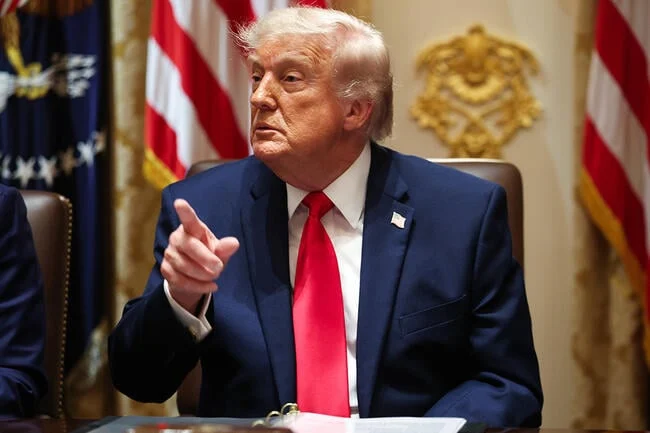
Judge Joun’s decision was unequivocal, labeling the Department of Education’s final rule as both "arbitrary and capricious" and a clear violation of the First Amendment. At the heart of the litigation was a March 2025 executive order issued by President Donald Trump, which sought to strip PSLF eligibility from any borrower employed by an organization deemed to be engaged in "illegal activities."
In his written opinion, Judge Joun argued that the administration’s interpretation of "illegal" was dangerously broad and inherently coercive. The judge noted that the rule functioned as a mechanism to "chill protected speech" and compel public service workers to adopt the administration’s specific policy views under the threat of losing their student loan forgiveness benefits.
"Although the department contends that the Final Rule does not target lawful activity, the text of the rule itself does not support that assertion," Joun wrote. By threatening to revoke benefits from those who facilitate gender-affirming care, teach diversity, equity, and inclusion (DEI) practices, or assist immigrants, the rule essentially forced borrowers to choose between their livelihoods and their professional principles.
Chronology of a Policy Battle
The trajectory of this policy shift highlights a rapid and highly polarized effort to redefine the boundaries of public service eligibility.
- March 2025: President Trump issues an executive order directing the Department of Education to tighten PSLF criteria, specifically targeting organizations involved in activities deemed contrary to federal interests.
- October 2025: The Department of Education releases its final rule. The document defines "illegal activities" to include aiding violations of immigration or civil rights laws, supporting terrorism, providing gender-affirming care, and the interstate transportation of children for the purpose of emancipation.
- November 2025: A massive coalition—comprising 22 states, the District of Columbia, five major cities and counties, various nonprofits, and employee associations—files a lawsuit challenging the legality of the rule.
- Winter 2025–2026: The case moves through the federal court system. Legal experts note an unusual lack of support for the administration; in the final record, Judge Joun pointedly observed that "zero amici appeared in support of the defendants," highlighting the isolation of the administration’s position.
- May 2026: With only hours remaining before the rules were to be enforced, Judge Joun issues the injunction, declaring the policy unlawful.
The Scope of the Disputed Rule
The PSLF program has long been a pillar of American public service, designed to incentivize doctors, teachers, public defenders, and nonprofit workers to stay in their fields for a decade in exchange for the discharge of their federal student debt.
The administration’s October 2025 final rule sought to introduce a "substantial illegal purpose" test. Under this framework, if an employer was found to have a "substantial" connection to the prohibited categories—such as gender-affirming care or immigration advocacy—the employer would be rendered ineligible. Consequently, employees would lose their progress toward the 120 qualifying payments required for forgiveness.
For many, this would have resulted in the immediate nullification of years of service, effectively forcing workers to either abandon their employers or lose thousands of dollars in anticipated debt relief. The scope was so broad that it threatened the stability of entire nonprofit sectors, particularly those focused on civil rights and healthcare equity.
Supporting Data and Legal Arguments
The plaintiffs, led by a diverse coalition of state attorneys general and labor organizations, argued that the rule exceeded the Department of Education’s statutory authority and violated the Administrative Procedure Act (APA).
The Constitutional "Chilling Effect"
Judge Joun’s focus on the First Amendment was the most damaging aspect of the ruling for the administration. He argued that the rule essentially engaged in viewpoint discrimination. By defining "illegal activities" to encompass specific social issues—such as gender-affirming care or DEI initiatives—the government was using a financial penalty to suppress conduct it disliked, even when that conduct is legally protected under state or local laws.

Lack of Institutional Support
The judge’s observation that "zero amici appeared in support of the defendants" is telling. In high-stakes federal litigation, the absence of support from interest groups, legal scholars, or advocacy organizations often signals that a policy is outside the mainstream of legal interpretation. The plaintiffs, by contrast, were bolstered by more than a hundred amici curiae briefs, reflecting a widespread belief that the administration’s policy threatened the viability of the American nonprofit and public service workforce.
Official Responses and Administrative Reactions
The White House has yet to issue a formal statement regarding the possibility of an appeal. However, sources within the Department of Education have indicated that the administration remains committed to its goal of "protecting the integrity of the PSLF program."
Critics of the administration, including several state attorneys general involved in the suit, praised the decision. "This was an attempt to weaponize the student loan system against those who do the most important work in our communities," said one lead plaintiff representative. "The court recognized that you cannot force public servants to sacrifice their First Amendment rights just to receive the benefits they were promised."
Conversely, proponents of the administration’s executive order have characterized the ruling as "judicial activism," arguing that the Executive Branch has the right to determine how federal funds are disbursed. They argue that taxpayer money should not be used to support organizations that work in direct opposition to federal policy priorities.
Broad Implications for the Future of Public Service
The implications of this ruling extend far beyond the specific nuances of the PSLF program.
1. Protection of the Nonprofit Sector
For nonprofit organizations, the ruling provides a vital shield. Had the rule stood, many organizations would have faced an impossible choice: cease providing essential community services or lose the ability to attract and retain staff who rely on PSLF. The ruling protects these organizations from being forced to conform to the ideological preferences of the sitting president.
2. Limits on Executive Authority
This case serves as a significant check on the reach of the Executive Branch. By invoking the "arbitrary and capricious" standard of the Administrative Procedure Act, the court has signaled that federal agencies cannot simply issue rules that contradict existing legislative intent or constitutional protections based on the personal policy agendas of the administration.
3. The Future of Student Aid
The ruling ensures that the PSLF program remains a stable, reliable incentive for public service. As the nation faces shortages in key sectors—such as education, public health, and social work—the certainty of loan forgiveness remains a critical recruiting tool. By striking down the uncertainty introduced by the Trump administration’s rule, the court has helped stabilize a workforce that is already under significant pressure.
4. Ongoing Legal Uncertainty
While this is a victory for the plaintiffs, it is likely not the end of the road. Legal analysts anticipate that the Department of Justice will seek an emergency stay or appeal the decision to the U.S. Court of Appeals for the First Circuit. Furthermore, the administration may attempt to refine the language of the rule to pass future judicial scrutiny, setting the stage for a prolonged legal battle that could ultimately reach the Supreme Court.
Conclusion
The District Court’s ruling on Tuesday represents a pivotal moment in the ongoing conflict over the role of federal aid in the culture wars. By prioritizing the First Amendment and the stability of the public service sector over executive discretion, Judge Joun has temporarily halted one of the most aggressive attempts to redefine the requirements for federal loan forgiveness.
For now, the thousands of borrowers who serve as the backbone of the nation’s public interest organizations can breathe a sigh of relief. However, the legal landscape remains precarious, and the battle over the limits of presidential power in administering student aid is far from concluded. The judiciary has drawn a line in the sand, but the push and pull between the executive branch’s policy objectives and the constitutional rights of individual citizens will continue to define the discourse for the foreseeable future.