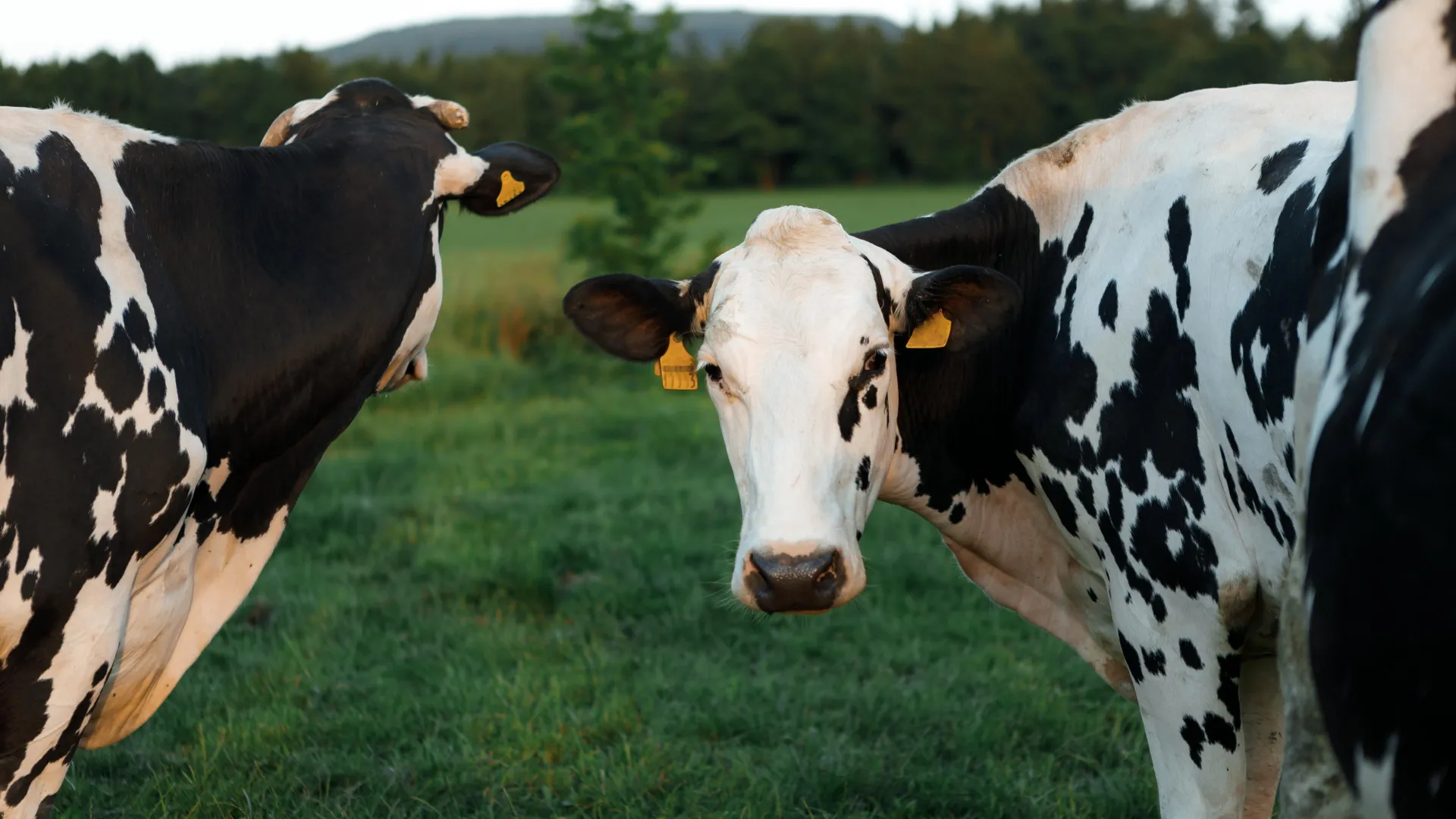
When the H5N1 strain of Highly Pathogenic Avian Influenza (HPAI) first appeared in U.S. dairy cattle in early 2024, the veterinary community was thrown into a state of bewilderment. Traditionally, avian influenza manifests in mammals as a respiratory pathogen, attacking the lungs and causing coughing, sneezing, and pneumonia. However, the virus presented in cattle with a baffling clinical profile: the respiratory systems of the cows remained largely unscathed, while the animals suffered from severe, necrotizing mastitis—a painful inflammation of the mammary glands.
This unexpected behavior sent researchers on a frantic search for answers. Now, a landmark study from the University of Pittsburgh School of Public Health, published in Science Advances, has decoded the biological mechanism behind this shift. By mapping the "lock-and-key" architecture of viral receptors, scientists have finally explained why the virus bypassed the bovine airway to colonize the udder, providing a critical blueprint for monitoring future zoonotic spillover events.
The Chronology of an Unexpected Outbreak
The Texas Panhandle Emergence
The mystery began in the Texas Panhandle, where dairy herds suddenly began showing signs of systemic distress. Producers noted a sharp decline in milk production, changes in the consistency of the milk, and physical signs of severe udder inflammation. Initially, veterinarians assumed the symptoms were indicative of classic bacterial mastitis, a common and manageable condition in dairy operations.
"Mastitis is a classic disease in milk-production animals, and veterinarians were dutifully looking to all the usual suspects for the source, like bacterial pathogens," said Dr. Suresh Kuchipudi, chair of Infectious Diseases and Microbiology at Pitt Public Health and senior author of the study. "When the real culprit turned out to be bird flu, everyone in the field was caught completely by surprise. We hadn’t even remotely considered that cattle could be a host for H5N1."
Rapid Viral Proliferation
As the virus moved from farm to farm, it became clear that the transmission dynamics were unique. Unlike traditional influenza, which relies on coughing and sneezing to spread through droplets, the H5N1 outbreak in cows appeared tied to the physical milking process and environmental contamination.
Dr. Kuchipudi notes that once a cow was infected, the virus was shed in massive quantities into the milk. This presented a twofold crisis: it heightened the occupational risk for farm workers—who were suddenly at risk of direct exposure—and it threatened domestic animals, such as farm cats that were occasionally fed raw milk. Previous studies conducted by the same team identified cases of fatal systemic infections in cats, likely linked to the consumption of virus-laden milk. While pasteurization remains a robust defense for the human food supply, the dairy outbreak served as a stark reminder of the virus’s unpredictable host-jumping capabilities.
Decoding the Biological "Lock and Key"
The Complexity of Glycan Receptors
To understand why H5N1 opted for the udder, the research team had to look at the microscopic interface between the virus and the host cell. Influenza viruses do not simply enter cells; they must "dock" onto specific structures known as receptors. These receptors are typically made of sugar-based molecules called glycans.
In previous decades, the scientific consensus held that cattle possessed flu-related glycan receptors in their noses, tracheas, and lungs. If these receptors were present, logically, the virus should have caused respiratory symptoms. When it did not, researchers realized that the existing map of bovine cell biology was incomplete.
"Glycan biology is very complex," Dr. Kuchipudi explained. "We realized that, to understand what was really going on, we would need to use more innovative technologies and map out the fine-detailed architecture that enables the virus to bind to cells."
The Harvard Collaboration: Mapping the Architecture
To bridge this knowledge gap, the Pitt team partnered with Dr. Lauren E. Pepi of Harvard Medical School, an expert in glycomics. Together, they employed a multifaceted approach:
- Binding Experiments: Testing the affinity of H5N1 for various tissue samples.
- Staining Approaches: Using fluorescent markers to visualize where the virus was actually congregating.
- Ultra-High-Resolution Imaging: Capturing the physical interaction between the viral spikes and the host cellular membrane.
The results were revelatory. The team discovered that the virus was not binding to all glycans indiscriminately. It possessed a highly specific preference for a subtype known as N-linked sialic acid receptors.
Crucially, while these receptors were virtually absent in the bovine respiratory tract, they were found in abundance throughout the tissue of the mammary glands. The udder was not just an accidental target; it was, as Dr. Kuchipudi described it, a "perfect breeding ground for the virus." This explains the clinical severity of the mastitis observed: the virus was essentially "locking" into the mammary tissue, replicating, and shedding into the milk supply, all while the lungs remained undisturbed.
Implications for Public and Animal Health
Moving Beyond Reactive Science
The discovery in Science Advances does more than solve a clinical riddle; it provides a predictive framework for the future. The ability of H5N1 to evolve its tropism—the specific tissue type it targets—is a major concern for epidemiologists tracking pandemic potential.
"We can preemptively screen different species and different tissues within them for susceptibility," says Dr. Kuchipudi. By applying this "glycomic mapping" approach, scientists can now analyze other livestock or wildlife species to determine which organs might be targeted if they were to encounter the virus. This allows for a more proactive stance: instead of waiting for a symptomatic outbreak to identify a new host, researchers can potentially identify "at-risk" populations and tissues in advance.
Addressing Occupational and Food Safety
The findings also underscore the importance of public health warnings regarding raw milk. Because the virus concentrates in the mammary glands, raw milk from infected herds is a high-risk vector for transmission to other mammals. While the U.S. dairy industry has implemented strict testing and biosecurity measures, the biological reality of the virus’s affinity for milk-producing tissue reinforces the necessity of strict adherence to pasteurization protocols.
The research also highlights the potential for "subclinical" spread. If a virus can target specific tissues without causing the expected respiratory distress, it can circulate within a herd undetected for longer periods, increasing the chance of spillover to humans or other domestic species.
Conclusion: A New Era of Surveillance
The unexpected emergence of H5N1 in U.S. dairy cattle served as a wake-up call for the scientific community. It shattered the assumption that influenza would always "look" like a respiratory disease in mammals. Through the diligent application of glycomics and high-resolution imaging, the research team at the University of Pittsburgh has provided the missing link in this evolutionary puzzle.
As we look toward the future, the lessons learned from the bovine udder will be critical. Understanding the specific molecular "keys" that allow a virus to enter a cell is the first step in designing defenses, whether through better surveillance, targeted vaccinations, or improved biosecurity measures on farms.
The team behind the study—including collaborators from Pennsylvania State University, Harvard, and North Dakota State University—has provided a roadmap for navigating the unpredictable nature of zoonotic viruses. By shifting from reactive observations to proactive molecular mapping, science is better positioned than ever to prevent the next unexpected outbreak from catching the world by surprise.
Study Credits and Acknowledgments
This research was conducted by a multidisciplinary team including Surabhi Srinivas, M.S., Shubhada K. Chothe, Ph.D., Santhamani Ramasamy, Ph.D., Sougat Misra, Ph.D., Noel Chandan Nallipogu, M.D., MPH, and Lindsey LaBella (Pitt Public Health); Yin-Ting Yeh, Ph.D. (Pennsylvania State University); May Wang, B.S. (Harvard University); and Heidi L. Pecoraro, Ph.D., and Brett T. Webb, Ph.D. (North Dakota State University).
Financial support for this study was provided by the University of Pittsburgh School of Public Health and the U.S. Department of Agriculture’s National Institute of Food and Agriculture (Grant No. FP00039373/AWD00010780).