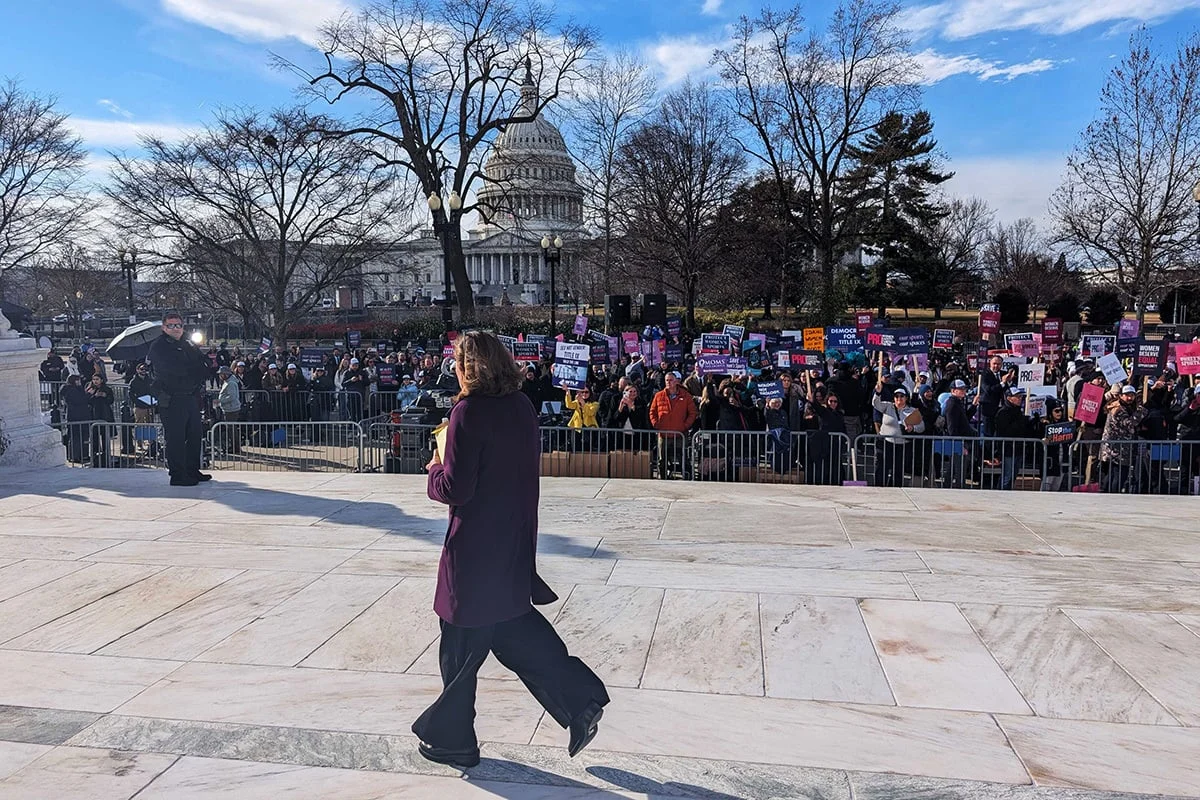
In a landmark decision that concludes years of intense legal and cultural debate, the United States Supreme Court ruled on Tuesday that Title IX, the federal law prohibiting sex-based discrimination in education, does not mandate the inclusion of transgender women and girls in sports teams aligned with their gender identity.
The 6–3 decision, delivered by the Court’s conservative majority, provides a significant victory for the Trump administration and a coalition of states that have sought to restrict athletic participation based on biological sex. The ruling effectively validates statutes in more than half of the United States that prohibit transgender girls and women from competing in women’s sports, settling a constitutional question that has percolated through federal courts for nearly a decade.
The Court’s Majority Opinion: Defining "Sex"
Writing for the majority, Associate Justice Brett Kavanaugh anchored the Court’s reasoning in a textualist interpretation of the 1972 Title IX statute. Kavanaugh asserted that the term "sex," as it was understood at the time of the law’s enactment, refers exclusively to biological sex rather than gender identity.
"The term ‘sex’ in Title IX and in the regulations surrounding it cannot plausibly be interpreted to refer to anything other than biological sex," Kavanaugh wrote. He further noted that the historical context of Title IX’s implementation—which explicitly allowed for separate athletic teams—was predicated on the inherent physiological differences between biological men and women. According to the majority, these distinctions remain a legitimate basis for state policy in the modern educational landscape.
The opinion was careful to establish parameters for the ruling’s scope. Kavanaugh clarified that the decision does not compel states or institutions to ban trans participation if they choose not to; rather, it permits states to enforce such bans without violating federal law. Furthermore, the opinion explicitly excludes from its reach the participation of biological females on male or co-ed teams, maintaining a narrow focus on the protection of the women’s sports category.
Chronology of the Legal Battle
The path to this Supreme Court decision was paved by a series of state-level legislative efforts and subsequent federal challenges.
- 2020: Idaho becomes the first state to pass a law banning transgender women from participating in women’s sports. This triggered the Little v. Hecox litigation, filed by Lindsay Hecox, a student at Boise State University.
- 2021: West Virginia enacts a similar ban, leading to the West Virginia v. B.P.J. lawsuit, brought on behalf of middle school student Becky Pepper-Jackson.
- February 2025: Shortly after his return to the White House, President Donald Trump signs an executive order barring transgender women from participating in women’s sports, threatening to withhold federal funding from universities that defy the order.
- April 2025: The Department of Education’s Office for Civil Rights formally accuses the University of Pennsylvania of violating Title IX for allowing a transgender woman (widely identified as swimmer Lia Thomas) to compete on the women’s team in 2022.
- January 2026: The Supreme Court hears oral arguments in the consolidated cases of Little v. Hecox and West Virginia v. B.P.J.
- June 2026: The Court issues its final ruling, cementing the legality of state-level bans.
The Cases of Hecox and Pepper-Jackson
The two cases at the heart of the ruling highlighted the personal impact of these legislative battles. Lindsay Hecox, whose lawsuit initially blocked the Idaho law, argued that her participation in club sports posed no competitive advantage. Her legal team provided evidence that she consistently ran slower than her cisgender competitors and that her testosterone levels remained within the typical range for cisgender women. Despite these arguments, the Court’s ruling overrides the previous injunctions that had allowed Hecox and others to continue participating.
Similarly, the case of Becky Pepper-Jackson, a West Virginia student, drew national attention. Pepper-Jackson, who has undergone hormone therapy, demonstrated that her physiological development remained consistent with that of her peers. Just last month, in a development that underscored the complexity of the issue, Pepper-Jackson won the Class AAA girls’ state championship in shot put—a victory that critics of trans inclusion cited as evidence of the necessity of the state bans, despite her legal team’s insistence that her performance was within the normative range for girls.

Official Responses: A Divided Nation
The reaction to the ruling has been starkly divided, mirroring the political polarization surrounding the issue.
Education Secretary Linda McMahon hailed the decision as a watershed moment for the Trump administration’s education agenda. "This is a tremendous victory, and we look forward to ensuring that every educational institution in America abides by the law of the land," McMahon stated. She added that the ruling "cements" the administration’s broader efforts to reform Title IX to focus exclusively on biological sex.
Conversely, LGBTQ+ advocacy groups expressed deep concern, characterizing the ruling as a systemic rollback of civil rights. Critics argue that the decision will lead to increased isolation for transgender youth, who often cite school sports as a primary means of social integration and physical health. The dissenting justices, though they filed opinions concurring in part, expressed alarm that the majority’s rigid interpretation of "sex" could have downstream effects on other protections for transgender individuals in the educational environment.
Broad Implications for Institutions
While the ruling is a monumental legal victory for the administration, its practical impact on the collegiate level may be more muted in the short term. The NCAA, the governing body for most collegiate sports, had already implemented a policy restricting competition to "student-athletes assigned female at birth only" in early 2025. Consequently, most major universities were already in compliance with the standards the Supreme Court has now affirmed.
However, the implications for secondary education and public school districts are profound. States that had hesitated to enforce bans due to pending litigation are now empowered to do so. Furthermore, the Trump administration has indicated that the Supreme Court’s reasoning could be applied to broader areas of school life. The Education Department has already opened several investigations into whether policies such as access to gender-segregated bathrooms violate Title IX under the new, stricter definition of "sex."
For transgender students, the ruling creates a landscape of significant uncertainty. As states move to codify the Supreme Court’s interpretation into local school board policies and administrative codes, the ability for transgender youth to participate in activities that align with their gender identity is likely to face increasing restriction across the country.
The Future of Title IX
This decision marks the end of a specific chapter of litigation, but it initiates a new phase of regulatory and policy implementation. The legal community is now closely watching to see if the Department of Education will move to rescind existing guidance that protects transgender students from discrimination, replacing it with formal rules that define "sex" strictly as biological sex.
As the dust settles, the ruling leaves the American educational system in a state of transition. For the six justices in the majority, the ruling is an exercise in preserving the original intent of a decades-old statute. For the three dissenting justices and the millions of Americans represented by the plaintiffs, the ruling represents a significant contraction of the inclusive interpretation of civil rights laws that had evolved over the last several years. The long-term impact on the mental health, athletic participation, and social inclusion of transgender youth remains one of the most pressing and contested questions in the American sociopolitical landscape.