For over three decades, the Mazda MX-5 Miata has stood as the global benchmark for the lightweight, rear-wheel-drive roadster. While the automotive industry has pivoted aggressively toward electrification, the "ND" generation of the Miata has defied conventional life cycles, remaining a top-selling, critically acclaimed sports car more than a decade after its introduction. However, as the industry faces an unprecedented transition toward zero-emission mandates, the future of the world’s most popular roadster is undergoing a profound evolution. New reports suggest that while the iconic formula is safe for now, the fifth-generation "NE" model may represent the final chapter for the traditional internal combustion engine (ICE) in the Miata lineage.
The Evolution of the Icon: A Decade of Analog Perfection
The current ND generation, launched in 2015, has become an outlier in the modern automotive landscape. In an era dominated by heavy battery-electric vehicles (BEVs), complex digital interfaces, and bloated curb weights, the Miata has remained a bastion of the "analog era." Its success lies in its simplicity: a naturally aspirated engine, a precise six-speed manual gearbox, and a chassis engineered to be an extension of the driver.
This "back-to-basics" philosophy has resonated with purists, keeping the car relevant despite its age. However, the regulatory environment is tightening. With Europe, North America, and parts of Asia implementing stringent CO2 reduction targets, even a lightweight roadster cannot ignore the march of progress. Mazda has navigated this by focusing on efficiency without sacrificing the "Jinba Ittai" (horse and rider as one) philosophy that defines the brand.
Chronology of Development: When to Expect the NE
The path to the next Miata is not a short one. Industry insiders and Mazda executives have confirmed that the next-generation roadster is still several years away. According to Mazda Europe Design Director Jo Stenuit, the project is in its deliberate planning stages, with the company opting for a slow-burn development cycle rather than rushing to market.
Current industry intelligence, including reports from Car Expert following a visit from senior Mazda leadership to Australia, suggests a timeline centered around 2028. This aligns with the rollout of Mazda’s new "Skyactiv-Z" powertrain architecture. Because this engine technology is not scheduled to hit production vehicles until the end of 2027—initially debuting in a hybrid-assisted CX-5—the MX-5 will not receive the heart of its next generation until that platform is fully matured. Given the extended life cycles of the "NC" and "ND" generations, analysts expect the "NE" to have a similarly long shelf life, potentially anchoring Mazda’s sports car portfolio well into the mid-2030s.
The Skyactiv-Z Factor: Engineering a Larger, Cleaner Heart
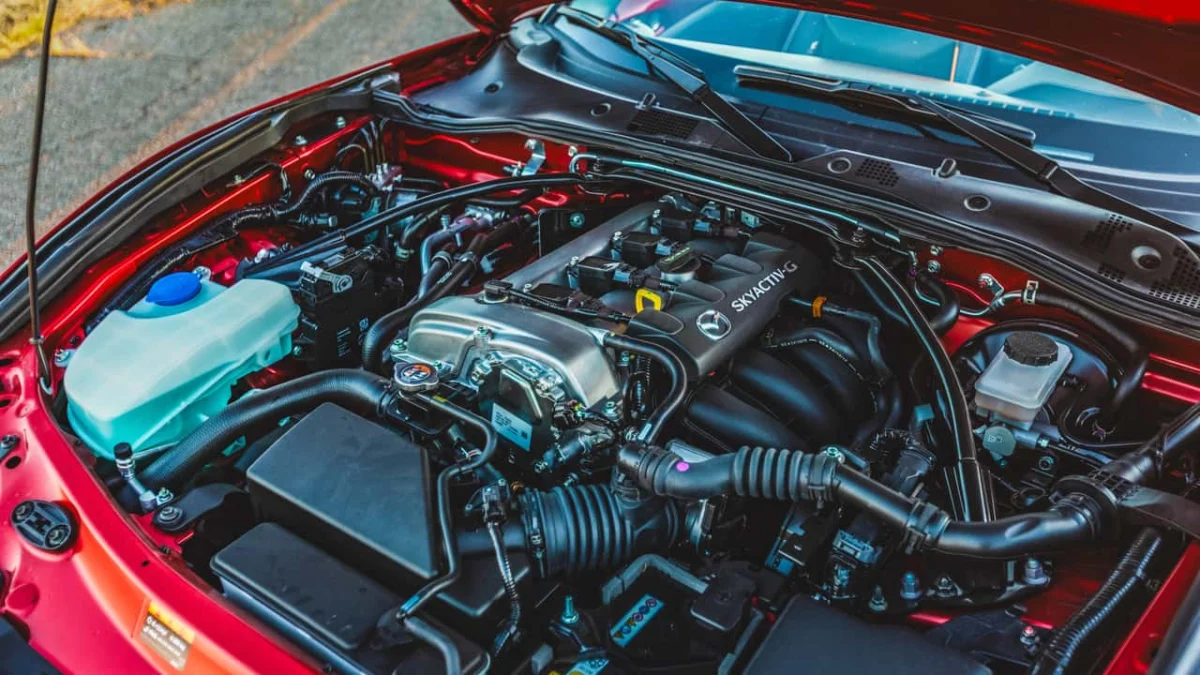
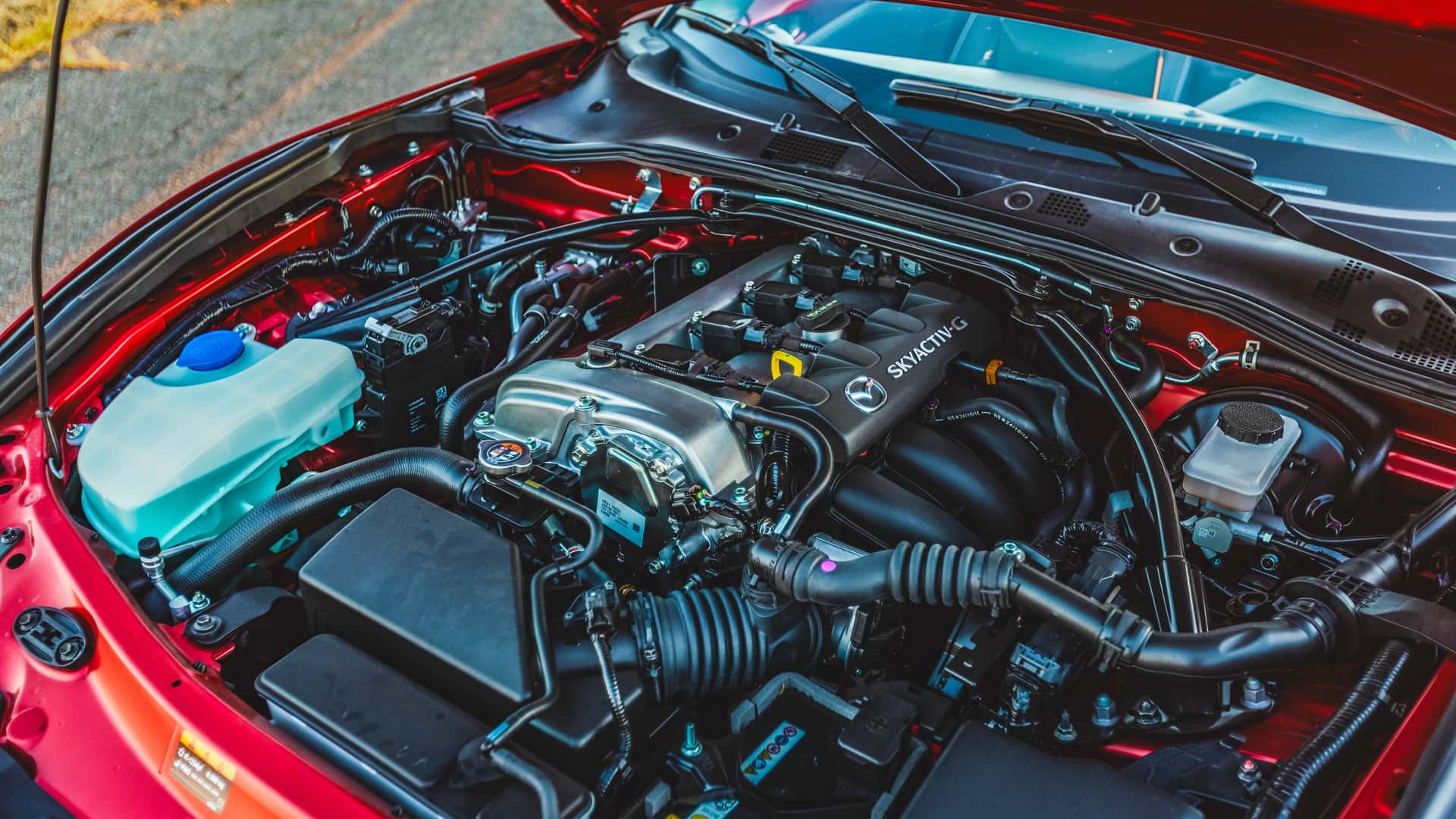
One of the most significant pieces of information regarding the NE Miata is the transition to the new Skyactiv-Z engine family. Reports indicate that the next roadster will feature a 2.5-liter, naturally aspirated powertrain. This marks a departure from the current 2.0-liter displacement, signaling a shift in how Mazda intends to meet performance targets while adhering to increasingly strict emissions standards.
The Skyactiv-Z engine is being developed to be the "ideal" combustion engine—optimized for high thermal efficiency and reduced carbon output. By moving to a larger displacement, Mazda aims to deliver improved torque and power delivery without relying on turbocharging, which can sometimes interfere with the linear throttle response that defines the Miata experience. Maintaining the naturally aspirated character is, according to leaked internal memos, a non-negotiable requirement for the development team.
Balancing Weight and Technology: The Under-1,000kg Challenge
Perhaps the most ambitious target for the NE generation is the preservation of its lightweight DNA. Mazda has publicly stated its desire to keep the next-generation car under the 1,000-kilogram (2,204-pound) threshold. Achieving this in a modern regulatory environment is a daunting engineering task.
Modern vehicles are mandated to carry a massive array of safety equipment, including pedestrian impact sensors, advanced driver-assistance systems (ADAS), and complex telematics. To keep the weight down, Mazda will likely need to employ advanced lightweight materials, such as high-tensile steel alloys and potentially carbon-fiber-reinforced plastics in structural components.
The "electrification dilemma" remains the greatest hurdle. To meet CO2 fleet averages, the NE might require some form of mild-hybrid assistance. Integrating a small battery and an electric motor typically adds significant mass—the antithesis of the Miata’s mission. If Mazda successfully implements a light-touch hybrid system, it would be a technological masterclass, allowing the car to reduce its carbon footprint without turning the nimble roadster into a heavy cruiser.
Official Responses and Strategic Implications
Mazda Australia CEO Vinesh Bhindi’s recent comments provided the most sobering insight into the brand’s long-term strategy. When asked about the future of the combustion engine in the MX-5, a high-ranking executive hinted that the upcoming generation would likely be the final iteration to rely exclusively on a gas-powered drivetrain.
This implies that while the fifth-generation Miata will be the ultimate combustion-powered version, the sixth generation—whenever it arrives in the 2030s—may be forced to transition to a fully electric or hydrogen-combustion platform. This strategic pivot is largely dictated by the European Union’s 2035 mandate, which requires a 90 percent reduction in CO2 emissions compared to 2021 levels. Since Mazda currently lacks a massive portfolio of mass-market EVs to offset the emissions of its performance models, the MX-5 must eventually evolve to avoid being legislated off the continent.
The Road Ahead: Why the Miata Matters
The Miata represents more than just a car for Mazda; it is the soul of the company. It serves as a halo product that defines the brand’s identity as an engineering-focused, enthusiast-led automaker. The decision to keep the combustion engine alive for one more generation is a calculated move to satisfy the brand’s core fan base while buying time to solve the "lightweight EV" puzzle.
For enthusiasts, the timeline is clear: the next few years represent the "golden hour" of the internal combustion Miata. With a larger, more efficient engine and a commitment to maintaining a curb weight that defies the industry trend of bloat, the upcoming NE generation is poised to be a collector’s item from the moment it leaves the factory.
Conclusion: A Final Act of Defiance
As the automotive industry rushes toward a future of uniform electric platforms and autonomous driving, the Mazda MX-5 remains a defiant anomaly. The forthcoming fifth-generation model promises to be a masterclass in compromise—marrying the efficiency of the new Skyactiv-Z engine with the purity of a rear-wheel-drive, manual-transmission chassis.
While it is bittersweet to acknowledge that this may be the final combustion-powered iteration, it is also a testament to Mazda’s commitment to its heritage. The NE Miata will not merely be a car; it will be a farewell to the analog performance era, delivered with the same passion and precision that made the original 1989 Miata an overnight sensation. For those who cherish the tactile connection between car and driver, the upcoming years of development will be among the most important in the history of the nameplate. The "Zoom-Zoom" company is ensuring that when the curtain finally falls on the internal combustion engine, the Miata goes out on its own terms—light, fast, and undeniably fun.