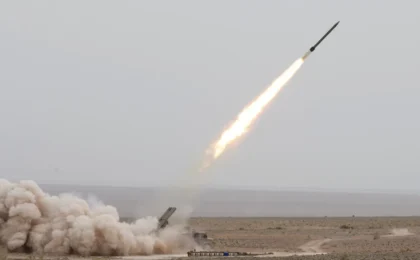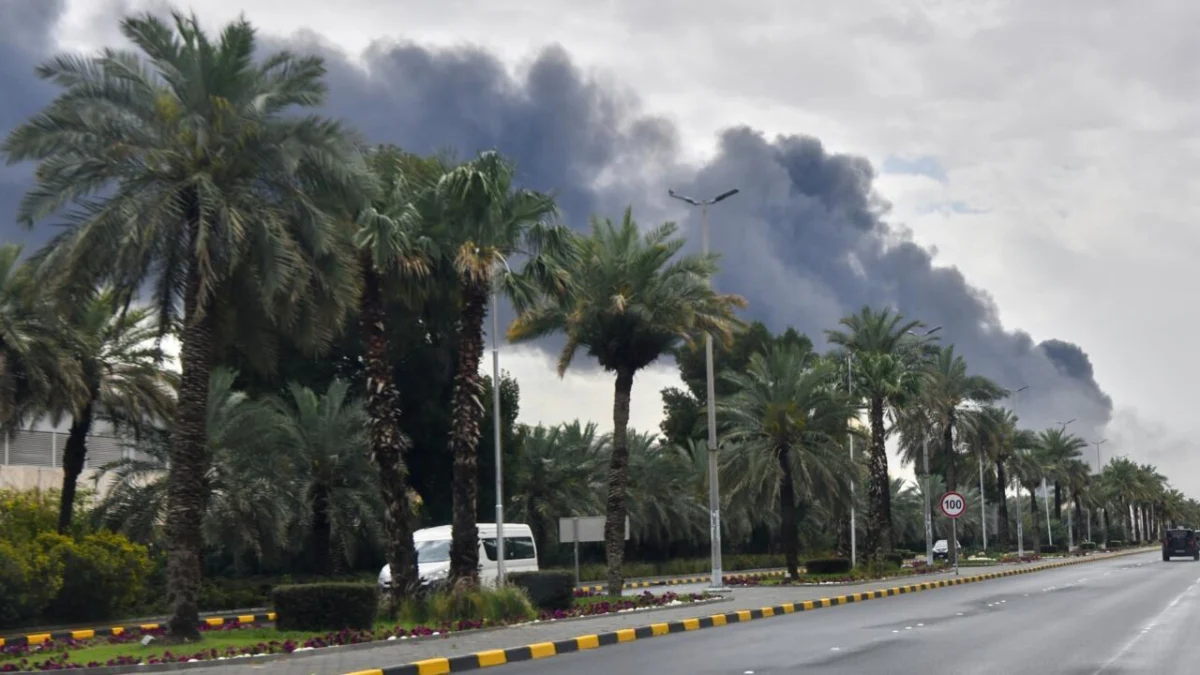
The Middle East teetered on the edge of a wider conflagration this Sunday as Iran launched a series of drone and missile strikes against Bahrain and Kuwait. The attacks, orchestrated by Iran’s paramilitary Revolutionary Guard, serve as a direct response to recent U.S. airstrikes against Iranian military infrastructure. This escalation has cast a long shadow over the fragile, month-old memorandum of understanding (MoU) intended to halt military operations and pave the way for diplomatic de-escalation between Washington and Tehran.
As the conflict intensifies, the critical Strait of Hormuz—a vital global energy artery—has become a flashpoint. With both the U.S. Navy and Iranian forces attempting to assert control over maritime traffic, the region faces the dual threats of a complete breakdown in diplomatic negotiations and a potential kinetic war that could cripple global oil and natural gas supplies.
The Chronology of Escalation: From Maritime Skirmishes to Regional Strikes
The current cycle of violence traces its origins to last Thursday, when an Iranian drone targeted a merchant vessel in the vicinity of Oman. This incident, occurring in a waterway that has historically facilitated the transit of approximately 20% of the world’s oil, prompted an immediate, robust response from the U.S. military.
Key Developments in the Recent Flare-Up:
- Thursday: An Iranian drone strike hits a merchant vessel off the coast of Oman.
- Saturday: The U.S. military conducts retaliatory strikes targeting Iranian "surveillance infrastructure, communication systems, air defence sites, drone storage facilities, and minelayer capabilities."
- Sunday Morning: Iran retaliates with drone and missile strikes directed at Bahrain and Kuwait. Kuwait, which hosts significant U.S. military assets, successfully intercepts the projectiles with its air defense systems.
- Sunday Mid-day: Bahrain reports that an Iranian strike hit a residential building near its international airport. While no casualties were reported, the government condemned the act as a "systematic pattern of repeated aggression."
- Sunday Evening: Reports emerge from Qatar of a civilian fatality caused by shrapnel from military operations, marking a grim expansion of the conflict’s human cost.
The Battle for the Strait of Hormuz
At the heart of the current crisis lies the disputed control of the Strait of Hormuz. Despite the strait being an international waterway bordered by Iran and Oman, Tehran has long maintained that it possesses the sole authority to regulate traffic through the passage.

Iranian Foreign Minister Abbas Araghchi reiterated this stance on Sunday, warning that any attempt by the U.S. or its allies to establish independent maritime arrangements would only "lead to further complications, delay the reopening of the Strait of Hormuz and increase the level of tension."
The U.S. Navy, in contrast, is overseeing a multinational maritime body tasked with securing commercial transit. On Saturday, this coalition announced it would expand a specific route near Oman for inbound and outbound traffic. However, the efficacy of these efforts is hampered by the persistent threat of Iranian strikes, which have already targeted vessels twice in the last few days.
According to data from the maritime task force, commercial traffic through the strait has dropped significantly. While 89 U.S.-assisted transits were completed over the last 72 hours, this remains well below the historical average of 138 vessels per day, highlighting the severe economic impact of the standoff.
Official Responses and the Fate of Diplomacy
The diplomatic landscape remains precarious. Despite the exchange of fire, Pakistan—acting as a key mediator—has indicated that technical talks between the U.S. and Iran are scheduled to resume this Tuesday.

U.S. Position: The "Military Option"
President Donald Trump took to social media on Sunday to issue a stark warning to Tehran. Accusing Iran of flagrantly violating the recently signed memorandum of understanding, Trump stated that the U.S. might be "forced to militarily complete the job." He added a chilling ultimatum: "If that happens, the Islamic Republic of Iran will no longer exist!"
Iranian Position: Demanding a Wider Resolution
Iran’s leadership is simultaneously attempting to link the maritime security issue with the broader conflict in Lebanon. Parliamentary Speaker Mohammad Bagher Qalibaf has called for the immediate assembly of a "conflict control unit" involving Iran, the U.S., and Lebanon to address the multifaceted nature of the hostilities. Iran continues to demand that Washington force Israel to withdraw from the 600 square kilometers it currently occupies in southern Lebanon—a buffer zone Israel claims is necessary for its national security following the ouster of the former Syrian regime.
A Multi-Front Conflict: Lebanon and Syria
The instability is not confined to the Persian Gulf. The conflict is deeply intertwined with the situation in Lebanon and Syria, complicating any potential peace deal.
The Lebanon Quagmire
Last week, Israel and Lebanon signed a framework agreement to end fighting between the Israeli Defense Forces (IDF) and Hezbollah. However, the agreement is crumbling. Hezbollah, which was not a party to the deal, has rejected calls to disarm and continues to engage in skirmishes. On Sunday, reports confirmed that Hezbollah militants killed an Israeli soldier in the village of Deir Siryan, while Israeli airstrikes hit areas in Taybeh and the Nabatiyeh district.

The Syrian Front
Further complicating the regional map, Israeli forces have expanded their operations into southern Syria. Following the collapse of the Bashar Assad government in late 2024, Israel seized control of a UN-patrolled buffer zone. While originally labeled a "temporary" measure, current indications suggest a move toward indefinite occupation.
On Sunday, Syrian state media reported that Israeli artillery shelled the village of Abdin in Daraa province. The shelling reportedly forced residents to flee after a confrontation involving local civilians and an advancing Israeli convoy. Israel confirmed it had killed several "armed men" in the area, though it provided no further details or evidence to support the classification of the targets.
Implications: The High Cost of Failure
The ongoing conflict poses three major risks to regional and global stability:
- Economic Disruption: As the Strait of Hormuz remains a high-risk zone, insurance premiums for shipping will continue to climb, inevitably driving up the global price of energy. The reduction in daily vessel transits is already a precursor to potential supply chain shocks.
- The Collapse of the MoU: The 60-day window established by the U.S.-Iran memorandum of understanding is closing. With the current cycle of tit-for-tat strikes, the window for technical negotiations—which were intended to address uranium enrichment, the lifting of port blockades, and sanctions relief—is rapidly narrowing.
- Humanitarian Crisis: The expansion of military operations into civilian-populated areas, such as the residential incident in Bahrain and the displacement of villagers in southern Syria, signals a disregard for established rules of engagement. As civilians become casualties of regional power struggles, the path to a sustainable political settlement becomes increasingly obstructed by resentment and trauma.
As of Sunday evening, the "conflict control unit" proposed by Tehran has yet to convene, and the U.S. has shown no sign of halting its military posture. With both Washington and Tehran locked into a cycle of aggressive posturing, the international community watches with bated breath to see if the scheduled Tuesday talks can pull the region back from the brink, or if the current "fragile ceasefire" will formally dissolve into full-scale war.