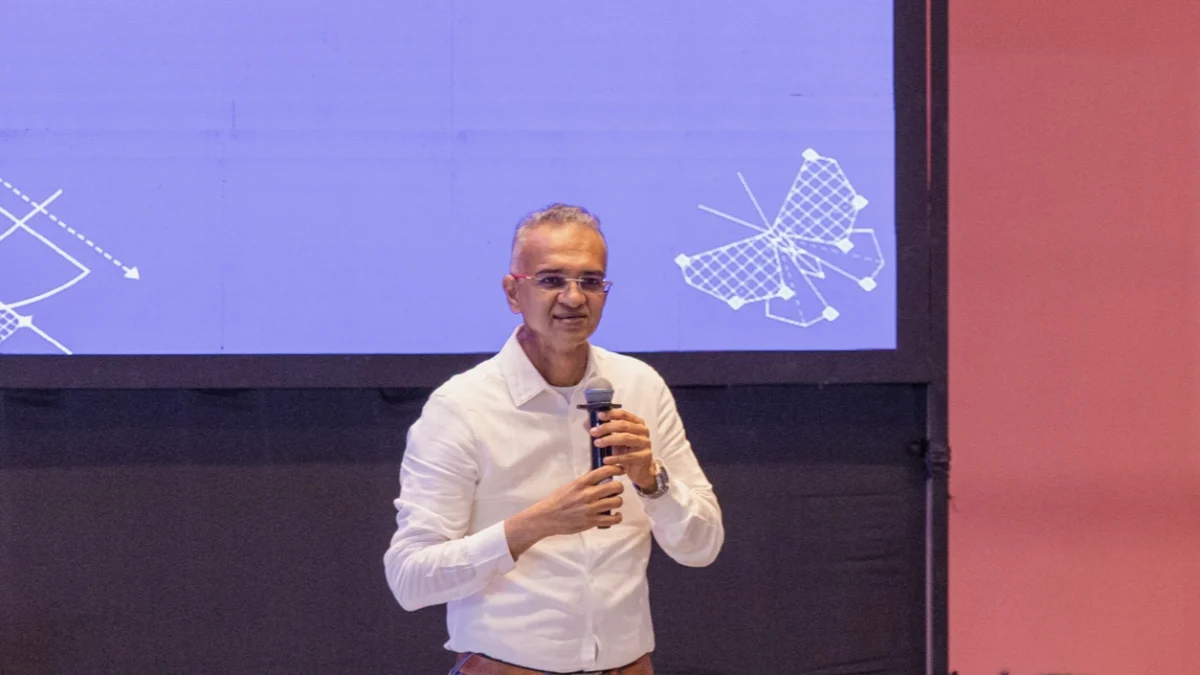
India’s digital payment landscape, anchored by the Unified Payment Interface (UPI), stands at a critical juncture. Having already revolutionized how a nation of 1.4 billion people transacts, the system now processes over 750 million daily transactions. However, the National Payments Corporation of India (NPCI)—the umbrella organization for operating retail payments and settlement systems in India—is not resting on its laurels. According to Dilip Asbe, MD and CEO of NPCI, the next phase of India’s digital evolution will be defined by a singular, transformative force: Artificial Intelligence.
In a recent interview at Mumbai Tech Week (MTW) 2026, Asbe outlined a vision where AI acts as the primary engine to scale UPI toward the monumental target of one billion daily transactions. This shift represents more than just a volume milestone; it is a fundamental redesign of how India approaches user onboarding, fraud mitigation, and financial inclusion.
The Strategic Pivot: AI as the Backbone of Future Payments
The "next half a billion" users in India will likely come from rural areas and non-English-speaking demographics. To integrate these citizens into the formal economy, the NPCI, in coordination with the Reserve Bank of India (RBI) and the federal government, is prioritizing AI-driven solutions that remove linguistic and technical barriers.
Enhancing Onboarding via Multilingual Voice Models
Asbe highlighted that voice-based interfaces are the key to unlocking the next wave of adoption. While NPCI launched a voice assistant-based system in 2023, adoption remains in its nascent stages. The challenge, as Asbe acknowledges, is the precision of voice models. To make onboarding simpler for a diverse population, the payment ecosystem requires highly accurate, multilingual models that can interpret local dialects and colloquialisms. By investing in these technologies, the NPCI aims to transform the payment experience from a screen-based interaction to a conversational, intuitive dialogue.
Fraud Detection and the Fight Against Mules
As the transaction volume climbs, so does the sophistication of cyber threats. AI is no longer a luxury for security; it is a necessity. The NPCI is deploying machine learning algorithms to identify "mule" accounts and fraudulent patterns in real-time. By analyzing transactional behavior and digital footprints, the system aims to create a proactive shield that protects citizens before a transaction is even completed.
A Chronology of UPI’s Ascent and Future Outlook
The rise of UPI is one of the most significant success stories in global fintech history.
- 2016: NPCI launches UPI, enabling real-time, inter-bank payments.
- 2023: Introduction of voice-assistant-based interactive systems to simplify transactions.
- 2024: NPCI spins off the BHIM UPI app into a wholly-owned subsidiary to focus on sovereign-backed, secure, and competitive payment infrastructure.
- 2025: Pilot programs for agentic commerce and AI-led chatbots (in collaboration with players like Razorpay) are launched, integrating GPT-style models into the shopping experience.
- 2026: Launch of "FIMI," an AI language model specifically designed for resolving user disputes, which is currently managing over a million active cases.
- December 31, 2026 (Projected): Implementation of the 30% market share cap on individual UPI apps, aimed at curbing the concentration of power among dominant players like PhonePe and Google Pay.
Supporting Data and the "Small Language Model" Opportunity
One of the most intriguing aspects of Asbe’s vision is the pivot toward Small Language Models (SLMs). While global tech giants are racing toward massive, resource-heavy Large Language Models (LLMs), Asbe believes India’s competitive advantage lies in specialization.
"We have a very rich data set in our ecosystem," Asbe stated. "There is a big opportunity for Indian companies—the banks, FinTechs, and the ecosystem—to create small language models which are sharp, specific, and as deterministic as possible."
The FIMI Success Story
The efficacy of this strategy is already visible in FIMI. By focusing specifically on payment disputes, the model has become highly efficient, resolving issues and handling mandate cancellations for over a million users. By keeping models "deterministic," NPCI ensures that the output remains consistent, accurate, and aligned with financial regulations—a critical requirement in a sector where errors can lead to direct financial loss.
The Regulatory Framework: Balancing Innovation and Risk
As India explores AI-powered finance, the regulatory environment is undergoing a transformation. Following the trend seen in the U.S.—where companies like Coinbase and Robinhood are empowering AI agents to execute trades—India is looking to adopt similar agentic commerce models.
However, Asbe is cautious. He emphasizes that the adoption of AI-powered financial agents must be governed by a robust framework that prioritizes user consent and risk mitigation. In the event of an error or a fraudulent transaction involving an AI agent, the system must be capable of tracing the instructions back to the user’s original intent.
"There should be enough protection for users," Asbe noted. "The system should be able to look at the instructions and consent given by the user to an agent to ensure full transparency and accountability."
UPI Competition and the Market Share Debate
The dominance of Walmart-owned PhonePe and Google Pay, which collectively control over 80% of the market, remains a point of contention for regulators. The NPCI’s persistent efforts to introduce a 30% market share cap have faced several delays, with the deadline currently set for the end of 2026.
The Problem of Commercial Models
Asbe addresses the concentration risk not merely as a regulatory failure, but as a byproduct of market maturity. He argues that the high barrier to entry for new players is due to the lack of a viable commercial model.
"The moment we see the commercial model being available to the ecosystem, I believe newer players will start investing very heavily," he explained.
To address this, the NPCI has revitalized the BHIM UPI app. Although its market share currently hovers at 1%, the goal is not to dominate, but to serve as a "sovereign and secure" alternative. By providing a neutral, state-backed option, NPCI ensures that the UPI ecosystem remains resilient against the potential failure or exit of any private commercial player.
Implications: The Future of the Global Digital Economy
The implications of India’s AI-driven payment strategy are global. As one of the world’s largest digital economies, India’s success in integrating AI into its financial backbone provides a blueprint for other emerging markets.
1. Credit Distribution
One of the next major frontiers for UPI is the democratization of credit. By leveraging the digital footprints generated by millions of transactions, AI can help banks and fintechs assess creditworthiness for millions of previously "unbankable" citizens. This transition from payments to credit is expected to be the next engine of growth for the Indian fintech sector.
2. Global Benchmarking
The move toward specialized, domain-specific AI models like FIMI suggests that the future of fintech may not lie in "generalist" AI, but in highly controlled, deterministic systems. This approach reduces the risks associated with AI hallucinations and ensures that financial services remain stable under load.
3. Investor Sentiment
For global investors, the regulatory clarity provided by the NPCI is a signal of stability. As the landscape evolves to support competition and foster innovation through AI, the Indian market is likely to attract significant capital, not just for payment apps, but for the underlying AI infrastructure and credit-tech solutions that ride on top of the UPI rails.
Conclusion
As India moves toward the target of one billion daily transactions, the role of the NPCI has shifted from being a mere operator of infrastructure to becoming an architect of an AI-powered financial ecosystem. By focusing on multilingual voice interfaces, fraud prevention, and the creation of deterministic small language models, India is positioning itself to not only meet the demands of its massive population but to define the next generation of global financial technology.
While the challenges of market concentration and technological accuracy remain, the roadmap provided by leadership at the NPCI suggests a disciplined, regulatory-first approach. For India, the future of money is not just digital—it is intelligent.