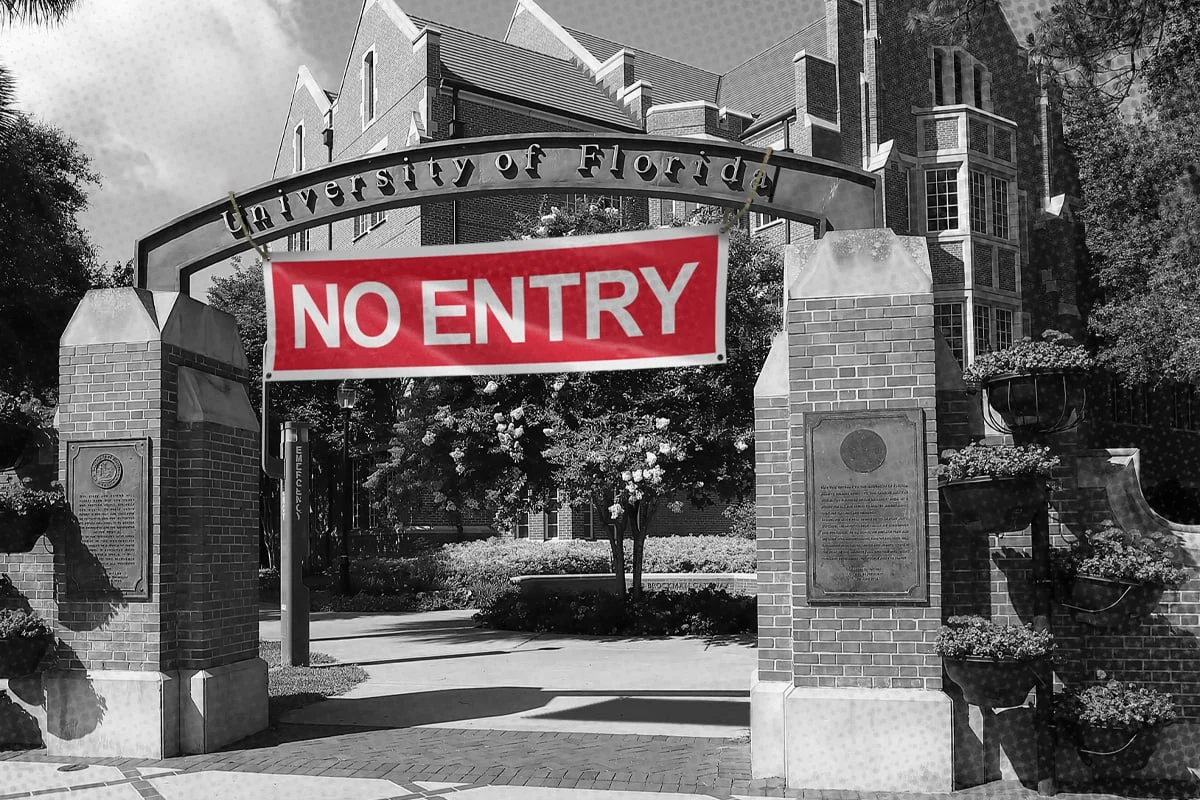
In a move that could fundamentally reshape the landscape of public higher education in the Sunshine State, the Florida Board of Governors has initiated a process that may effectively bar undocumented students from enrolling in the state’s 12 public universities. This policy shift, which has ignited a fierce debate over access, equity, and the role of state-funded institutions, represents one of the most aggressive legislative stances against noncitizen students in the United States.
The Proposed Policy: An Administrative Pivot
The proposal, which was discussed and subsequently adopted in a preliminary version by the Board of Governors’ academic affairs committee, would block undocumented students from admission beginning in the 2027–28 academic year. Under the current language, the only exception provided is for institutions that have already admitted "all academically qualified applicants"—a vague provision that has drawn immediate criticism from legal experts and educational advocates who argue it lacks clear criteria for verification.
While the rule would not apply to students currently enrolled in the state university system, it serves as an "eviction notice" to the pipeline of prospective scholars. The board, which oversees the state’s massive public university network, is expected to hold a final vote in September following a 14-day public comment period.
A Chronology of Exclusion
The movement to restrict higher education access for undocumented residents did not appear in a vacuum; it is the culmination of a multi-year effort by Florida’s executive branch to reshape immigration policy through administrative rule-making.
- 2025: Florida took the initial step of eliminating in-state tuition for undocumented students, effectively reversing a decade-old policy of tuition equity. This move was part of a sweeping, broader immigration legislative package signed by Governor Ron DeSantis.
- Early 2026: State lawmakers attempted to codify a total ban on noncitizen enrollment through the legislative process. However, bills introduced by state Sen. Erin Grall and former state Sen. Randy Fine stalled in committee, failing to garner sufficient support to reach a floor vote.
- June 2026: Following legislative failures, the focus shifted to administrative boards. The Board of Governors moved forward with the current proposal, while the State Board of Education scheduled a June 30 meeting to consider a parallel rule for the state’s 28 community and state colleges.
- September 2026: The Board of Governors is scheduled to meet, where the final, binding vote on the university ban is expected to take place.
Supporting Data: The Scale of the Impact
The implications of these potential rules are significant, given the size of Florida’s undocumented student population. According to data from the Higher Ed Immigration Portal, more than 49,000 undocumented students are currently enrolled in Florida’s colleges and universities. Furthermore, an estimated 8,000 undocumented students graduate from Florida high schools every year.
Critics point out that these students are not "outsiders" in the traditional sense; many have been raised in Florida since early childhood. According to Gaby Pacheco, president and CEO of TheDream.US, a scholarship provider for undocumented students, the average age of arrival for their Florida scholarship recipients is six years old. These students have progressed through the Florida K–12 system, effectively becoming "homegrown talent" that the state has already invested millions of dollars to educate.
Official Responses and Political Friction
Governor Ron DeSantis has emerged as the primary architect and public defender of this shift. During a press conference in mid-June, he expressed full support for the move, framing it as a matter of prioritizing Florida residents.
"I think what they’re doing is the right thing to do," DeSantis stated. "I think it’s putting the students in Florida who are growing up here going to our schools, Florida residents, it’s putting them first."
However, the policy has faced intense pushback from student leaders and advocacy groups. Alexander Lambridis, a junior at Florida Atlantic University, addressed the board during the public comment period, characterizing the proposal as "shameful" and warning that it effectively functions as a systemic denial of the American Dream.
Jared Nordlund, the Florida state director at the immigrant-advocacy organization UnidosUS, suggests that the failure of similar bills in the legislature indicates that the policy is fundamentally unpopular. "The fact that we’ve not found ways to make their economic future brighter… it shows you just how backwards the state leaders are," Nordlund said.

Diego Sánchez, vice president of policy and strategy at the Presidents’ Alliance on Higher Education and Immigration, has raised technical concerns regarding the implementation of the rule. He argues that the ambiguity surrounding what constitutes "lawfully present" and the lack of a clear, standardized verification process will inevitably lead to confusion for both university administrators and prospective students, likely resulting in inconsistent enforcement across the state.
Implications for Florida’s Future
The potential ripple effects of this policy are twofold: economic and social.
Economic Consequences
Economists and educators alike have warned that barring a large segment of the population from higher education will ultimately hurt the state’s workforce. Undocumented students, once graduated, often enter critical sectors such as nursing, teaching, and engineering—professions where Florida is already experiencing labor shortages. By closing the door to these students, critics argue that the state is "shooting itself in the foot," effectively cutting off a vital pipeline of professional talent that has already been groomed by the Florida taxpayer-funded K–12 system.
Additionally, the departure of these students to other states or the loss of tuition revenue for universities could create a fiscal drag on the institutions themselves. As students seek opportunities elsewhere, Florida risks a "brain drain" of individuals who have deep roots in local communities.
The "Administrative Loophole" Concern
A recurring criticism of these recent board actions is the use of administrative rule-making to bypass the legislative process. Because previous attempts to ban undocumented students via the Florida Senate and House failed, observers like Sánchez are alarmed that administrative boards are acting as surrogate legislatures. "The State Board of Education is using the administrative rule-making process to make a major policy shift when its general purpose is to implement laws, not create new ones," Sánchez noted.
A Growing National Pattern
If these proposals pass, Florida will join a small, restrictive group of states—including Alabama, Georgia, and South Carolina—that have implemented similar bans. This trend marks a stark contrast to other parts of the country where states have moved toward "tuition equity" and increased access for Dreamers.
The move also comes at a time when federal courts are increasingly scrutinizing state-level immigration policies. While the U.S. Department of Justice has challenged tuition equity bans in 10 other states, Florida’s aggressive posture indicates a willingness to test the limits of state authority regarding who can access public education.
Conclusion: A Turning Point
The potential ban on undocumented students at Florida’s public universities and colleges is more than a policy dispute; it is a fundamental debate over the definition of a "Florida student." As the September deadline for the Board of Governors approaches, the state stands at a crossroads. Whether the final decision results in a more restrictive educational environment or a reconsideration of the long-term economic and human costs, the outcome will undoubtedly serve as a bellwether for the future of higher education access in the American South.
For now, thousands of students, families, and administrators are left in a state of uncertainty, waiting to see if the doors to the state’s public university system will remain open to those who have, for all intents and purposes, grown up within its walls.