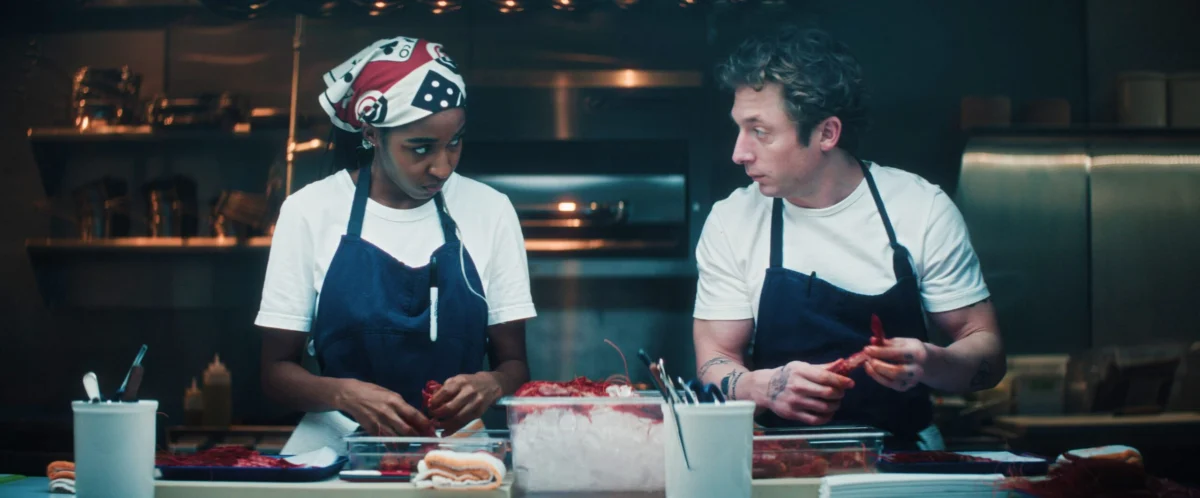
SPOILER ALERT: This analysis contains comprehensive spoilers for “The Original Beef of Chicagoland,” the series finale of the critically acclaimed FX/Hulu drama, "The Bear."
For four seasons, viewers have watched the transformation of a gritty, grease-stained Italian beef sandwich shop into a temple of high-concept gastronomy. Yet, as the final credits rolled on the series finale, "The Original Beef of Chicagoland," it became clear that the show’s central thesis was never truly about the food. It was, as the characters often hinted through their chaotic, high-pressure arcs, about the people. The restaurant was merely the vessel—a crucible designed to forge, break, and eventually heal a found family.
The Climax: A Kitchen at the Brink
The finale serves as a sobering, yet hopeful, epilogue to the penultimate episode’s "perfect storm." The staff had survived a service defined by a relentless thunderstorm, supply chain collapses, and an overwhelming volume of reservations that pushed the team to their psychological breaking points. Behind the scenes, the financial reality was equally dire. Uncle Jimmy (Oliver Platt), the primary financier who had gambled his personal fortune—including the sale of his watch collection—to keep the restaurant afloat, had officially run out of capital.
Unlike the frantic pacing of the preceding season, the finale takes a breath, slowing down to capture the quiet, momentous shifts in the lives of those who kept the lights on at The Bear. It is a transition from the adrenaline-fueled trauma of the kitchen to the deliberate, often painful process of moving forward.
A Chronology of New Beginnings
The resolution of The Bear is not marked by a single explosive event, but by a series of quiet handoffs and life-altering decisions.
- The Japanese Horizon: Natalie (Abby Elliott) and Carmy (Jeremy Allen White) push Richie (Ebon Moss-Bachrach) toward a life-changing opportunity: an international hospitality seminar in Japan. This represents the ultimate arc for Richie—the man who once fought against the restaurant’s modernization now finds himself at the forefront of global culinary standards.
- Expansion and Legacy: Ebraheim (Edwin Lee Gibson) successfully pitches the franchising of "The Beef." By pivoting to ghost kitchens in the suburbs, the staff ensures that the soul of the original sandwich shop survives even as the flagship restaurant ascends to the stratosphere of fine dining.
- The Passing of the Spatula: Marcus (Lionel Boyce) bids farewell to his mentor, Luca (Will Poulter), as the latter returns to Copenhagen. Simultaneously, Tina (Liza Colón-Zayas) assumes the mantle of chef de cuisine under Sydney (Ayo Edebiri), cementing a internal hierarchy that finally feels stable.
- The Michelin Verdict: The emotional pivot point arrives via a phone call from Peter Clark, the "Star Man." The Bear has been awarded two Michelin stars. In a moment of understated brilliance, Carmy deflects the achievement, telling Sydney, "You got two." Having spent the season operating in a "passing of the torch" capacity, Carmy finally recognizes that the kitchen no longer belongs to his obsession, but to Sydney’s vision. The subsequent embrace between the two—a raw, tearful release of years of tension—serves as the show’s most earned catharsis.
Supporting Data: The Architecture of Change
The finale is deeply concerned with the concept of "scoring"—the culinary term for success, but also a metaphor for personal validation. John Mulaney’s character, Stevie, facilitates a pivotal scene where Carmy, dressed in a sharp suit, meets with a woman named Sue (Bonnie Hunt). While the audience is initially led to believe this is a corporate interview, it functions as a therapeutic audit.
Carmy admits that if he had been in charge during the final service, he would have "made it worse." This admission marks the end of his self-imposed martyrdom. He is no longer the tortured genius at the center of the orbit; he is an observer of the ecosystem he helped create. It is eventually revealed that Carmy is interviewing for an internship at an architectural firm. It is a poetic pivot: he plans to apply his obsessive, microscopic focus on the colors, presentation, and design of food to the literal structure of buildings.
Official Responses and Creative Direction
The showrunners have maintained a deliberate ambiguity regarding some of the series’ long-standing mysteries. The status of the romance between Carmy and Claire (Molly Gordon) remains largely unresolved, a choice that reinforces the show’s commitment to the platonic and professional bonds that define the characters’ lives.
However, the finale provides closure elsewhere. Richie’s long-standing "will-they, won’t-they" dynamic with his colleague Jess (Sarah Ramos) is settled on his flight to Japan, as she reaches out to comfort him—a rare, gentle moment of romantic promise in a series often dominated by conflict. The inclusion of cameo appearances from the likes of Bob Odenkirk and Josh Hartnett at a surprise birthday party for Richie’s daughter, Eva, reinforces the idea that the "family" of the restaurant has extended well beyond the kitchen walls.
Implications: The Legacy of "The Bear"
What does The Bear leave behind? The final scene is one of profound tranquility. Carmy, sitting at his new desk, texts his late brother, Mikey (Jon Bernthal): "All good." It is a closure that transcends the restaurant.
While he is no longer the head chef, the restaurant remains his "happy place." He realizes that his pursuit of greatness was never about the stars or the accolades; it was about the people he worked alongside. As he sits in his new office, he closes his eyes, mentally returning to the kitchen—not as a place of labor, but as a place of belonging.
The show concludes with a dual reality: The Bear continues to operate as an elite culinary institution under Sydney’s command, while its original, humble spirit lives on through the suburban ghost kitchens. It is a balanced ending, one that suggests that while individuals may outgrow the environments that shaped them, the connections forged in the heat of the kitchen remain permanent.
Ultimately, the series finale of The Bear argues that the greatest success a person can achieve is not in the perfection of their craft, but in the successful mentorship and liberation of those who come after them. Carmy, the man who started the show trying to fix his brother’s legacy, ends it by successfully building his own—not in steel and soufflés, but in the people he allowed to lead.
As the final frames fade, the message is clear: The restaurant was never the story. The people were. And for the staff of The Bear, everything is, finally, all good.