
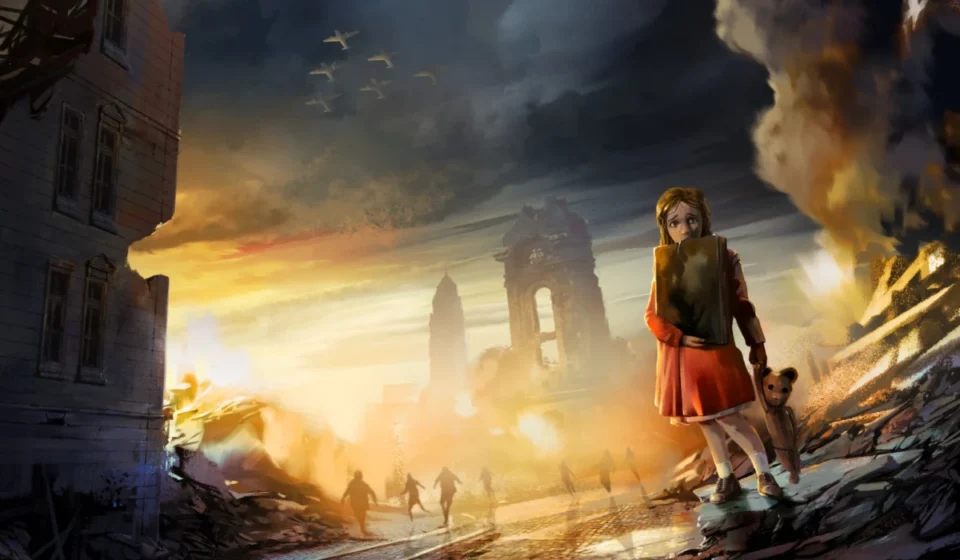
Cosmic Horror Meets Animation: Álex de la Iglesia to Direct "Ages of Madness: The Howling of the Jinn"

In a move that has sent ripples of excitement through both the international animation community and the world of genre cinema, acclaimed Spanish filmmaker Álex de la Iglesia has announced his directorial debut in the realm of animation. The visionary director, known for his unique blend of dark humor, grotesque imagery, and high-octane tension—seen in cult hits like The Day of the Beast, The Last Circus, and the supernatural television series 30 Coins—is set to helm Ages of Madness: The Howling of the Jinn.
This ambitious 3D animated feature is not merely a new project for the veteran director; it represents a significant milestone in the evolution of adult-oriented animation. Set to be produced by the Canary Islands-based animation house 3Doubles Producciones—famed for their Goya-nominated work on SuperKlaus and Norbert—alongside Bizkaia-based studio Sumendi Uhartea, the film promises to be the first major 3D production to faithfully and deeply explore the complex, unsettling universe of H.P. Lovecraft for a global audience.
The Necronomicon: A Legacy of Forbidden Knowledge
At the heart of Ages of Madness lies one of literature’s most infamous artifacts: the Necronomicon. Lovecraft, the architect of cosmic horror, consistently utilized the "book of the dead" as a literary device to anchor his sprawling mythology. He framed it as a tome of forbidden knowledge, a gateway to understanding the "Old Ones"—primordial, malevolent entities that existed before the dawn of humanity and wait in the shadows to reclaim the Earth.
De la Iglesia’s adaptation will weave together several "tragically intertwined stories" spanning four distinct historical and geographical periods. The film serves as a tapestry of dread, exploring how the presence of the Necronomicon acts as a catalyst for insanity and death. By focusing on the book as a narrative thread, the film aims to capture the essence of Lovecraft’s original works: the terrifying realization that humanity is insignificant in the face of an uncaring, infinite universe.
"Feeding on humanity’s thirst for forbidden knowledge," the production team noted during the unveiling at the Annecy Animation Festival, "the Necronomicon unleashes madness and the chilling certainty that we are nothing more than dust to the Ancient Ones. The film explores the inherent fragility of human sanity when confronted with the vast, incomprehensible unknown."
A Career Full-Circle: From Comic Panels to Animated Frames
The question of why a filmmaker with such a distinct, physical style as Álex de la Iglesia has waited until now to enter the world of animation is perhaps best answered by his own creative history. Before he was the mastermind behind some of Spain’s most daring live-action thrillers, De la Iglesia was a burgeoning comic book artist.
His transition into film was paved by his sharp eye for visual storytelling, leading to his debut feature Mutant Action (1993), which was produced by the legendary Pedro and Agustín Almodóvar. Yet, the seeds of his current project were planted long before he ever set foot on a live-action set.

"Before making movies, I used to draw monsters," De la Iglesia remarked during the announcement. "I started out creating comic books, and animation has always been there, simmering in the background. Ages of Madness gives me the chance to reconnect with my roots alongside an incredibly talented team. I am thrilled because, even after so many years in filmmaking, I can still tackle something new with the excitement of day one."
For fans of his work, the medium of animation seems like a natural, albeit long-awaited, home for his signature surrealism. In animation, the constraints of reality disappear, allowing De la Iglesia to craft the kind of Eldritch horrors and nightmarish landscapes that Lovecraft described but that are often difficult to capture with traditional practical or visual effects.
Production Logistics and Industry Impact
The production of Ages of Madness: The Howling of the Jinn is scheduled to commence in late 2026. The collaboration between 3Doubles Producciones and Sumendi Uhartea is a testament to the burgeoning strength of the Spanish animation industry.
3Doubles, led by CEO Darío Sánchez, has positioned this project as a landmark achievement. "I have always been fascinated by the Lovecraftian universe," Sánchez stated. "Being able to bring that specific brand of cosmic horror to the screen alongside Álex de la Iglesia is a dream come true. I am convinced that this is a turning point for our sector. Adult animation is currently experiencing a global boom, and this project will undoubtedly put the Spanish industry on the global map."
Sumendi Uhartea brings a wealth of experience to the table as well. Having worked on projects such as Heidi, Katamotzaren erreskatea, Lasai, Zeus!, and the Cartoon Forum 2025 selection KooKoo Corral, the studio has demonstrated a versatility that will be crucial in balancing the dark, atmospheric requirements of a Lovecraftian feature with the technical demands of high-end 3D animation.
Implications: The Rise of Adult Animation
The decision to market Ages of Madness as an "adult 3D animation production" highlights a growing trend in the film industry. For decades, animation was largely viewed in the West as a medium primarily for children. However, the success of series and films like Arcane, Spider-Man: Across the Spider-Verse, and various adult-oriented anime has shifted the narrative.
By choosing a filmmaker with De la Iglesia’s credentials, the production is signaling that this film is not intended for the family-friendly market. Instead, it is aimed at an audience that craves sophisticated, dark, and challenging narratives. This project potentially sets a new standard for how classic literary horror can be adapted into the digital age.

Furthermore, the choice of Lovecraft as a subject matter is strategically brilliant. Lovecraft’s works are notoriously difficult to adapt because the horror is often psychological rather than physical. Animation allows directors to visualize the "unspeakable" monsters and the distorted, non-Euclidean geometry that characterize the Cthulhu Mythos, offering a level of fidelity that live-action struggles to maintain without exorbitant budgets.
Looking Ahead: A New Era of Cosmic Horror
As we look toward the 2026 production window, the industry will be watching closely. Ages of Madness: The Howling of the Jinn is poised to be a high-stakes experiment. If it succeeds, it could pave the way for a wave of high-budget, dark animated features originating from Europe.
The film’s exploration of four different historical eras also provides an opportunity for a unique visual style—a shifting aesthetic that evolves as the Necronomicon passes from hand to hand through time. Whether it is the ancient, dust-choked ruins of a forgotten civilization or the shadow-filled corners of a Victorian library, the visual potential is vast.
For Álex de la Iglesia, this is more than just another credit on his resume; it is a return to the sketchbook, a chance to refine the monsters that first captured his imagination as a young man. For the audience, it promises a harrowing, beautiful, and utterly terrifying descent into the madness that lies just beneath the thin veneer of our reality. As the production gathers momentum, one thing is certain: the howling of the Jinn will not be easily ignored.
The intersection of Spanish creative ingenuity, cutting-edge 3D animation technology, and the timeless, oppressive dread of H.P. Lovecraft makes Ages of Madness one of the most anticipated projects of the coming years. It represents a bold step forward for the director, a statement of intent for the studios involved, and a potential new chapter in the history of adult animation.