
The High-Stakes Diplomacy of Mark Rutte: Navigating the Fragile Transatlantic Alliance

Executive Summary: A Diplomatic Tightrope Walk
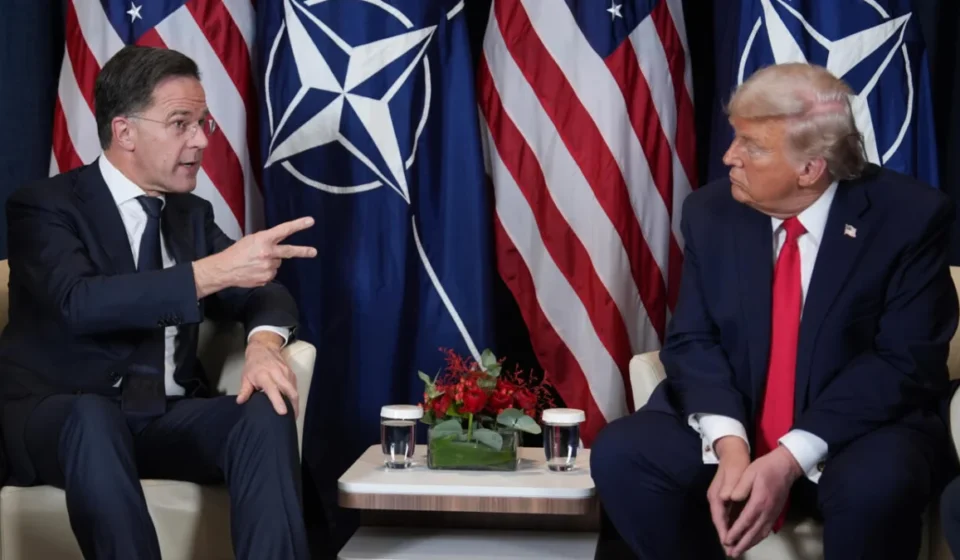
NATO Secretary-General Mark Rutte arrives at the White House this Wednesday for a pivotal meeting with President Donald Trump, a session widely viewed as a critical "damage control" operation. The encounter comes at a moment of profound instability for the transatlantic security architecture. With the shadow of the ongoing Iran war looming over Western capitals, the alliance faces an existential crisis fueled by Washington’s frustration over European "free-riding" and the strategic fallout from the February 28 US-Israeli military operations against Iran.
Rutte, often dubbed the "Trump whisperer" for his adept handling of the mercurial president, faces a dual mandate: appease a skeptical White House to prevent a premature drawdown of US forces in Europe, and ensure the stability of the upcoming July 7–8 NATO leaders’ summit in Ankara.
Chronology of Crisis: From Tehran to the Beltway
The current friction did not emerge in a vacuum; it is the culmination of nearly 18 months of escalating geopolitical friction.
- November 2024: Donald Trump secures his return to the White House, immediately signaling a departure from the traditional multilateral approach to NATO.
- Early 2025: Tensions flare as President Trump floats the idea of claiming Greenland, an autonomous Danish territory. Rutte successfully maneuvers to prevent the diplomatic spat from fracturing the alliance.
- February 28, 2026: A coordinated US-Israeli strike on Iranian infrastructure disrupts global energy security, specifically targeting the Strait of Hormuz. NATO allies, wary of the economic and humanitarian consequences, largely refuse to provide the unilateral support demanded by the Trump administration.
- June 2026: Defense Secretary Pete Hegseth publicly condemns European allies at a Brussels summit, labeling them "free-riders" and announcing a sweeping six-month review of US troop deployments across the European theater.
- July 7–8, 2026: The scheduled NATO summit in Ankara, which now serves as the focal point for the alliance’s survival.
Supporting Data: The Arithmetic of Defense
The primary catalyst for the current hostility is the perceived disparity in defense investment. While the 2025 Hague Summit saw leaders commit to an ambitious target of 5% of GDP for defense spending—a figure meant to satisfy Trump’s demands—the implementation has been uneven.
The "Huge Numbers" Defense
In a pre-emptive interview with Fox News, Rutte indicated that he intends to present "huge" new data on European defense spending to President Trump. The Secretary-General’s strategy is to shift the narrative from the "isolated" incidents of European refusal to support specific US war-related overflights toward the broader picture of European investment in industrial production and military capacity.
The Troop Drawdown Risk
Defense Secretary Hegseth’s ongoing review of US military presence in Europe is not merely bureaucratic; it represents a fundamental shift in the US security guarantee. Current US military assets in Europe provide the backbone for regional stability, and any significant reduction threatens to leave a power vacuum that could be exploited by regional adversaries.
Official Responses: Managing the "Paper Tiger"
The rhetoric from Washington has been remarkably blunt. President Trump, who has frequently referred to NATO as a "paper tiger," has openly questioned the viability of the alliance’s Article 5 mutual defense pact.
The View from the White House
The administration’s position is that there exists an "unhealthy co-dependence" by Europe on US military hardware and personnel. Officials argue that if Europe cannot contribute to the security of critical corridors like the Strait of Hormuz, the rationale for maintaining such a massive US footprint in the region diminishes.
The Rutte Doctrine
Rutte’s approach is one of "flattery diplomacy." By acknowledging the legitimacy of Trump’s grievances while simultaneously highlighting the tangible contributions of member states, he seeks to frame NATO as a partner rather than a burden. In his Fox News remarks, Rutte emphasized that hundreds of US planes operated from European bases to support Washington’s operations in the Middle East, effectively arguing that European support is more substantial than the President suggests.
Implications: The Risk of Strategic Decoupling
The potential for a "wipeout" at the Ankara summit remains high. Experts, including Stephen Wertheim of the Carnegie Endowment for International Peace, suggest that the erratic nature of the Trump presidency makes even a successful meeting with Rutte a temporary fix.
The Ankara Summit: A Crossroads
The July summit will focus on three key pillars:
- Investment: Delivering on the 5% GDP target set in The Hague.
- Industrial Capacity: Expanding the defense industrial base to ensure that Europe can sustain long-term military operations without relying solely on US supply chains.
- Strategic Support: Continuing the assistance programs for Ukraine, which remain a point of contention for the current US administration.
The Threat of Withdrawal
Should the Ankara summit fail to produce a reconciliation, the prospect of a US withdrawal from NATO is no longer considered a fringe theory. Such a move would be an extraordinary, historic pivot, fundamentally altering the global security architecture established after 1945. It would force a complete rethink of European sovereignty, likely triggering a rapid, localized arms race among EU member states to fill the gap left by the American departure.
Analysis: The Future of the Transatlantic Bond
The friction between the US and its NATO partners reflects a deeper structural shift in international relations. We are moving away from the post-Cold War era of unquestioned American hegemony toward a more transactional, multipolar reality.
Rutte’s challenge is to manage this transition without allowing the alliance to collapse under the weight of its own internal contradictions. The "Trump whisperer" label is not just a moniker; it is a description of a high-wire act. If Rutte can convince the President that NATO serves US national interests—not just as a collective defense organization, but as a force multiplier for American power—the alliance may survive the current storm.
However, the "unhealthy co-dependence" cited by the Pentagon is a reality that Europe can no longer ignore. The future of NATO rests not just on the diplomatic skills of the Secretary-General, but on the ability of European capitals to demonstrate that they are no longer the "free-riders" of the 20th century, but the strategic partners of the 21st.
As Wednesday’s meeting progresses, the world will be watching to see if Rutte can buy the alliance the time it needs to modernize, or if the cracks in the foundation have grown too deep to repair. The Ankara summit will either be a testament to the resilience of the Atlantic bond or the final chapter of an era that defined global security for over three-quarters of a century.
Key Strategic Questions for the Coming Weeks:
- Will the Pentagon’s troop review lead to a partial or total withdrawal from key European hubs?
- Can European nations sustain the 5% GDP spending threshold amidst domestic economic pressures?
- Is there a path for NATO to support US strategic interests in the Middle East without becoming embroiled in conflicts that lack broad European consensus?
The answers to these questions will be dictated in the halls of the White House this week and in the plenary sessions of the Ankara summit this July. For now, the alliance waits in a state of suspended animation, held together by the careful, deliberate, and increasingly difficult diplomacy of Mark Rutte.