
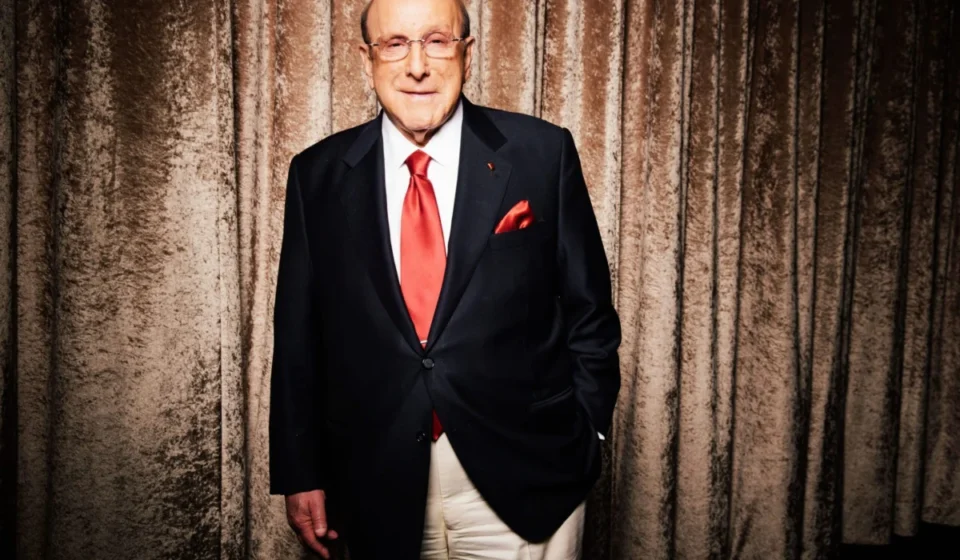
The Architect of the Soundtrack: Clive Davis, Legendary Music Mogul, Dies at 94

The music industry has lost its most enduring titan. Clive Davis, the visionary record executive whose "golden ear" and relentless business acumen shaped the landscape of popular music for more than half a century, has passed away at the age of 94. His death, which occurred in his Manhattan apartment, was confirmed by his family and long-time publicist, Aliza Rabinoff.
Davis, a Harvard-educated lawyer who stumbled into the music business only to become its most influential figure, was responsible for discovering, nurturing, or revitalizing the careers of icons ranging from Janis Joplin and Bruce Springsteen to Whitney Houston and Alicia Keys. His career was a masterclass in adaptation, spanning the eras of vinyl, cassettes, CDs, and the digital revolution without ever losing his relevance or his ability to spot a hit.
Main Facts: The Passing of a Cultural Giant
Clive Davis’s death marks the end of an era in the recording industry. Earlier this year, Davis had been briefly hospitalized following an upper respiratory issue, though he was released shortly thereafter and remained active in his professional and social circles. His passing in New York City—the city that served as the backdrop for his legendary pre-Grammy galas—leaves a void in a business he helped build from the ground up.
Known as much for his meticulous attention to song selection as for his sharp business instincts, Davis was the rare executive who remained a "creative" at heart. He didn’t just sign checks; he signed talent. At the time of his death, he held the title of Chief Creative Officer at Sony Music Entertainment, a role created specifically to harness his unparalleled instincts.
Over his six-decade career, Davis founded Arista Records and J Records and served as the President of Columbia Records. He was inducted into the Rock and Roll Hall of Fame in the non-performer category in 2000, a year that also saw him win a Grammy for Album of the Year as a producer for Carlos Santana’s Supernatural.
Chronology: From the Courtroom to the Recording Studio
The Accidental Mogul (1960–1967)
Born in Brooklyn on April 4, 1932, Davis was an unlikely candidate for a music revolutionary. A star student who attended New York University and Harvard Law School on scholarships, he began his career as a lawyer. In 1960, he joined Columbia Records as assistant counsel. By 1967, his sharp mind and organizational skills led to his appointment as the President of Columbia Records.
The turning point for Davis—and the industry—came in 1967 at the Monterey International Pop Festival. Clad in a business suit amidst a sea of tie-dye, Davis witnessed Janis Joplin perform. He famously described the experience as a "revelation." He signed Joplin and Big Brother and the Holding Company on the spot, signaling Columbia’s shift from a conservative, middle-of-the-road label to a powerhouse of the counterculture.
The Columbia Peak and Fall (1967–1973)
Under Davis, Columbia became the dominant force in music. He signed Earth, Wind & Fire, Aerosmith, Billy Joel, and Bruce Springsteen. He also oversaw the careers of established legends like Bob Dylan and Barbra Streisand. However, his tenure ended abruptly in 1973 when he was fired amid allegations of misusing company funds for personal expenses. Davis later maintained he was a scapegoat during a corporate power struggle. Though he eventually pleaded guilty to a single count of tax evasion and paid a $10,000 fine, the industry was far from finished with him.
The Arista Empire (1974–2000)
In 1974, with the backing of Columbia Pictures (the film studio, then a separate entity from the record label), Davis founded Arista Records. It was here that he solidified his reputation as a "hit-maker." He signed Barry Manilow, whose string of hits like "Mandy" and "I Write the Songs" turned Arista into a financial juggernaut. He also provided a home for Aretha Franklin during her 1980s commercial resurgence, leading to hits like "Freeway of Love."
The defining moment of the Arista years was his discovery of a teenage Whitney Houston. Davis spent years developing her debut, meticulously choosing songs that would showcase her generational voice. The result was a string of seven consecutive No. 1 singles, a feat never before achieved.
J Records and the American Idol Era (2000–2024)
In 2000, in a move that shocked the industry, BMG (Arista’s parent company) forced Davis out due to a mandatory retirement age policy. Undeterred, Davis immediately founded J Records. His first major signing was Alicia Keys, whose debut album, Songs in A Minor, became a global phenomenon.
Davis later took the reins of the broader RCA Music Group, where he oversaw the careers of American Idol winners like Kelly Clarkson and Carrie Underwood. He proved that even in the age of reality television, a traditional A&R (Artists and Repertoire) approach could still produce multi-platinum superstars.
Supporting Data: A Legacy in Numbers and Icons
The statistical impact of Clive Davis’s career is nearly impossible to overstate. He was associated with hundreds of Top 10 hits and dozens of Grammy-winning albums.
- The Whitney Houston Factor: Under Davis’s guidance, Houston became one of the best-selling music artists of all time, with estimated sales of over 200 million records.
- The Santana Miracle: In 1999, Davis masterminded Carlos Santana’s Supernatural. The album, featuring collaborations with younger artists, sold over 30 million copies worldwide and won nine Grammy Awards, tying the record for the most wins by a single album.
- The Songbook Strategy: Davis was a pioneer of the "standards" album. He convinced rock legend Rod Stewart to record The Great American Songbook series. The first volume won Stewart his first-ever Grammy and sparked a five-album franchise that sold over 20 million copies.
However, Davis’s career was not without its missteps. He famously turned down Meat Loaf’s Bat Out of Hell, which went on to become one of the best-selling albums in history. He also oversaw the rise and fall of Milli Vanilli; while he blamed the label’s European division for the lip-syncing scandal, the incident remained a rare blemish on his record for spotting authentic talent.
Official Responses: Tributes to a Legend
Following the announcement of his death, the Davis family released a statement emphasizing his dual legacy as a professional icon and a devoted patriarch.
“To the world, our father was the iconic music legend whose vision, instincts, and relentless pursuit of excellence shaped the soundtrack of countless lives," the statement read. "He discovered, mentored, and championed the greatest artists in modern music history, leaving an indelible mark on culture that will endure for generations. Through every chapter of his remarkable life, family remained Clive’s greatest pride and deepest joy. We celebrate the man who led our family with grace, generosity, and kindness.”
Industry leaders also weighed in. Many cited Davis’s 2013 memoir, The Soundtrack of My Life, as a definitive text on the music business. In that book, Davis also made headlines by coming out as bisexual, a move praised for its courage given his age and the often-conservative nature of corporate boardrooms.
Long-time collaborator Barry Manilow once remarked on Davis’s uncanny ability to bridge the gap between art and commerce: “He’s just brilliant at picking ideas he thinks the public will connect with. He has a sense of the ‘common ear’ that very few people in history have possessed.”
Implications: The End of the A&R Era?
The death of Clive Davis signals more than just the passing of a man; it marks the twilight of the "A&R Mogul." Davis belonged to a generation of executives—including Ahmet Ertegun and Berry Gordy—who relied on intuition, live performances, and the "gut feeling" that a specific voice belonged on the radio.
In today’s music industry, dominated by TikTok algorithms and data-driven streaming metrics, Davis’s methodology seems like a relic of a bygone age. He was a "song man" who believed that a great song was the foundation of everything. He would famously spend hours debating a single bridge or a vocal inflection, a level of detail that many modern labels have abandoned in favor of high-volume output.
His legacy will be felt in the way artists are developed. He proved that an executive could be a partner to an artist, pushing them toward commercial heights they might not have reached on their own. While his methods sometimes led to friction—most notably his public feud with Kelly Clarkson over her creative direction on the album My December—his track record usually vindicated his interference.
As the industry mourns, the "Clive Davis Pre-Grammy Gala"—an event that was often more exclusive and star-studded than the Grammy Awards themselves—stands as a symbol of his power. It was there that he brought together the old guard and the new, reminding the world that while technology changes, the power of a superstar voice remains constant.
Clive Davis is survived by his four children and a sprawling legacy of music that continues to play on every radio station and streaming platform in the world. He didn’t just work in the music industry; for sixty years, he was the music industry.