In a legislative move aimed at securing the integrity of the nation’s higher education financial system, the U.S. House of Representatives recently passed the No Aid for Ghost Students Act. This bill, championed by Republican Representative Burgess Owens of Utah, represents a significant escalation in the federal government’s efforts to stop a sophisticated and persistent form of identity theft that has drained millions of dollars from colleges and universities nationwide.
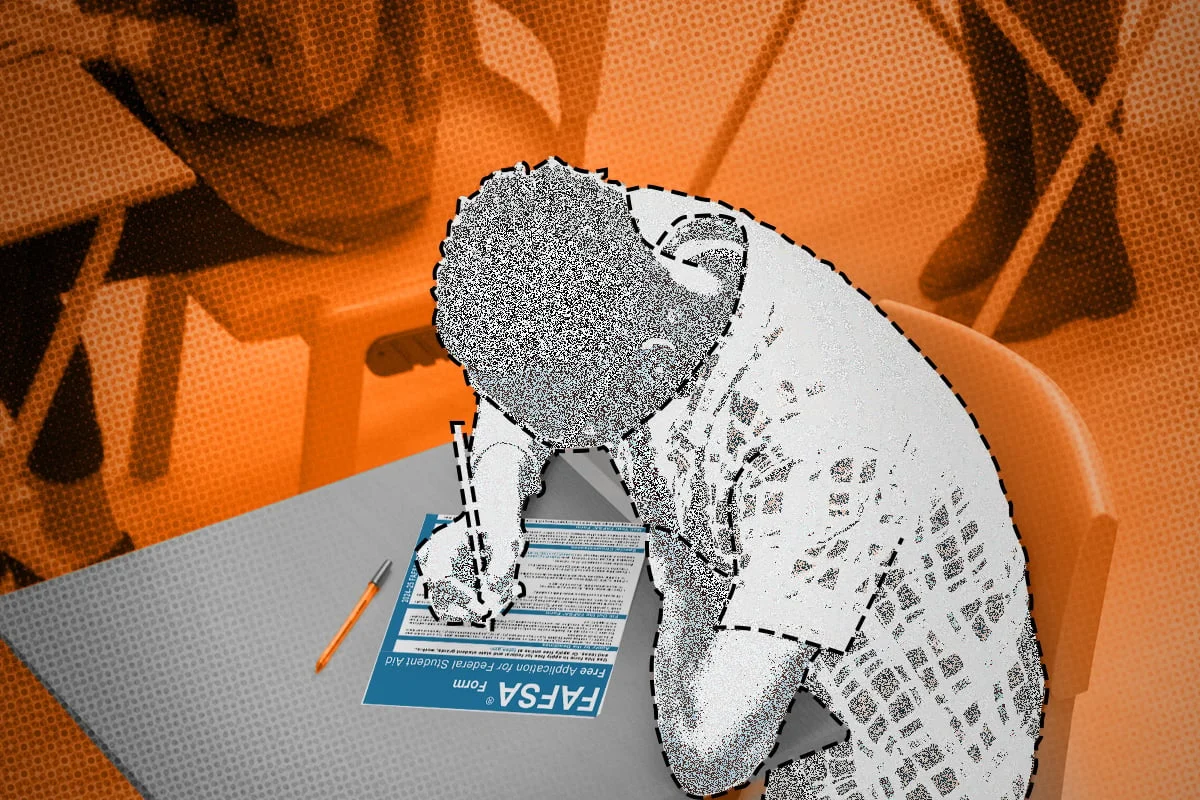
The legislation seeks to codify a new "Real-Time Fraud Detection" initiative recently launched by the Department of Education (ED). By mandating strict identity screening protocols for all applicants of the Free Application for Federal Student Aid (FAFSA), the bill aims to transform what was once an institution-by-institution battle into a centralized, robust federal defense against the rise of "ghost students"—fictitious personas created by bad actors to siphon off taxpayer-funded grants and loans.
The Mechanics of the "Ghost Student" Scam
At its core, FAFSA fraud is a form of industrial-scale identity theft. Fraudsters utilize stolen personal identifiable information (PII)—often obtained via dark web data breaches—to populate fake student profiles. These "ghosts" are then enrolled in various higher education institutions, particularly online-heavy or open-access programs that may have lower barriers to entry.
Once the fraudulent application is processed and the student is admitted, the perpetrator waits for the disbursement of federal financial aid. As soon as the funds hit the account, the "ghost" vanishes, leaving the institution to grapple with the consequences.
The sophistication of these schemes has evolved rapidly over the last decade. Karen McCarthy, vice president of public policy and federal relations at the National Association of Student Financial Aid Administrators (NASFAA), notes that while these scams initially targeted community colleges and open-access institutions, the problem has now permeated almost every corner of the higher education landscape.
"It’s definitely still prevalent at those types of institutions, but I would say almost all institutions have dealt with some type of identity fraud at some level at this point," McCarthy said.
Perpetrators have become increasingly tactical. Investigative reports from outlets like EdSource have highlighted how scammers manipulate the application process, often claiming status as homeless youth or minors—categories that typically trigger fewer verification requirements—to bypass standard institutional checks. Furthermore, some fraudsters go as far as completing a full semester of coursework to establish a "legitimate" academic record, only to disappear before the following semester’s aid is disbursed.
Chronology: From Pandemic Opportunism to Legislative Action
The surge in FAFSA fraud is inextricably linked to the seismic shifts in education delivery caused by the COVID-19 pandemic. As colleges transitioned to online learning, the barriers for remote, anonymous enrollment dropped, creating a target-rich environment for cybercriminals.
- 2020–2022 (The Pandemic Surge): With the rapid expansion of online programs, the volume of fraudulent applications skyrocketed. Institutions found themselves overwhelmed by the sheer number of applicants, many of whom were AI-generated or bot-driven.
- 2023–2024 (Institutional Resistance): Colleges and universities began implementing their own makeshift defenses. California community colleges, for instance, became early adopters of AI-driven screening software to detect anomalies in application patterns.
- 2025 (Federal Pivot): Recognizing the systemic threat, the Department of Education announced a new priority: centralized identity validation. The federal government reported successfully curbing over $1 billion in attempted fraud during the 2025 cycle.
- April 2026: The Department of Education officially rolled out its "Real-Time Fraud Detection" feature for the 2026–27 FAFSA cycle. This system retroactively screened applications submitted prior to its launch.
- June 2026: The House of Representatives passed the No Aid for Ghost Students Act, aiming to make these protective measures a permanent, legally mandated standard.
Supporting Data: The Cost of Deception
The financial toll of these scams is difficult to quantify with precision, as many institutions underreport the issue to avoid reputational damage. However, state-level audits provide a chilling glimpse into the scale of the theft.
In California, the 116-college community college system reported losses of nearly $2 million in the first quarter of 2026 alone. In Utah, an audit revealed that eight public colleges lost up to $1 million in 2025 to these specific schemes. While the federal government claims to have prevented $1 billion in fraud, the reality is that for every dollar stopped, other attempts likely slip through the cracks.
The impact extends beyond mere dollars. For the victims whose identities are stolen, the consequences are life-altering: ruined credit scores, insurmountable debt burdens, and the future inability to qualify for legitimate financial aid, as the system erroneously flags their social security numbers as "used" or "defaulted."

Official Responses and Political Friction
The passage of the No Aid for Ghost Students Act was not without controversy. While proponents argue that it is a common-sense solution to protect taxpayer funds, the bill passed largely along party lines, with only 36 Democrats crossing the aisle to support it.
Representative Bobby Scott, the top Democrat on the House Education and Workforce Committee, voiced strong opposition during floor debates. He argued that codifying the system into law before fully assessing its effectiveness is premature. "Codifying this new system, without assessing its effectiveness, just doesn’t make any sense," Scott stated, expressing concern that the legislation might inadvertently create barriers for legitimate, vulnerable students.
Conversely, supporters maintain that the urgency of the situation demands immediate, permanent legal action. The Department of Education, under current leadership, has signaled its support, noting that the new real-time detection tools have already prevented more than $100 million from falling into the hands of fraudsters since their implementation earlier this year.
How "Real-Time Detection" Works
To avoid arming the very criminals they are trying to stop, the Department of Education has kept the exact algorithms behind the "Real-Time Detection" system opaque. However, the general framework is understood to involve behavioral analysis.
As an applicant navigates the FAFSA portal, the system monitors for red flags—such as rapid data entry consistent with bot scripts, inconsistent metadata, or suspicious IP address patterns. If the system flags an application, the applicant is prompted to verify their identity via a live camera session.
If the applicant fails to comply, or if the documentation is insufficient, the application is rejected. This provides a clear directive to colleges: do not disburse funds. According to McCarthy, this is a "major win" for financial aid offices that have long been forced to act as the primary, yet ill-equipped, police force for the federal government.
"The school doesn’t have to reach out and say, ‘Hey, you’ve been selected, I need you to send us a copy of your ID,’" McCarthy explained. "The pre-screening will weed out the vast majority of potentially fraudulent applications."
Implications for the Future of Higher Education
While the new system is a significant step forward, it raises critical questions about the future of financial aid access. College access advocates, including the Institute for College Access & Success (TICAS), have warned that while fraud prevention is necessary, identity-verification requirements must not become a deterrent for legitimate students.
There is a fine line between effective security and discriminatory bureaucracy. Critics of the bill fear that students who are non-native English speakers, those from marginalized backgrounds, or students in precarious housing situations may struggle to navigate complex verification hurdles. If the system is too rigid, it could inadvertently discourage the very population the FAFSA is intended to serve.
Furthermore, the integration of generative AI in the fraudster’s toolkit means this is an ongoing arms race. As the Department of Education improves its detection, criminal networks are simultaneously training their AI models to mimic human behavior more accurately.
The No Aid for Ghost Students Act is currently one of three pieces of legislation aimed at FAFSA reform. Whether these measures will prove sufficient to end the era of the "ghost student" remains to be seen. What is clear, however, is that the era of passive federal oversight is over. The integrity of the $100 billion-plus annual federal student aid program now depends on the success of these new, high-stakes digital defenses. As the academic year progresses, the education community will be watching closely to see if these barriers truly close the door on scammers, or if they merely force them to find more sophisticated ways to haunt the system.