In the landscape of modern media, few cultural artifacts have managed to bridge the gap between high-concept science fiction and profound existential philosophy as effectively as the 2022 film Everything Everywhere All at Once. Directed by Daniel Kwan and Daniel Scheinert (collectively known as "the Daniels"), the film has become a touchstone for those grappling with the chaotic, often overwhelming nature of 21st-century life.
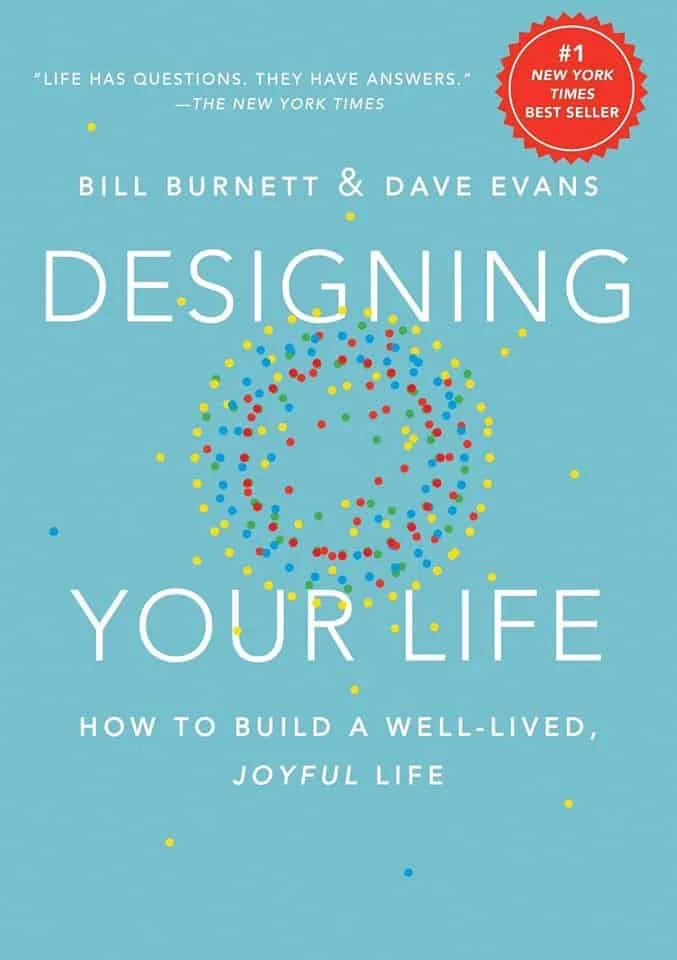
For many viewers, the film’s appeal lies in its disarming blend of absurdity and intimacy. By grounding the infinite scale of the multiverse in the mundane struggles of a failing laundromat and a fracturing family, the film offers a mirror to our own search for meaning. This cultural moment—fueled by a growing public interest in how we define our own realities—is being furthered by practical applications of life-design philosophy, most notably the methodologies popularized by Bill Burnett and Dave Evans in their seminal work, Designing Your Life.
The Anatomy of the Multiverse: A Narrative Framework
At its core, Everything Everywhere All at Once serves as a poignant allegory for the modern condition. The narrative follows Evelyn Wang, an immigrant business owner struggling with a tax audit, a deteriorating marriage, and an estranged relationship with her daughter, Joy. When Evelyn is thrust into a conflict spanning parallel universes, she is forced to confront the "multiverse"—a chaotic expanse of infinite possibilities.
The film’s villain, Jobu Tupaki, represents the nihilistic nadir of this concept: if every action, every choice, and every failure exists simultaneously in an infinite number of timelines, then nothing carries intrinsic weight. However, the film’s resolution offers a counter-narrative, championed by the character of Waymond Wang. He posits that in a universe devoid of inherent meaning, the act of choosing kindness and constructing one’s own purpose is the ultimate form of rebellion. This transition from nihilism to agency is the bridge that connects cinematic fiction to the practical, actionable strategies of personal development.
The Design Thinking Paradigm: A Chronology of Self-Optimization
The desire to "design" one’s life is not a new phenomenon, but it has gained significant institutional traction through Stanford University’s Life Design Lab. Bill Burnett, executive director of the Stanford Design Program, and Dave Evans, co-director of the Life Design Lab, formalized these concepts into a curriculum that treats life planning with the same rigor as product development.
- The Foundational Phase (2016): The publication of Designing Your Life brought the principles of "design thinking"—empathy, ideation, and prototyping—out of the engineering lab and into the mainstream. The authors argued that a well-designed life is one of "coherence," where a person’s beliefs, work, and identity exist in alignment.
- The Iterative Phase (2020–2022): The global disruptions of the early 2020s prompted a massive re-evaluation of career trajectories and personal priorities. Readers turned to the book’s exercises as a framework for navigating uncertainty.
- The Synthesis Phase (2022–Present): The release of Everything Everywhere All at Once provided a visual and emotional shorthand for the design-thinking concept of the "Odyssey Plan," allowing individuals to visualize their potential futures as parallel tracks rather than a single, linear path.
Supporting Data: The Five Disciplines of a Coherent Life
Burnett and Evans propose that to build a sustainable and meaningful life, one must master five distinct disciplines. These are not merely abstract goals but tactical behaviors designed to minimize "friction" between who we are and what we do:
- Curiosity: Replacing judgment with an interest in "what if."
- Bias to Action: Moving away from excessive contemplation toward experimentation (prototyping).
- Reframing: Shifting one’s perspective to identify problems that are actually solvable.
- Awareness: Recognizing that the process of life design is continuous rather than a "one-and-done" achievement.
- Radical Collaboration: Understanding that no one designs their life in a vacuum; seeking mentorship and community support is essential.
These disciplines function as a system of checks and balances. For example, by practicing "Reframing," an individual who feels trapped in a dead-end career can pivot from the panic of "I am stuck" to the design-based inquiry of "What are three small experiments I can conduct to test a different career path?"
The Odyssey Plan: Mapping the Multiverse
The most profound tool offered by the design-thinking methodology is the "Odyssey Plan." This requires the individual to draft three distinct five-year timelines, effectively creating their own personal "multiverse."
- Plan A (The Current Path): This is the future you are currently building. It assumes that your present trajectory is the baseline. It forces an honest assessment of whether this path truly aligns with your core values or if you are simply continuing out of inertia.
- Plan B (The Pivot): This plan asks: "What would you do if your current life path were suddenly removed?" It is a contingency for those who need to reinvent themselves. For many, this leads to a career shift that leverages existing skills in a new context, such as a writer transitioning into oral history or hospice care.
- Plan C (The Radical Dream): This is the "no-limits" scenario. Money, social standing, and current constraints are removed. This plan is designed to uncover latent passions—like moving to art school or launching a niche creative project—that are often suppressed by practical anxiety.
By drafting these three plans, the individual is no longer a prisoner of a single reality. The psychological impact is immediate: it converts the paralysis of choice into a structured, proactive exploration of possibility.
Official Perspectives and Academic Reception
While the design-thinking approach has been praised for its utility, it is not without its critics. Some academic observers note that the language of "design" can feel clinical or overly corporate when applied to the messy, non-linear experience of human life. There is also the critique of privilege; the ability to "design" one’s life assumes a baseline level of stability and opportunity that is not universal.
However, advocates maintain that the process of design is universal. Even in constrained circumstances, the act of mapping out potential actions—what the authors call "prototyping"—is a powerful tool for self-advocacy. The lack of a comprehensive index in the book has been a noted frustration among readers, with many arguing that a manual for life design should, ironically, be designed for easier reference. Despite this, the effectiveness of the underlying exercises has cemented the book’s status as a staple of modern personal development literature.
Implications: The Synthesis of Meaning and Action
The intersection of Everything Everywhere All at Once and Designing Your Life reveals a profound shift in the cultural zeitgeist. We are moving away from the idea of "finding" a single, pre-ordained destiny and toward the act of "building" multiple, meaningful possibilities.
The implications for the individual are significant. By adopting the mindset of a designer, one can effectively treat their life as a living, breathing project. This means:
- Lowering the stakes of failure: If life is a series of prototypes, a "failed" career or a closed door is simply data for the next iteration.
- Increased Agency: Realizing that if the current timeline is unsatisfactory, the tools to design a better one are already in your possession.
- Coherence over Achievement: Success is no longer defined by external metrics—wealth, status, or title—but by the alignment between one’s inner values and outward actions.
As we navigate an increasingly complex world, the ability to synthesize the chaos into a coherent narrative is perhaps the most valuable skill one can develop. Whether through the lens of a cinematic multiverse or a Stanford-designed workbook, the message is clear: You are not trapped by your current reality. You are the architect of your own timeline, and the most important work you will ever do is the work of deciding which version of yourself you want to become next.