
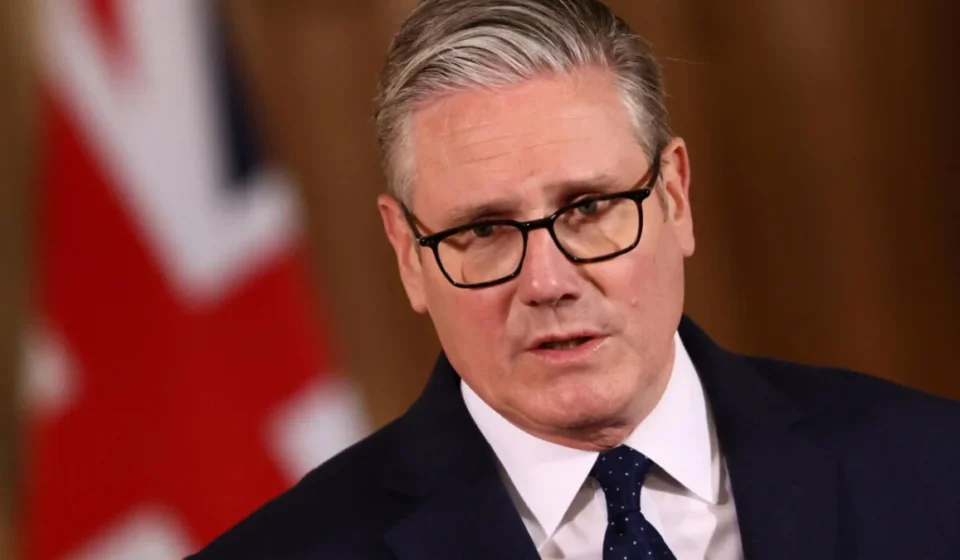
The Unraveling of a Premier: Keir Starmer Resigns Amidst Scandal and Political Paralysis

In a somber, high-stakes address delivered from the steps of 10 Downing Street this Monday, Prime Minister Keir Starmer announced his resignation as leader of the Labour Party. The statement, which marked the end of a turbulent tenure, confirmed that while he would step down from his party leadership immediately, he would remain in office as caretaker Prime Minister to ensure government continuity until a successor is chosen in the coming weeks.
"The question my party is asking now is whether I am best placed to lead us into the next general election," Starmer stated, his voice steady but reflective. "I have heard the answer of my parliamentary party to that question, and I accept that answer with good grace."
This development marks a precipitous decline for a leader who, only twenty months ago, achieved a historic landslide victory. His departure signals the end of a brief, fraught era in British politics, leaving the United Kingdom to prepare for its seventh Prime Minister in a single decade.
Chronology of a Political Collapse
The downfall of Keir Starmer was not a singular event, but rather a slow-motion collision between high expectations and a series of self-inflicted wounds.
The Rise (July 2024)
On July 4, 2024, Starmer led the centre-left Labour Party to a commanding victory, securing 411 of the 650 seats in the House of Commons. After 14 years of Conservative governance, marked by the rapid turnover of leaders such as Boris Johnson and Liz Truss, Starmer presented himself as the antidote to "soap opera politics." His promise was one of professional, forensic governance—a "government of public service" that would restore integrity to the halls of power.
The Erosion (2025)
However, the veneer of stability began to crack early. Public frustration simmered over the "Freebiegate" scandal, where Starmer faced intense scrutiny for accepting luxury gifts, including designer eyewear and high-profile concert tickets. This was compounded by a series of policy U-turns, most notably the controversial decision to cut winter fuel subsidies for 10 million pensioners, a move that alienated his own base and drew sharp rebukes from within the Labour ranks.
The Catalyst: The Mandelson Affair (2025–2026)
The definitive turning point was the appointment of Peter Mandelson as UK ambassador to the United States. While intended to bridge the divide with the administration of Donald Trump, the appointment backfired when reports surfaced in September 2025 detailing Mandelson’s historical ties to the disgraced financier Jeffrey Epstein.
The crisis deepened in January 2026, when further documents suggested that Mandelson had not only maintained ties to Epstein after his 2008 conviction but had potentially leaked sensitive government information while serving as a cabinet minister in 2009. The revelation that Mandelson had been appointed despite failing official security vetting proved fatal to Starmer’s credibility.
The Final Straw (May 2026)
The May 7, 2026, local and regional elections served as a referendum on the government’s competency. The drubbing handed to Labour by voters ignited a revolt within the parliamentary party. The subsequent victory of Andy Burnham—the former Greater Manchester Mayor—in a by-election solidified his position as the natural successor, rendering Starmer’s leadership untenable.
Supporting Data and Public Perception
Despite the narrative of failure, the empirical record of Starmer’s government is nuanced. A Channel 4 analysis of his manifesto pledges found that, as of early 2026, the government had successfully delivered or was on track to fulfill 22 of its 36 primary campaign promises. Only four pledges had been definitively abandoned, with ten remaining inconclusive.
Yet, as political science professor Rob Ford of the University of Manchester noted, the government became "the antithesis of what he said he was going to be about." Starmer’s electoral victory in 2024 was built on a wide but shallow base—a 34% share of the vote that was largely driven by anti-Conservative sentiment rather than an organic passion for Labour’s platform. This lack of a deep mandate left him vulnerable the moment he lost the "moral high ground" he had campaigned on.
Furthermore, Starmer’s background—a former Chief Prosecutor knighted for his services—became a political liability. Critics successfully branded him an "out-of-touch lefty London lawyer," an image that persisted despite his efforts to highlight his humble upbringing as the son of a toolmaker and his lifelong devotion to Arsenal FC.
Official Responses and International Stance
The reaction to Starmer’s departure has been mixed, reflecting his bifurcated legacy: a struggle on the domestic front contrasted with a respected standing on the international stage.
European Commission President Ursula von der Leyen was among the first to offer a public tribute, noting: "European and Ukrainian security is stronger because of you. Thank you, dear Keir." Starmer was widely credited with maintaining a steadfast alliance with Kyiv and navigating the complexities of the US-Israeli war on Iran.
His relationship with Donald Trump, however, served as a microcosm of his broader political difficulties. While initially cordial, the relationship soured as Starmer took a more assertive stance against Trump’s protectionist policies and rhetoric regarding Greenland and international security. By March 2026, the diplomatic frost was complete, with Trump publicly disparaging the Prime Minister.
Domestically, the reaction within the House of Commons was one of exhaustion and frustration. Labour MP Emma Lewell captured the mood of the party in an April 28 session, describing the Mandelson appointment as "a fundamental failure of judgment."
Implications for the Future of the UK
The resignation of Keir Starmer leaves the United Kingdom in a state of political flux. The immediate implication is a leadership contest within the Labour Party, with Andy Burnham positioned as the clear frontrunner. Burnham’s ascendancy represents a potential shift toward a more populist, regionalist focus, moving away from the technocratic style that defined the Starmer years.
The Security and Institutional Toll
The Mandelson scandal has left a lasting scar on the UK’s vetting processes. The revelation that an ambassador could be appointed despite failing security checks has sparked calls for a parliamentary inquiry into the civil service and the Prime Minister’s Office. Trust in government, already fragile, has been further eroded, with voters expressing deep cynicism that, in the words of one Labour MP, "the public thought we were all the same."
The Economic and Global Outlook
As the UK waits for a new leader, the economic climate remains uncertain. The government’s ability to negotiate trade deals, particularly with a volatile US administration, will be the primary test for the incoming Prime Minister. The economic, defense, and social policies that Starmer championed—and those he abandoned—will now be subject to a rigorous, and likely unforgiving, review by his successor.
The Road to 2029
The next general election is not constitutionally required until August 15, 2029. However, the political reality is that the new Labour leader will face immediate pressure to either call an early election to secure a fresh mandate or to radically overhaul the current cabinet to restore public confidence.
As the curtains close on the Starmer administration, the lesson for British politics is stark: in an era of hyper-scrutiny, the "moral high ground" is not merely a campaign slogan—it is a requirement for survival. The transition to the next administration will be defined by the urgent need to move beyond the scandals of the past eighteen months and address the deep-seated anxieties of a public that feels increasingly disconnected from its leaders.
For the Labour Party, the task ahead is to reconcile its 2024 vision with the harsh realities of governing, ensuring that the successor to the "forensic" Prime Minister can provide the one thing voters have been denied for over a decade: consistency.