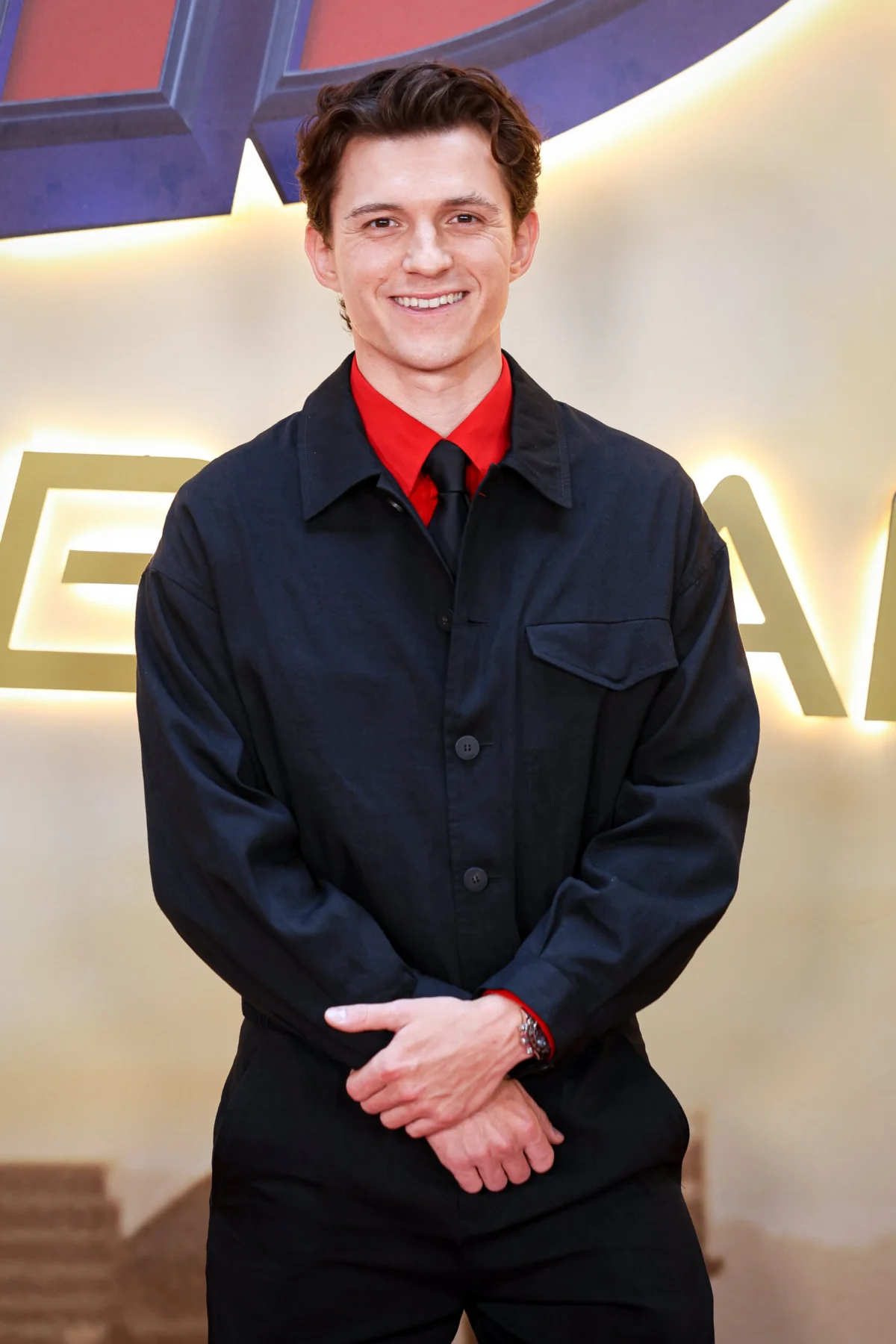
As artificial intelligence continues its rapid integration into the fabric of the entertainment industry, the debate surrounding its role—and its existential threat—to human artistry has reached a fever pitch. Amidst this polarized landscape, Marvel star Tom Holland has emerged as a vocal proponent of human-centric storytelling, firmly asserting that while AI may master data, it remains fundamentally incapable of capturing the “soul” of the creative experience.
Holland’s recent remarks, delivered during an appearance on Spain’s hit talk show El Hormiguero alongside co-star Zendaya, underscore a growing divide in Hollywood between those who view AI as an inevitable creative partner and those who see it as the death knell of genuine human expression.
The Core Argument: Why Creativity Requires a Pulse
During his segment on El Hormiguero, Holland did not mince words regarding the limitations of machine learning. When prompted on the topic of AI’s encroachment into the arts, the actor framed the issue not as a technological hurdle, but as a biological and emotional one.
“Creativity is safe from AI because creativity has to do with the human experience,” Holland stated. “It’s about emotions; it’s about understanding one another. AI can sift through data, but it can’t understand people’s emotions. It doesn’t understand the difference between being happy and being sad.”
For Holland, the artistic process is an act of vulnerability. He argued that the work of a painter or a performer is not merely a technical exercise in imitation or output, but an act of self-expression born from lived reality. “The way artists paint, it’s not about what they’re copying; it’s about expressing themselves. So, I feel protected,” he added, suggesting that the specific alchemy of human trauma, joy, and perspective is something that algorithms, regardless of their complexity, cannot replicate.
A Summer of High-Stakes Blockbusters
Holland’s commentary arrives at a pivotal moment in his own career, as he prepares to dominate the box office with two highly anticipated projects this summer. He is set to star as Telemachus in Christopher Nolan’s The Odyssey, arriving in theaters on July 24, followed quickly by his return to the MCU in Spider-Man: Brand New Day on July 31. With Zendaya appearing alongside him in both features, the duo represents a massive force in modern cinema, making Holland’s stance on AI all the more influential for the industry at large.
These projects come on the heels of a diverse run for the actor, including his complex turn in the Apple TV+ limited series The Crowded Room and his blockbuster outings in Uncharted and Spider-Man: No Way Home. As he navigates these high-budget, high-visibility roles, his insistence on the “human element” serves as a reminder of the creative core that audiences flock to see.
The Chronology of the AI Debate in Tinseltown
The conversation surrounding AI in film did not emerge overnight; it has been simmering for years, reaching a boiling point during the 2023 WGA and SAG-AFTRA strikes.
- Early Speculation (2020–2022): AI tools for script-writing and deepfake visual effects began appearing in niche capacities, initially ignored by the mainstream.
- The Paradigm Shift (2023): The widespread accessibility of generative AI platforms brought the technology to the forefront of labor negotiations. SAG-AFTRA and the WGA fought hard for protections against the unauthorized use of actors’ likenesses and the replacement of human writers.
- The Current Landscape (2024–2026): We have moved past the “threat” phase into a phase of active adoption and resistance. Studio executives are now openly discussing AI as a cost-saving measure, while creatives like Holland and Guillermo del Toro are sounding the alarm on the loss of artistic integrity.
A House Divided: The Industry Response
Holland is far from alone in his skepticism. The industry is currently fractured, with legendary filmmakers and A-list stars taking starkly different sides on the issue.
The Critics: The Fight for Artistic Integrity
Guillermo del Toro, a titan of visionary filmmaking, recently expressed deep concern over the trajectory of technological integration. Speaking at the BFI Fellowship, del Toro warned, “We are on the verge of image illiteracy. We are on the verge of cinema illiteracy.” His stance aligns with the belief that if we allow machines to generate the images that define our culture, we lose the ability to critically engage with those images as reflections of our own human condition.
The Adopters: Embracing the Future
Conversely, a segment of the industry is leaning into the efficiency that AI offers. Reese Witherspoon and Sandra Bullock have both expressed cautious optimism, suggesting that rather than fearing AI, Hollywood should focus on understanding how to leverage it to streamline production and expand creative possibilities.
Perhaps the most significant development is the move by Martin Scorsese—a man synonymous with the sanctity of traditional cinema—to partner with an AI company to assist in the storyboarding of his upcoming projects. For proponents like Scorsese, AI is a tool, no different from a digital camera or computer-generated imagery, meant to assist the director’s vision rather than replace the human at the helm.
Implications: The Future of the Human Experience
The implications of this debate extend far beyond Hollywood boardrooms. If we accept a future where the scripts we read, the films we watch, and the music we hear are curated or created by algorithms, we risk a stagnation of the "human experience" that Holland champions.
1. The Devaluation of Lived Experience
If AI can effectively mimic the output of a human, the value of the unique, messy, and often painful life experiences that inform art may be diminished. If a machine can "act" or "write" based on the sum of all human data, individual perspective—the very thing that makes art universal—might be viewed as redundant.
2. Job Displacement and Economic Shifts
The anxiety voiced by actors and writers is rooted in economic reality. If the "middle class" of the film industry—animators, editors, background actors, and script doctors—can be replaced by automated systems, the barriers to entry for new talent could become insurmountable.
3. The "Uncanny Valley" of Art
As del Toro suggests, there is a risk of “cinema illiteracy.” If the audience becomes accustomed to content that is aesthetically perfect but emotionally hollow, the demand for nuanced, challenging, and human-led storytelling could wither. We risk entering an era of content consumption where the "soul" is systematically stripped away, leaving only the "data" of entertainment.
Conclusion: A Call for Balance
Tom Holland’s perspective acts as a vital counterweight to the technological fervor currently sweeping the studios. While the efficiency of AI is undeniable, the artistic, emotional, and social necessity of the human creator remains the industry’s most valuable asset.
As we look toward the releases of The Odyssey and Spider-Man: Brand New Day, audiences will be the ultimate arbiters of this debate. If they continue to flock to performances that resonate with the messy, beautiful reality of the human experience, the studios will have no choice but to keep the human soul at the center of the frame. In a world increasingly dominated by the cold logic of algorithms, perhaps the most radical act an artist can perform is to remain unmistakably, defiantly human.