In the intricate tapestry of the natural world, survival is rarely a solitary endeavor. While biology has long focused on how animals communicate with their own kin to secure mates or defend territory, a burgeoning field of research is uncovering a far more complex phenomenon: the cross-species dialogue. A landmark review published in the journal Animal Behaviour has synthesized decades of observations to reveal that communication is the "connective tissue" that allows diverse species to forge cooperative partnerships, synchronize behaviors, and thrive in competitive environments.
This study, the product of a massive collaborative effort involving 58 researchers from fields as diverse as anthropology, biology, and linguistics, suggests that the ability to bridge the gap between species is not just a biological curiosity—it is a fundamental evolutionary mechanism that shapes ecosystems globally.
The Mechanics of Cooperation: Synchronizing Diverse Minds
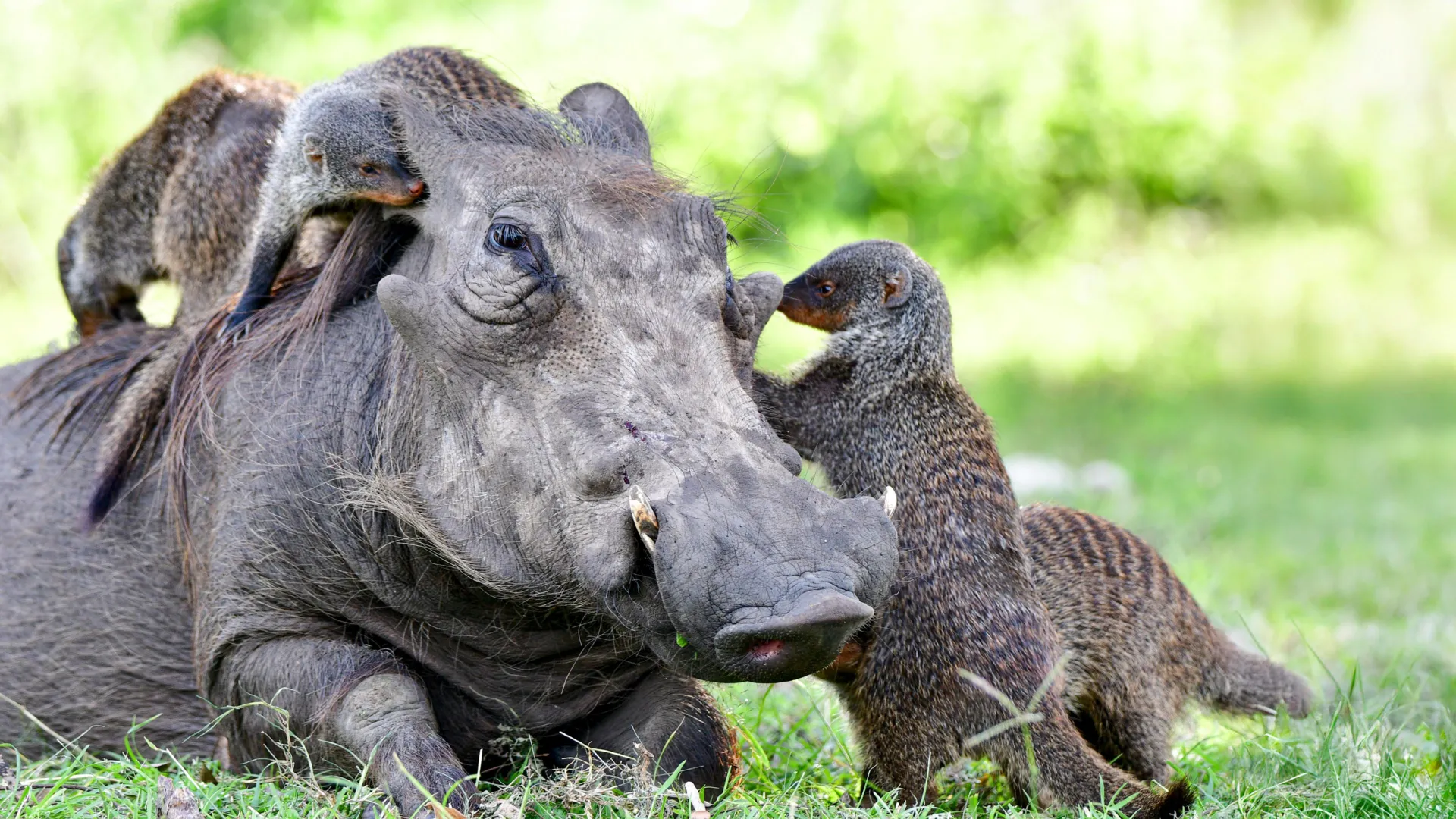
For cooperation to succeed, species must bridge the "perception gap." A predator and its prey, or two entirely different classes of animals, do not view the world through the same sensory lens. Yet, they manage to align their actions with remarkable precision to achieve shared goals, such as accessing food or securing protection.
The research identifies that these partnerships rely on a sophisticated exchange of signals—ranging from acoustic calls and intricate body postures to chemical cues and bioluminescent displays. When a greater honeyguide bird (Indicator indicator) emits a specific, specialized call to guide a human toward a beehive, it is performing a complex cross-species negotiation. The human provides the "labor" of opening the hive, and the bird receives the "payment" of beeswax. This transaction is only possible because both parties have learned to interpret each other’s signals as reliable indicators of a mutual benefit.
The Spectrum of Signaling
The study categorizes these interactions into various tiers of complexity:
- Acoustic Coordination: Seen in birds and mammals, where vocalizations serve as triggers for movement or collective action.
- Visual Displays: Predominantly used by reef inhabitants, such as cleaner fish and their "clients," where specific movements or color patterns signal a non-aggressive, service-oriented intent.
- Chemical and Vibrational Signaling: Subtle cues, such as those used by lycaenid butterfly larvae to manipulate ants into providing protection, effectively "hacking" the ants’ social behavior to ensure the larvae’s survival.
Chronology of a Global Research Initiative
The scope of this review is unprecedented, reflecting a shift in how the scientific community approaches animal cognition. The synthesis of this data was not the work of a single lab, but rather the culmination of a multi-year intellectual journey.
July 2023: The Cambridge Catalyst
The foundation for this paper was laid during an interdisciplinary workshop held in Cambridge. Researchers from across the globe gathered to move beyond their specialized niches. The event brought together experts who usually work in isolation—anthropologists studying human-animal bonds, biologists observing deep-sea symbiosis, and linguists analyzing the structure of information transfer.
The Collaborative Synthesis
Following the workshop, the 58-member team embarked on a rigorous meta-analysis. They categorized thousands of documented interactions, moving from anecdotal observations to a formal framework of how cues become signals. The team meticulously mapped how behaviors—which may have originated as accidental byproducts of existence—evolved into deliberate communication channels.
2024: Publication and Peer Review
The resulting paper, "The ecology and evolution of cues and signals in animal interspecies cooperation," was published in Animal Behaviour, providing a unified theoretical framework for a field that had previously been scattered across disparate journals.
Risk Management and the "Honesty" of Signals
One of the most critical findings of the study concerns the inherent danger of interspecies interactions. In a world where "cheating" is a viable evolutionary strategy, how do animals ensure their partners are trustworthy?
"Signals and behavioral cues do more than initiate cooperation," the researchers note. "They help animals identify trustworthy partners and reduce the risk of being exploited."
In the high-stakes environment of a coral reef, the risk of a predatory fish deciding to eat its "cleaner" rather than letting it remove parasites is significant. To mitigate this, cleaners—such as certain species of Labroides wrasse—have evolved highly specific "advertising" displays. These signals act as a social contract; by performing a specific dance, the cleaner signals, "I am a service provider, not prey."
If a cleaner breaks this contract by biting the client, the client will likely punish the cleaner or seek services elsewhere. Thus, communication becomes a mechanism for market regulation, forcing partners to maintain the quality of their service to ensure future cooperation.
Official Responses and Expert Perspectives
The lead researchers behind the study emphasize that we have only scratched the surface of this hidden dialogue.
Dr. Katie Dunkley of the University of Oxford, the study’s lead author, underscores the importance of the informational flow between species. "We were particularly interested in how sharing information allows such close coordination between species," she stated. "Studying how information flows between species gives us a powerful window into how communication systems originate, change, and sometimes coevolve."
Dr. van der Wal, a researcher at UCT’s FitzPatrick Institute of African Ornithology and the senior author of the review, highlighted the remarkable flexibility of these systems. "In some forms of interspecies cooperation, cues and signals vary depending on the ecological context, the species involved, and whether the signal is inherited or learned," van der Wal explained. "This highlights just how flexible and adaptable interspecies communication can be."
The researchers caution that the scientific community may have been blinded by its own sensory biases. By focusing primarily on visual signals, humans have likely overlooked entire realms of communication—particularly the chemical and vibrational signals that are imperceptible to us but vital to the animals themselves.
Implications: The Evolution of "Language"
The implications of this research extend far beyond mere animal behavior; they touch upon the very origins of communication. The study posits that many complex signaling systems began as simple, accidental cues.
For instance, a behavior that was originally used to resolve conflicts within a species may, over generations, be co-opted for a cooperative interaction with another species. This process, known as exaptation, suggests that interspecies communication is not a separate "language" but a fluid, adaptive toolset.
Why This Matters for Ecosystems
- Resilience: Ecosystems with high levels of interspecies cooperation are often more resilient. When species work together to access resources, they can survive in harsher environments than they could alone.
- Conservation: Understanding how these partnerships function is vital for conservation. If we lose one species, we may inadvertently collapse a communication network that supports several others.
- Human-Animal Bonds: The study provides a scientific basis for understanding how humans have successfully partnered with animals throughout history, from the honeyguide-human relationship in Africa to the dolphin-assisted fishing traditions seen in various coastal regions.
Future Directions: The Uncharted Frontier
While the 58-author review provides a robust foundation, the team is already looking toward the next phase of discovery. The researchers stress that the current understanding is heavily skewed toward species that are easy for humans to observe.
Future research will require:
- Broader Taxonomic Scope: Investigating interactions between less-studied groups, such as soil microbes, fungi, and deep-sea organisms.
- Experimental Validation: Moving from observation to controlled experiments that test how signals arise and persist in changing environments.
- Technological Integration: Utilizing AI and advanced acoustic sensors to decode communication channels that fall outside of human sensory ranges.
"We still have much to learn about how these systems function and evolve," concluded Dr. van der Wal. "We look forward to future research revealing both these interactions and other forms of interspecies cooperation yet to be discovered."
As the scientific community continues to peel back the layers of this cross-species dialogue, one thing is becoming increasingly clear: the natural world is not a collection of isolated organisms, but a vibrant, communicative web. By learning to "listen" to these signals, we gain not only a better understanding of our fellow creatures but a deeper appreciation for the complex, collaborative nature of life on Earth.