The Digital Ghost: Preserving the Vaquita Through Advanced Imaging in the Face of Extinction

The vaquita (Phocoena sinus), a diminutive porpoise found exclusively within the shallow, nutrient-rich waters of Mexico’s northern Gulf of California, stands today as the harrowing symbol of the global biodiversity crisis. Measuring a mere five feet in length, this shy, elusive creature is the smallest member of the cetacean order—a biological family that includes the world’s largest whales and most intelligent dolphins. With its signature dark, circular markings around the eyes and mouth—often referred to as "panda-like" rings—the vaquita is an evolutionary marvel that remained largely unknown to science until the mid-20th century.
Today, however, the vaquita is known for a far more tragic reason: it is the most endangered marine mammal on the planet. With only a handful of individuals believed to be left in the wild, the species is teetering on the precipice of a total population collapse. In a race against time, an international coalition of scientists has turned to cutting-edge digital technology to ensure that even if the vaquita vanishes from the sea, its biological legacy will remain immortalized in high-definition, three-dimensional archives.
Chronology of a Crisis: From Discovery to Brink
The story of the vaquita is one of rapid discovery followed by tragic decline. Scientists only officially identified the species in 1958. For decades, it existed in relative obscurity, thriving in the isolated environment of the Gulf of California. However, as the 20th century closed, the vaquita became an accidental victim of the global trade in totoaba.
The totoaba, a large, endangered fish, is highly sought after for its swim bladder, which is prized in international black markets—particularly in parts of Asia—for its alleged medicinal properties and high value as a status symbol. Despite a decades-old international ban on the trade, illegal gillnetting remains rampant. The vaquita, which inhabits the same waters as the totoaba, is frequently caught as "bycatch" in these fine-meshed nets. Once entangled, the porpoises are unable to surface for air, leading to a slow and inevitable drowning.
Despite years of intensive conservation efforts, including marine patrols, acoustic monitoring, and international diplomatic pressure, the population has plummeted. The situation has reached a critical juncture where the survival of the species now hinges on the total elimination of gillnet fishing in its restricted habitat.
The Digital Archival Project: Bridging the Gap Between Science and Extinction
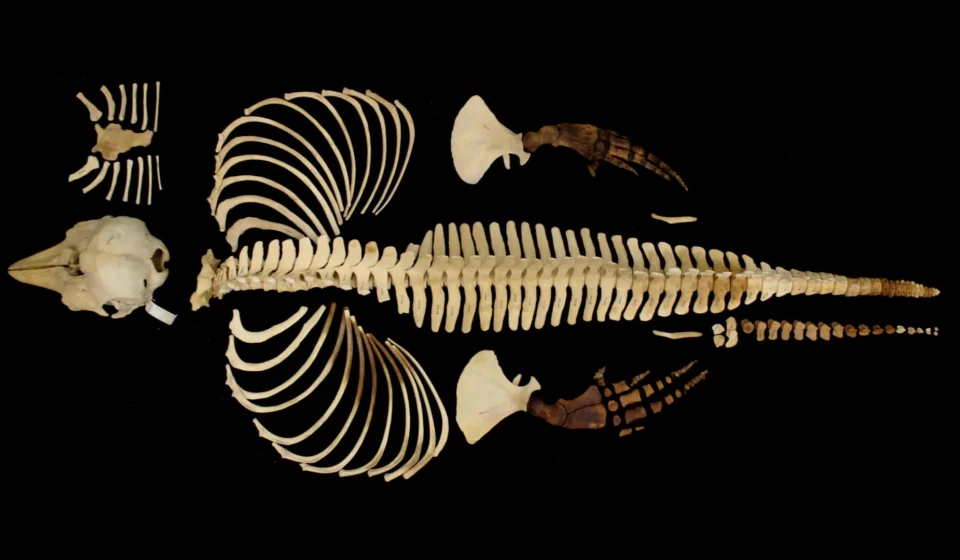
In a pioneering effort to preserve the anatomical knowledge of this critically endangered species, a multidisciplinary team—led by researchers from Florida Atlantic University (FAU) in collaboration with the San Diego Natural History Museum, SeaWorld California, and NOAA Fisheries—has successfully created a comprehensive digital archive of a female vaquita skeleton.
The specimen, originally collected in 1966 by biologist Robert L. Brownell Jr. during his graduate studies, has become the centerpiece of a technological breakthrough. The research, recently published in the journal Marine Mammal Science, provides an unprecedented look at the porpoise’s physiology. By merging medical-grade computed tomography (CT) scans, micro-CT imaging, and high-resolution digital photography, the researchers have transformed a fragile, 60-year-old skeleton into an interactive, 3D educational resource.
Unveiling the Microscopic Architecture
The project utilized a multi-tiered imaging workflow. The team began with standard medical CT scanning to generate cross-sectional views of the entire skeleton. To capture the finer nuances of the bones, they progressed to micro-CT scanning. While standard CT scans provide a high-level view, micro-CT systems allow researchers to capture anatomical structures measured in microns—details smaller than the diameter of a human hair.
"This project required an unusually intricate imaging workflow to capture the vaquita skeleton at multiple scales, from whole-bone structure down to microscopic internal detail," explained Dr. Marianne E. Porter, professor in the FAU Department of Biological Sciences and the study’s senior author. "By integrating medical CT, micro-CT and high-resolution photography, we were able to reconstruct both the external morphology and internal architecture of each bone in a way that preserves anatomical fidelity while remaining fully interactive."
The result of this thousands-of-images process is a layered dataset that reflects the true complexity of the animal. The digital models allow scientists to rotate, zoom, and inspect bones from any angle without subjecting the original, fragile specimen to the wear and tear of physical handling.
Implications for Global Conservation
The implications of this digital archive extend far beyond the laboratory. By making these high-resolution models accessible through the online repository MorphoSource, the team has democratized access to rare biological data.
Enhancing Educational Reach
Jamie Knaub, the project’s first author and a Ph.D. candidate at FAU, emphasizes that the digital archive is not merely a scientific curiosity but a powerful educational tool. "By combining advanced imaging technologies with open-access data sharing, the effort not only safeguards a valuable record of one of the planet’s most endangered marine mammals, but also makes that information accessible to anyone," Knaub stated.
The digital files allow museums, schools, and conservation organizations worldwide to produce scientifically accurate 3D-printed replicas. This capability ensures that students and the public can engage with the anatomy of the vaquita, fostering a deeper understanding of its plight and the urgent need for habitat protection. In a world where the physical creature may soon be gone, these digital avatars provide a tangible connection for future generations.
The Role of Technology in Biodiversity Management
The success of this project highlights the necessity of "Bioimaging Labs" in modern conservation. As Dr. Tricia L. Meredith, director of research for FAU’s lab schools, noted, the integration of high-resolution micro-CT systems with sophisticated software is essential for modern biological preservation. "This kind of integrated technological environment is what allows specimens like the vaquita to be preserved and shared at a level of detail that simply wasn’t possible until recently," Meredith said.
This technological roadmap serves as a template for other endangered species. When the living population of an animal becomes too small for traditional research, digital archival serves as the final, vital layer of biological documentation.
Official Perspectives and Future Outlook
The collaborative nature of the project—spanning academic institutions, federal fisheries agencies, and private research centers—reflects the severity of the vaquita’s status. The researchers involved, including Philip Unitt of the San Diego Natural History Museum and Brittany Aja Dolan, formerly of SeaWorld California, have all underscored that while the digital archive is a success, it is a response to a failure of environmental policy and international enforcement.
The project received significant support from FAU’s School of Environmental, Coastal, and Ocean Sustainability (ECOS), the Joshua M. Berlin Research Gift, and SeaWorld California. These entities recognize that while the digital model preserves the image of the vaquita, the real work remains the protection of its living habitat.
The Ongoing Battle for Survival
Despite the scientific triumph of the 3D archive, the vaquita remains in a fight for its life. The consensus among marine biologists is clear: digital preservation, while important for science, is no substitute for a living, breathing population. International cooperation remains the only viable path to success. The removal of gillnets from the Gulf of California is a geopolitical challenge that requires the sustained commitment of the Mexican government, international environmental regulators, and the global community to curb the demand for totoaba products.
As researchers continue to refine the digital archive, the vaquita remains a haunting reminder of the fragility of marine ecosystems. The project serves as both a funeral shroud and a beacon of hope—a digital archive that ensures that, even if humanity fails the vaquita, we will not lose the memory of what we allowed to fade away. The work of Knaub, Porter, and their colleagues ensures that the vaquita’s story, its unique anatomy, and its place in our oceans will be preserved for as long as digital records endure, serving as a testament to the beauty we are currently on the verge of losing.