GENEVA – In a move that has sent ripples of cautious relief across global financial markets, the United States and Iran officially signed a high-stakes “memorandum of understanding” (MoU) on June 17, 2026. The agreement aims to halt a devastating Middle East conflict that has, for the better part of a year, paralyzed the world’s most critical energy corridors and pushed emerging economies to the brink of collapse.
The centerpiece of the deal is Iran’s commitment to reopen the Strait of Hormuz—a maritime chokepoint through which approximately one-fifth of the world’s oil consumption passes. While the signing marks a significant diplomatic breakthrough, energy analysts, economists, and political scientists warn that the "thaw" in relations is fraught with volatility. As the world looks toward a post-conflict era, the reality of damaged infrastructure, depleted stockpiles, and a "stop-start" diplomatic atmosphere suggests that the return to pre-war normalcy will be a marathon, not a sprint.
Main Facts: The 14-Point Framework
The June 17 memorandum is not a formal treaty but a 14-point roadmap designed to de-escalate hostilities that have decimated global fuel supplies. Under the terms of the agreement, the U.S. has signaled a willingness to ease its naval blockade of Iranian oil exports in exchange for a total cessation of Iranian attacks on regional energy infrastructure.
Key components of the MoU include:
- The Reopening of the Strait of Hormuz: Iran has pledged to dissolve or bypass the restrictive "Persian Gulf Strait Authority" (PGSA) established in May, allowing international tankers unhindered passage.
- Asset De-freezing: A phased plan to release Iranian assets currently frozen in international accounts, contingent on IAEA inspections and verified de-escalation.
- Ceasefire in Proxy Theaters: A tentative agreement to lower tensions between Israel and Hezbollah, which served as a secondary front during the conflict.
- Infrastructure Rehabilitation: An international commitment to provide technical assistance for the repair of damaged energy facilities, including Qatar’s massive Ras Laffan LNG terminal.
Despite these points, the MoU remains a non-binding document. Critics point out that it lacks a robust enforcement mechanism, leaving the global economy at the mercy of political whims in both Washington and Tehran.
Chronology: The Path to the Brink
The crisis that led to the June 17 signing was characterized by a rapid escalation of maritime warfare and economic brinkmanship.
- Late 2025 – Early 2026: Tensions flared following a series of unclaimed drone strikes on regional refineries. The U.S. responded by tightening sanctions and implementing a "maximum pressure" naval blockade on Iranian crude.
- March 2026: Iran retaliated by officially closing the Strait of Hormuz, citing "national security threats." This move caused global oil prices to spike above $150 per barrel. In the Philippines, President Ferdinand Marcos Jr. was forced to declare a state of national energy emergency as fuel prices rendered public transport and agriculture unsustainable.
- April 2026: A brief window of hope emerged when Iran declared the Strait open, only to shutter it again 72 hours later following a skirmish between U.S. destroyers and Iranian fast-attack boats.
- May 2026: Tehran established the PGSA, codifying its control over the waterway and demanding "transit tolls" from Western-aligned nations.
- June 17, 2026: Following weeks of back-channel negotiations in Switzerland, the MoU was signed, leading to the current tentative pause in hostilities.
Supporting Data: The Economic Toll and Logistic Inertia
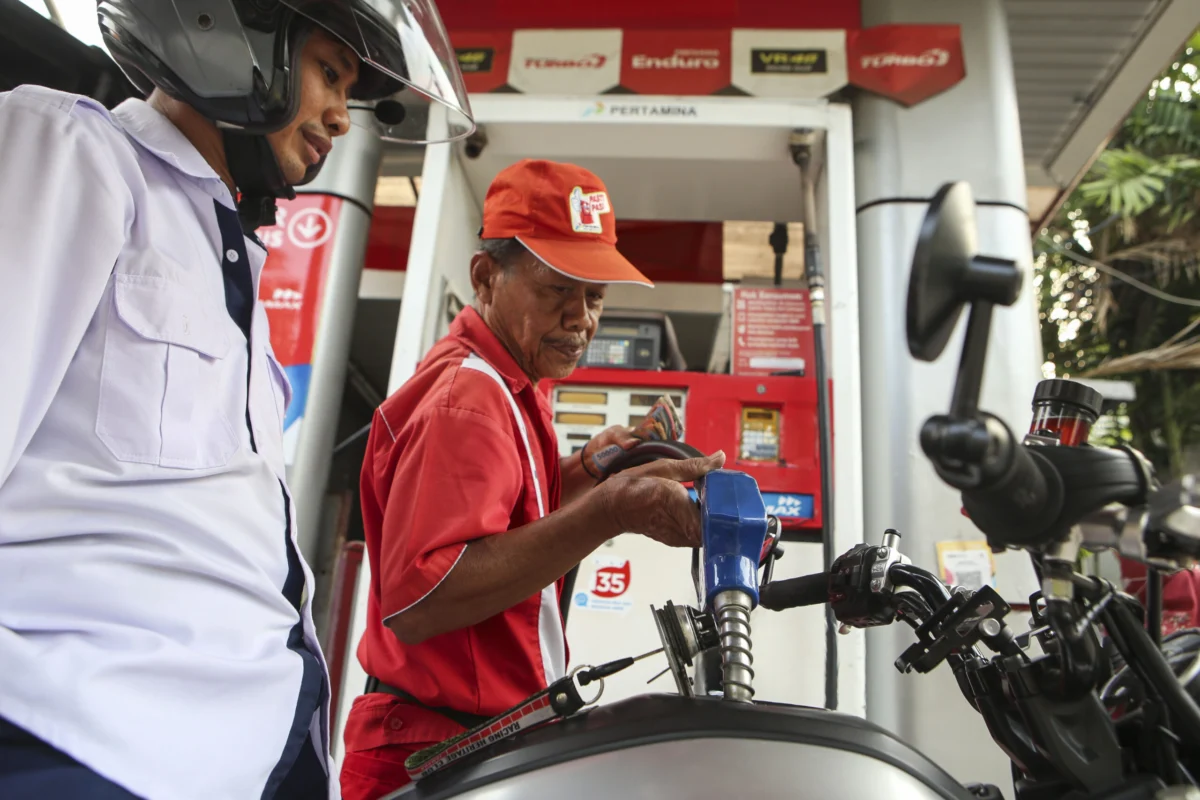
The human and economic cost of the conflict has been disproportionately borne by Asia. Southeast Asian nations, heavily dependent on Gulf crude, were forced into drastic austerity measures. Governments in the region implemented four-day work weeks to save electricity, rationed diesel for essential services, and aggressively reactivated mothballed coal-fired power plants, undoing years of "green energy" progress.
However, the reopening of the Strait does not equate to an immediate drop in prices. Experts cite "logistic inertia" as the primary hurdle.
The Tanker Gap
Chen Chien-Ming, an associate professor of operations management at Singapore’s Nanyang Technological University (NTU), emphasizes the physical limitations of the oil supply chain. “The oil supply will not flip right back,” Chen told Fortune. “A tanker’s round trip between Singapore and the Gulf Cooperation Council (GCC) can easily take one to two months. When you consider that many Asian countries are currently operating on multi-year-low stockpiles, the math simply doesn’t allow for a quick recovery.”
The Stockpile Vacuum
Data from Wood Mackenzie suggests that regional crude stockpiles will continue to decline well into August before they begin to stabilize. Sushant Gupta, an analyst at the firm, explains that the "bare minimum" levels reached during the blockade mean that every drop of oil entering the market in the next quarter will be diverted to emergency reserves rather than commercial use. "We don’t expect stocks to reach anywhere near pre-war levels—at least within this year," Gupta noted.
Infrastructure Damage
The physical destruction of processing facilities adds another layer of delay. Qatar’s Ras Laffan, the world’s largest LNG terminal, sustained significant damage during the height of the war. Refineries and LNG liquefaction trains cannot be "switched on" like a lightbulb; they require months of safety checks, mine clearance in surrounding waters, and technical recalibration after a forced shutdown.
Official Responses: Political Skepticism and Hardline Demands
The reaction to the MoU has been polarized, reflecting the deep-seated distrust between the negotiating parties.
The View from Washington
The U.S. administration’s stance remains aggressively cautious. Former President Donald Trump, currently a dominant figure in the 2026 political landscape, has already threatened to resume military action. "I will bomb the hell out of Iran if they violate even one word of this agreement," Trump warned, signaling that U.S. domestic politics could derail the deal at any moment.
Furthermore, the White House announced on Thursday that a planned trip by Vice President JD Vance to Switzerland for "technical talks" had been delayed. The official statement cited "logistical complexities," but insiders suggest the delay is due to disagreements over the "war reparations" clause demanded by Tehran.
The View from Tehran
Iran’s negotiators have remained firm on several "deal-breakers." Beyond the unfreezing of assets, Tehran is demanding that Israel withdraw from Lebanon and cease all military operations in the region. Professor Chen Chien-Ming observes, “Iran’s demands are high-stakes. They are linking the energy flow to the broader geopolitical map of the Levant. I don’t expect Israel to comply with these terms, which makes the MoU inherently fragile.”
The Analyst Perspective
Kim Fustier, HSBC’s senior global oil and gas analyst, expressed skepticism in a recent note to investors. She highlighted the ambiguity of the PGSA’s status. If Iran maintains the legal infrastructure to close the Strait at a moment’s notice, shipping companies will remain hesitant to send their most expensive vessels into the Gulf, keeping insurance premiums—and thus oil prices—inflated.
Implications: The "New Normal" for Global Energy
The Iran energy crisis has fundamentally altered the strategic thinking of major global powers. Even if the peace deal holds, the "lesson learned" by energy-importing nations will have long-term consequences for the market.
1. The Race for Over-Stockpiling
Wood Mackenzie’s Gupta predicts that South and Southeast Asia will no longer be content with "just-in-time" energy arrivals. Countries are expected to double down on building strategic petroleum reserves (SPR) to levels significantly higher than pre-2026 standards. As China and the U.S. also move to replenish their depleted reserves, this "restocking demand" will create a floor for oil prices, preventing them from falling significantly despite the resumption of supply.
2. Demand and Supply Synchronization
Pushan Dutt, a professor of economics at INSEAD, suggests that a "concurrent rise" in demand and supply will limit the rate of price decline. "As Asia relaxes its rationing and industries return to full capacity, the surge in demand will eat up the newly available supply almost instantly," Dutt explains.
3. The Sustainability of Peace
The most profound implication is the realization that the global economy is tethered to a 14-point memorandum that "does not enforce action." The "start-stop" nature of the 2026 negotiations has injected a permanent "risk premium" into oil futures. Investors now require evidence of lasting security—including expensive mine clearance operations in the Gulf—before they return to pre-war investment levels.
In conclusion, while the June 17 agreement has successfully pulled the world back from the edge of a total energy collapse, the path to recovery is littered with technical, logistical, and political obstacles. For the governments of Southeast Asia and the consumers at the pump, the "energy emergency" may be downgraded, but the era of cheap, stable energy remains a distant memory. As Professor Chen concludes: “It’s a step in the right direction, but to expect this MoU to materialize into a long-term, frictionless peace is, at this stage, unrealistic.”