The legal battle over the massive estate of the late Zappos founder and CEO Tony Hsieh has taken a highly technical, forensic turn. Nearly four years after Hsieh’s tragic death following a Connecticut house fire, a sudden and mysterious development has shifted the focus of his estimated $840 million estate from standard probate proceedings to a high-stakes scientific investigation.
At the center of the dispute is a purported seven-page will that suddenly arrived by mail at a Las Vegas courthouse. The document, dated March 2015, has ignited a complex legal war, pitting Hsieh’s surviving family against an elusive claimant and prompting a judge to authorize advanced forensic testing of the document’s ink, paper, and signatures.
Main Facts of the Estate Dispute
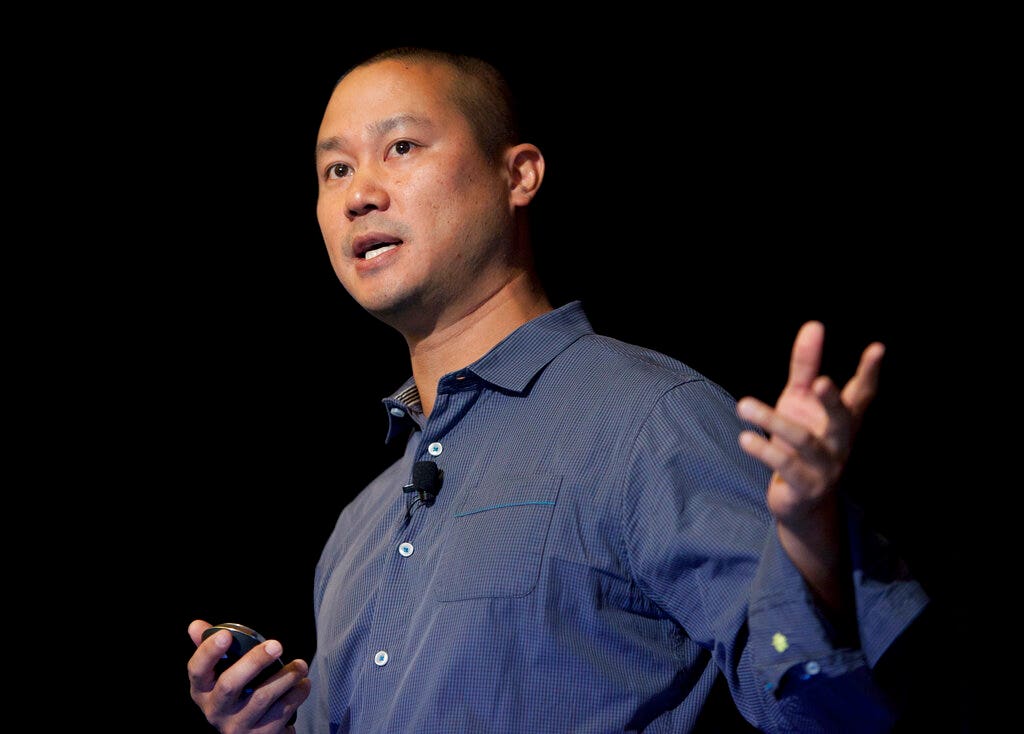
Tony Hsieh, a visionary tech entrepreneur celebrated for his customer-centric business philosophy and the revitalization of downtown Las Vegas, died on November 27, 2020, at the age of 46. He succumbed to complications from smoke inhalation sustained during a house fire in New London, Connecticut. Because Hsieh was widely believed to have died intestate—meaning without a valid will—a Nevada probate court initially appointed his father, Richard Hsieh, and his brother, Andrew Hsieh, as co-administrators of his vast estate.
For years, the family managed the estate under the assumption of intestacy, dealing with dozens of creditor claims from former associates, hangers-on, and business partners who claimed Hsieh had promised them millions during his increasingly chaotic final months. However, the legal landscape shifted dramatically when a physical copy of a seven-page document, claiming to be Hsieh’s last will and testament from March 2015, was mailed anonymously to the Clark County District Court in Las Vegas.
Key Elements of the Disputed Document
- The No-Contest Clause: The purported will contains a severe "no-contest" (or in terrorem) clause directed specifically at Hsieh’s parents and his two younger brothers. Under the terms of this clause, if any single family member challenges the validity of the document, the entire family is immediately disqualified from receiving any portion of the inheritance.
- The Unnamed Executor: The document names Robert Armstrong, a prominent Las Vegas-based trust and estate attorney, as a co-executor. Armstrong, however, has stated under oath that he has never met Tony Hsieh and had no knowledge of the document’s existence prior to its sudden arrival in court.
- The International Connection: The physical document was allegedly sent to Armstrong’s office by a man identifying himself as Kashif Singh. Singh claimed he discovered the seven-page will among the personal belongings of his recently deceased grandfather in Balochistan, Pakistan.
Hsieh’s family has vehemently condemned the document, labeling it an outright fabrication and a coordinated scam designed to siphon off the tech mogul’s fortune.
Chronology of Events
The transition of Tony Hsieh’s legacy from a celebrated corporate success story to a forensic battleground is marked by a series of tragic, chaotic, and highly unusual events.
[November 2020] ────────────────► Tony Hsieh dies following a house fire in Connecticut.
[December 2020] ────────────────► Family files for probate, stating Hsieh died intestate.
[2021–2022]     ────────────────► Estate faces a barrage of multi-million dollar creditor claims.
[Mid-2023]      ────────────────► A purported 2015 will arrives by mail at a Las Vegas courthouse.
[Late 2023]     ────────────────► Kashif Singh contacts attorney Robert Armstrong's office.
[May 2024]      ────────────────► Judge appoints forensic specialist Gerry LaPorte as Special Master.
[June 2024]     ────────────────► LaPorte's team begins testing the document at the courthouse.
[July 24, 2024] ────────────────► Deadline for the Special Master’s official forensic report.
The Downward Spiral and Tragic Death
In the years leading up to his death, Hsieh retired from Zappos and relocated to Park City, Utah, where his behavior became increasingly eccentric. Reports surfaced of heavy drug use, extreme sleep deprivation, and physical deprivation experiments. On November 18, 2020, while visiting family and friends in New London, Connecticut, Hsieh became trapped in a storage shed during a fire. He was rescued but died nine days later in a hospital.
The Intestacy Period and Creditor Deluge
Shortly after his death, Hsieh’s family initiated probate proceedings in Las Vegas, declaring he left no estate plan. Over the next two years, the estate was besieged by claims. Former employees and associates filed lawsuits seeking tens of millions of dollars, citing verbal agreements, napkin contracts, and sticky-note promises made by Hsieh during his period of mental and physical decline.
The Arrival of the Purported Will
The status quo was shattered in 2023 when the March 2015 document was delivered to the courthouse. Shortly thereafter, Kashif Singh contacted Robert Armstrong’s office, claiming his grandfather—whose death certificate from Pakistan was later mailed to the office—had been in possession of the original document.
The Transition to Forensic Investigation
Faced with a highly suspicious document originating from an unverified source overseas, Hsieh’s family petitioned the court for independent testing. In May 2024, a Las Vegas probate judge appointed Gerry LaPorte, a highly regarded forensic document examiner, to act as a "special master" to oversee the physical and chemical testing of the document.
Supporting Data and Forensic Methodology
Because the stakes of the dispute are incredibly high, the court has authorized a rigorous battery of forensic examinations. In early June 2024, Special Master Gerry LaPorte transported approximately 150 pounds of specialized forensic equipment from his laboratory in Virginia to the Las Vegas courthouse to ensure the document remained under tight security during testing.
Advanced Forensic Techniques Employed
To determine whether the document is a genuine relic from 2015 or a modern forgery, LaPorte’s team is utilizing several specialized scientific disciplines:
| Forensic Discipline | Specific Testing Method | Objective |
|---|---|---|
| Ink Dating & Analysis | Gas Chromatography-Mass Spectrometry (GC-MS) & Thin-Layer Chromatography (TLC) | Analyzes the chemical composition of the ink and the degradation of solvents (such as phenoxyethanol) to determine the approximate date the signatures were written. |
| Paper and Fiber Analysis | Microscopic and spectroscopic evaluation | Examines the physical composition of the paper, watermarks, and optical brighteners to see if the paper stock matches materials available in 2015. |
| Indented Writing Analysis | Electrostatic Detection Analysis (ESDA) | Reveals invisible indentations left on the paper from writing on overlying sheets, which can expose hidden text or indicate if the signatures were traced. |
| Biometric Testing | Latent fingerprint recovery and DNA swabbing | Attempts to harvest genetic material and ridge patterns to identify who handled the document and whether Hsieh’s biological markers are present. |
The Legal Mechanics of the "No-Contest" Clause
The inclusion of the no-contest clause in the purported seven-page document is a critical piece of supporting data. In estate planning, such clauses are designed to deter beneficiaries from challenging a will by threatening them with total disinheritance.
If the document is proven authentic, the clause could theoretically freeze Hsieh’s family out of the estate if their legal objections are deemed a "contest" under Nevada law. However, if the document is proven to be a forgery through forensic science, the entire instrument—including the no-contest clause—will be declared void.
Official Responses and Legal Standpoints
The legal battle has drawn some of the most prominent names in forensic science and estate litigation, with all sides preparing for a highly technical courtroom confrontation.
                  ┌────────────────────────────────────────┐
                  │       Clark County Probate Court       │
                  └───────────────────┬────────────────────┘
                                      │ Appoints
                                      ▼
                  ┌────────────────────────────────────────┐
                  │    Special Master: Gerry LaPorte       │
                  │   (Conducting Independent Testing)     │
                  └───────────────────┬────────────────────┘
                                      │
             ┌────────────────────────┴────────────────────────┐
             ▼                                                 ▼
┌──────────────────────────┐                      ┌──────────────────────────┐
│   Hsieh Family Estate    │                      │     Proponent of Will    │
│  Attorney: Dara Goldsmith│                      │      (Kashif Singh /     │
│  Expert: Larry Stewart   │                      │    Unidentified Parties) │
└──────────────────────────┘                      └──────────────────────────┘
The Hsieh Family’s Position
Represented by veteran Las Vegas estate attorney Dara Goldsmith, the Hsieh family has maintained a firm stance that the document is entirely fraudulent. To bolster their defense, the family has retained Larry Stewart, a legendary forensic scientist and former director of the U.S. Secret Service laboratory.
Stewart’s resume includes work on some of the most high-profile forensic investigations in American history, including:
- The forensic reinvestigation of the assassination of President John F. Kennedy.
- The investigation into the assassination of Dr. Martin Luther King Jr.
- The forensic examination of evidence in the Unabomber case.
The family’s legal team argues that the bizarre origin story involving a deceased grandfather in Pakistan, combined with the total absence of the witnesses listed on the document, makes the will highly suspect.
The Co-Executor’s Response
Robert Armstrong, the prominent Las Vegas trust attorney named in the document, has cooperated fully with the court but has distanced himself from the purported will. Armstrong’s office confirmed receiving the initial phone call from Kashif Singh and the subsequent delivery of the death certificate from Balochistan. However, Armstrong has maintained that he has no record of ever consulting with or representing Tony Hsieh in 2015, casting further doubt on how his name came to be included in the document.
The Claimants and Missing Witnesses
To date, Kashif Singh has not made a physical appearance in the Las Vegas probate court, nor have any legal representatives formally entered the proceedings on his behalf to defend the document’s validity. Furthermore, the individuals listed as witnesses to the signing of the 2015 document have not come forward to verify their signatures or testify to the document’s execution.

Implications for Probate Law and the Tech World
The forensic battle over Tony Hsieh’s estate carries profound implications that extend far beyond the borders of Nevada, touching on estate planning vulnerability, the legacy of tech leaders, and the evolving role of science in probate courts.
Vulnerability of High-Net-Worth Intestacy
Hsieh’s case serves as a cautionary tale for high-net-worth individuals. When an estate worth nearly a billion dollars is left without a clear, verified, and secured estate plan, it becomes an attractive target for sophisticated litigation and potential fraud. The emergence of the "Pakistan will" demonstrates how modern technology and international borders can be exploited to complicate probate proceedings.
Precedent for Forensic Science in Probate
While forensic document examination is common in criminal law, its extensive use in estate disputes is rarely this advanced. The appointment of a Special Master equipped with 150 pounds of laboratory gear to analyze ink degradation at a courthouse sets a significant precedent. If LaPorte’s chemical analysis successfully determines the precise age of the ink, it will demonstrate the power of chemical dating in resolving multi-million-dollar estate disputes.
The Shadow Over a Legacy of "Delivering Happiness"
Tony Hsieh built his reputation on the concept of "Delivering Happiness"—the title of his bestselling book on corporate culture and customer service. The ongoing, highly publicized legal battle over his estate, his mental state in his final years, and the sensational details of his tragic death stand in stark contrast to the legacy of joy and community empowerment he spent his life building.
The final report from Special Master Gerry LaPorte, scheduled for submission on July 24, 2024, is expected to provide the scientific clarity needed to resolve this chapter of the dispute, determining once and for all whether the March 2015 will is a genuine reflection of Hsieh’s final wishes or a highly sophisticated international hoax.