
A Legacy of Terror: Human Rights Watch Exposes the Devastating Impact of ‘Operation Metro Surge’ in Minnesota

In a searing indictment of federal overreach, Human Rights Watch (HRW) has released a comprehensive report titled “A Manufactured Crisis: Minnesota Communities Terrorized by the Federal Government.” The document provides a harrowing account of the four-month occupation of Minneapolis and St. Paul by federal immigration agents between December 2025 and March 2026. According to the report, the deployment—codenamed "Operation Metro Surge"—did not merely function as an enforcement mechanism; it operated as a campaign of systemic abuse, characterized by racial profiling, the use of lethal force, and the erosion of fundamental civil liberties.
The HRW findings suggest that the federal government’s presence in the Twin Cities exposed what researchers describe as "deeply abusive" tendencies within the infrastructure of United States immigration enforcement. As the administration of President Donald Trump continues its aggressive push for mass deportations, the Minnesota case study stands as a chilling harbinger of the potential human cost of these policies when implemented without oversight or restraint.
The Chronology of an Occupation: December 2025 – March 2026
The deployment of Immigration and Customs Enforcement (ICE) agents to Minnesota was not an isolated incident but a strategic pivot in President Trump’s broader immigration enforcement agenda. Following his inauguration in January 2025, the President prioritized the "interior enforcement" of immigration law, targeting major metropolitan areas across the United States.
The Surge Begins (December 2025)
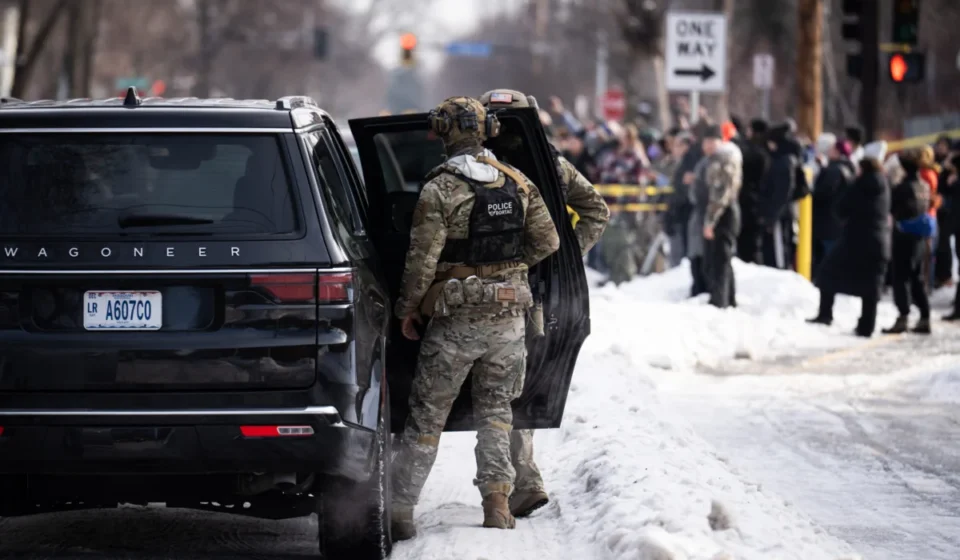
In late 2025, federal authorities quietly mobilized units to the Twin Cities. Residents reported an immediate and jarring shift in the atmosphere. Masked agents, heavily armed and operating in unmarked vehicles, began conducting what the administration termed "targeted enforcement operations." By mid-December, the presence of these units had transitioned from sporadic patrols to a persistent occupation of residential neighborhoods.
Escalation and Public Outcry (January – February 2026)
As the operation intensified, the line between law enforcement and paramilitary occupation blurred. Throughout early 2026, witnesses documented agents utilizing chemical irritants, such as tear gas and pepper spray, in densely populated residential areas. The HRW report details incidents where agents threatened unarmed bystanders with lethal force simply for recording or attempting to document arrests. By February, the atmosphere of fear was palpable, with many immigrant families shuttering their homes and avoiding public transit, schools, and grocery stores.
The Climax and Departure (March 2026)
The operation concluded in March 2026, but not before the death of two United States citizens at the hands of federal agents. These fatalities—which remain a focal point of ongoing investigations—served as the final, violent punctuation mark on a four-month campaign that left the community physically and psychologically scarred.
Supporting Data: The Reality of the "Metro Surge"
While the Department of Homeland Security (DHS) framed Operation Metro Surge as a necessary measure to "keep Americans safe and eradicate fraud," the data compiled by Human Rights Watch tells a drastically different story.
Arbitrary Detentions and Lack of Due Process
The administration repeatedly asserted that the crackdown would focus on non-citizen residents with significant criminal histories. However, HRW’s analysis of the 4,000 detentions carried out during the operation reveals that over 75% of those taken into custody had no criminal records. Many were detained based on minor civil violations or, in numerous instances, through sheer administrative whim.
Economic and Social Devastation
The economic toll on the Twin Cities has been catastrophic. The city of Minneapolis has estimated the total community impact to be in the neighborhood of $700 million. This figure encompasses:
- Property Damage: Costs incurred from forced entries, tactical raids, and destruction of personal property during detentions.
- Productivity Loss: A massive reduction in the local workforce as immigrant workers—many of whom are essential to the regional economy—were detained or forced into hiding.
- Public Service Strain: Increased demand for emergency food and shelter services as families were left without breadwinners or were too terrified to access municipal resources.
The Human Cost
Reagan Williams, a lead researcher for HRW, summarized the atmosphere of the occupation: "The federal government sent hordes of masked, armed agents to grab people off the street, whisk them away in shackles, and abuse those who sought to bear witness." This environment of impunity meant that victims had little recourse, and those who stood up to the agents were often met with retaliatory arrests.
Official Responses and Federal Justification
The Department of Homeland Security has maintained a defiant posture regarding its operations in Minnesota. Despite the HRW report’s findings, a spokesperson for the DHS stated that the agency would not leave cities until its "objective of restoring the rule of law" was achieved. This stance echoes the broader rhetoric of the Trump administration, which has prioritized "law and order" as the guiding principle of its interior immigration policy.
However, the administration’s focus has also shifted toward legal retribution. Federal prosecutors are currently pursuing criminal charges against a significant number of Minnesota residents and local government officials. These individuals are being prosecuted for "conspiracy to impede federal agents" during the raids. Critics view these prosecutions as a clear attempt to intimidate local officials and discourage the public from challenging federal authority, regardless of the legality of the agents’ actions.
Implications: The Long-Term Fallout
The conclusion of Operation Metro Surge does not signal a return to normalcy for the people of Minnesota. Instead, the state faces a long, arduous process of recovery.
Structural Erosion and Trust
The most profound impact of the occupation is the near-total collapse of trust between immigrant communities and law enforcement. When federal agents operate with perceived impunity, the entire concept of community policing becomes untenable. HRW warns that the long-term consequences of this distrust will be felt in public health, crime reporting, and civic engagement for a generation.
A Call for Accountability
The Human Rights Watch report concludes with a series of urgent recommendations, calling for:
- Independent Oversight: The creation of an independent commission to investigate the conduct of federal agents during Operation Metro Surge.
- Structural Reform: A complete overhaul of internal reporting and accountability mechanisms within ICE and the DHS to prevent the recurrence of such abuses.
- Restorative Justice: Federal funding to support the victims of the crackdown and the municipalities that have borne the economic brunt of the federal operation.
"Operation Metro Surge put the violent and abusive practices of these agencies on full display," Williams stated in the report’s concluding remarks. "We have clear proof of how they operate when impunity prevails, and we need to urgently chart a new way forward through accountability and structural reforms that put an end to these abuses."
As the federal government continues to deploy similar tactics in other cities—including Los Angeles, Chicago, and Portland—the Minnesota experience serves as a sobering reminder of what happens when the machinery of state power is unleashed without a commitment to human rights. The "manufactured crisis" in the Twin Cities may have officially ended, but for the thousands of families whose lives were upended by the federal government, the struggle for justice is only just beginning. The question remains whether the U.S. political system possesses the capacity—or the will—to hold its own agencies accountable for the terror they have inflicted upon their own residents.