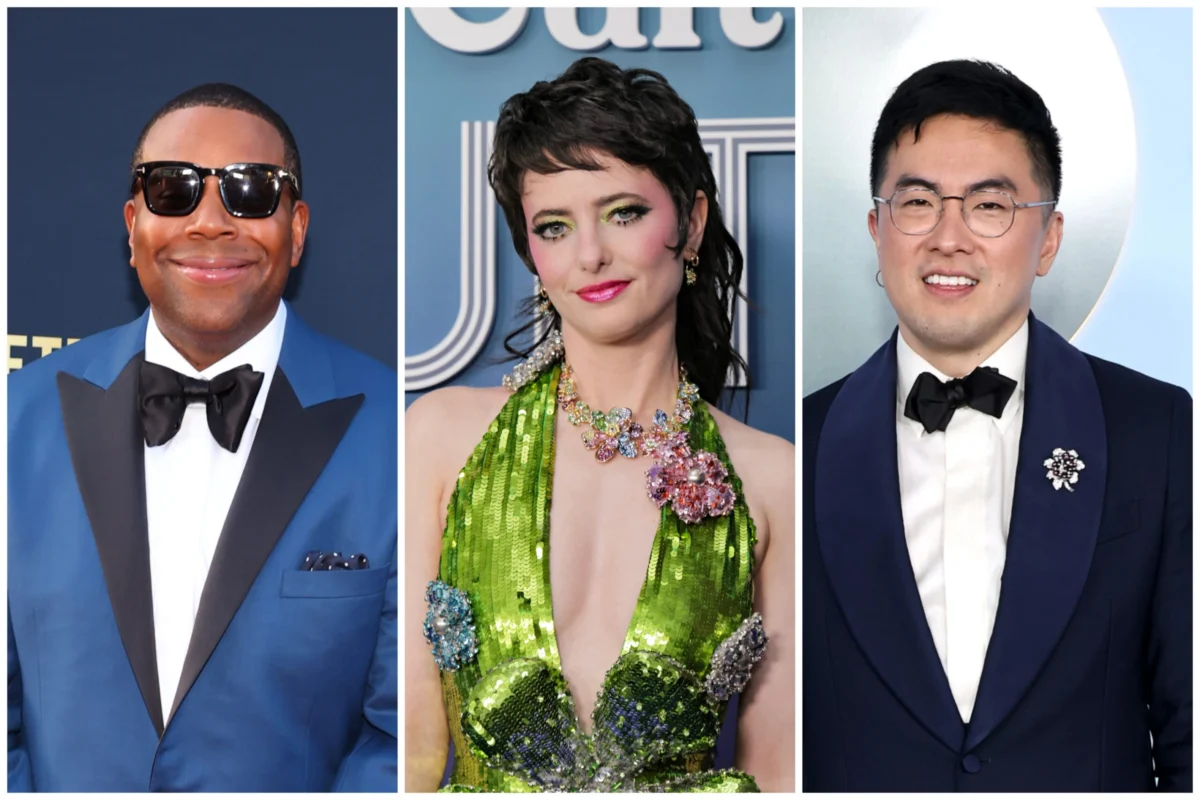
The landscape of American sketch comedy is defined by the monolithic presence of Saturday Night Live. For decades, it has served as both a launchpad for the next generation of comedic icons and a persistent, high-pressure crucible for those who choose to stay. Recently, at the Television Academy’s Emmy FYC event, three pivotal figures—outgoing breakout star Bowen Yang, legendary mainstay Kenan Thompson, and the acerbic, beloved Sarah Sherman—gathered to reflect on the nature of this institution. Their conversation, ranging from the technical demands of “hard comedy” to the emotional toll of leaving the “dream factory,” reveals the profound shift in how modern performers view their tenure at 30 Rockefeller Plaza.
The Departure and the Realization
Bowen Yang, who first entered the SNL ecosystem as a writer in 2018 before joining the cast in 2019, officially stepped away from the show in December. For Yang, the transition from active cast member to fan has been a process of retrospective clarity. It wasn’t until he began filming this year’s “Las Culturistas Culture Awards” with his podcast partner, Matt Rogers, that the true weight of his SNL education became apparent.
“When we did the culture awards, it reminded me very much of the dream factory that was SNL, just on a much smaller scale,” Yang noted. His departure has sparked a wider meditation on the state of comedy today—an industry he argues is increasingly undervalued, despite its psychological necessity as a coping mechanism for the public. Watching the show from the outside, Yang describes the experience as “surreal” but profoundly grounding, noting that the show remains his ultimate comfort watch.
A Chronology of Longevity and Mentorship
The discussion highlighted the starkly different career trajectories within the SNL halls. Kenan Thompson, the longest-running cast member in the show’s history, occupies a space of singular authority. For Thompson, the departure of colleagues is not merely a professional transition; it is an emotional event akin to a parent watching a child head off to college.
“It’s sad. There’s a sadness to it, because it’s like, you start to become somewhat of an empty nester,” Thompson admitted. He spoke to the unique bond formed with those who work the hardest—performers like Yang and Sherman who push the boundaries of the medium. Thompson, who has been a fixture on the show for over two decades, reflected on the “new page” of SNL history, where the traditional two-to-three-year stint has been replaced by performers who, like himself, seem to find a rhythm that allows them to stay for multiple decades.
The “Hard Comedy” Standard
A recurring theme in the discussion was the technical difficulty of producing live sketch comedy. Sarah Sherman, currently five years into her tenure, offered a sobering perspective on the “hard comedy” philosophy championed by Lorne Michaels.
“Lorne calls it ‘hard comedy,’” Sherman explained. “You have to have a joke-per-minute pace. There’s not that many things on TV that are hard comedy.”
This relentless demand—generating three sketches a week under the looming pressure of world events—creates a high-stakes environment where performers must balance the need for topical relevance with the necessity of escapism. Thompson, who prefers to lean into the “playful” and “silly,” noted that while he is aware of the dark realities of the world, his contribution is to offer a reprieve. “By the time it gets to Saturday, it feels like we’ve had enough of that, and we would like another version of escapism.”
Technical Mastery and the “Cold Open” Maturity
The group identified the “Cold Open” as the true litmus test for a performer’s maturity. According to Thompson, the Cold Open is where the “adults” in the room gather to tackle the most heady, political, or high-stakes content.
Yang reflected on the intense pressure of these segments, citing his portrayal of George Santos as a pinnacle of the “mature experience.” He recalled the frantic nature of live television, where song lyrics were being rewritten seconds before air. “You feel like, ‘oh, I know how to do this kind of thing,’ once it goes well,” Thompson added.
The conversation also touched on the evolution of the “warm-up”—a role Thompson held for years, entertaining the audience with song and dance before the cameras rolled. He described the relief of finally stepping away from that duty, noting that the anxiety of the warm-up was a “defense mechanism” against the broader stresses of the broadcast. “Now, to not have that anymore, I’m like, man, if I’m not in the cold open… I’ve got like 25 minutes still into the show to just relax!”
Supporting Data: The "What Would Kenan Do?" Factor
Perhaps the most touching aspect of the conversation was the shared admiration for Kenan Thompson’s leadership. Both Yang and Sherman described him as a “reassuring presence” whose influence extends far beyond his own performances.
Sherman recounted a story from her second year, when a casual comment about being cold in the office led to Thompson leaving a space heater in her room with a note. “He doesn’t have to be nice to anyone! He doesn’t have to talk to anyone… He’s still putting in effort to make everyone feel comfortable and welcome,” Sherman said.
Yang added that Thompson’s method of mentorship is never didactic. It is “behavior modeling.” Whether it’s how to arrive on time, how to provide constructive feedback, or how to advocate for oneself, Thompson sets the standard by example. “What Would Kenan Do?” has become a mantra for the cast, a guiding principle that helps newcomers navigate the daunting waters of the Rockefeller Center stage.
Implications for the Future of SNL
As the show looks toward the future, the conversation underscored a fundamental shift: SNL is no longer just a stopping point; for many, it has become a destination. Thompson, when asked if he could stay for another 15 or 20 years, was characteristically open. “I could do it for forever, if that’s the case,” he mused, noting that the writing process may still be stressful, but the act of performing live on Saturday has become “cake.”
For Yang, the takeaway is one of gratitude and the realization that his time on the show was a vital “skill transfer.” He noted that he wouldn’t have been able to produce the “Culture Awards” without the grueling training ground of SNL.
The legacy of these performers, and the community they built, serves as a testament to the show’s enduring power. Despite the changing tides of the media landscape, the “dream factory” remains a space where the pursuit of the “silly” is treated with the utmost seriousness. As Sherman and Yang look toward their next chapters, they do so with the confidence that they have been shaped by the best, and in turn, have helped shape the future of a show that, as Thompson suggests, might just be worth staying at forever.