Chronic Wasting Disease (CWD)—often colloquially dubbed "zombie deer disease"—has long been recognized as a devastating neurological scourge affecting cervid populations, including deer, elk, moose, and reindeer. Characterized by progressive weight loss, stumbling, and behavioral changes, the disease has marched steadily across North America, including expanding hotspots in Alberta. While the public has generally viewed CWD as a wildlife-management issue, a groundbreaking study from the University of Calgary (UCalgary) suggests the landscape of this pathogen is far more complex than previously assumed.
The Core Revelation: Beyond the Cervid Barrier
At the heart of the recent research, published in Science Advances, is a fundamental question: Can the prions responsible for CWD jump the species barrier to infect non-cervid animals?
The investigation, led by Dr. Samia Hannaoui and Dr. Hermann Schaetzl of the UCalgary Faculty of Veterinary Medicine (UCVM), utilized controlled laboratory experiments to probe the zoonotic potential of the disease. The findings were unsettling. While the majority of the non-cervid animals exposed to the prions did not exhibit the classic, visible symptoms of the disease, their tissues revealed a different story. Scientists detected small amounts of infectious prions embedded within the host tissues, a phenomenon known as a "silent" infection.
Crucially, when these tissues were subsequently transferred to other species, the recipients developed clear clinical signs of CWD. This confirms that the disease can exist in a subclinical state, acting as a "stealth" pathogen that does not immediately incapacitate the host but remains fully infectious.
Chronology of a Pathogenic Expansion
To understand the urgency of this research, one must look at the timeline of CWD’s emergence and the scientific race to keep pace with it.
- 1967: CWD is first identified in a captive mule deer in a wildlife research facility in Colorado. For years, it was considered a localized curiosity.
- 1980s–1990s: The disease begins to spill over into free-ranging populations, spreading across state and provincial lines.
- 2000s: Global attention intensifies as CWD is detected in new regions, including Canada. The scientific community begins to draw parallels to other Transmissible Spongiform Encephalopathies (TSEs), such as Bovine Spongiform Encephalopathy (BSE).
- 2010s: The "Mad Cow" crisis serves as a grim historical reminder that prion diseases are capable of crossing species barriers, having successfully jumped from cattle to humans, leading to variant Creutzfeldt-Jakob disease (vCJD).
- 2023–2024: The UCalgary study represents a shift in focus. Instead of asking if the disease will spread, researchers are now mapping the evolutionary potential of the prions themselves, acknowledging that they are not static biological entities.
Supporting Data: The Nature of Prion Evolution
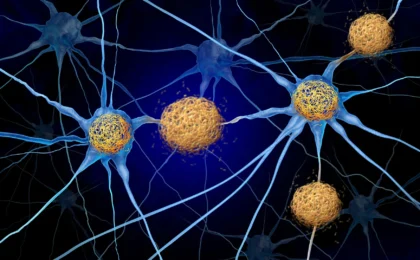
Prions are unique and terrifying biological agents. Unlike bacteria or viruses, they are not living organisms; they are misfolded proteins that induce healthy proteins in the brain to fold into the same pathological shape. This process triggers a chain reaction that results in microscopic holes in the brain, leading to death.
The UCalgary researchers emphasize that prions are "chameleonic." They do not remain fixed once they enter a new host. As they move between different species, they can evolve into new strains. Each strain may exhibit different incubation periods, different tissue tropisms (the types of cells they infect), and different levels of virulence.
The Challenge of Environmental Persistence
One of the most alarming aspects of CWD is its environmental resilience. Infected animals shed prions through saliva, urine, and feces long before they show signs of illness. These prions bind to soil particles and can remain infectious for years, or even decades, on the landscape. This creates a "contamination loop" where healthy animals can contract the disease simply by grazing in an area where an infected animal once stood, even if that animal died years prior.
Official Responses and Scientific Perspective
The researchers involved in the UCalgary study are careful to balance their findings with the current epidemiological reality. Dr. Hermann Schaetzl, a senior author on the study, is clear: "Our findings don’t indicate an immediate risk to humans, but they do suggest the situation is more nuanced than previously understood."
The "Silent" Risk
The study highlights that the absence of clinical symptoms is not a guarantee of safety. Because prions can replicate in a host without causing immediate neurological decline, the potential for "asymptomatic carriers" is high. This makes surveillance incredibly difficult. Wildlife agencies across North America have ramped up testing, but current protocols usually rely on detecting symptomatic animals or post-mortem testing of hunter-harvested deer. If animals can carry the disease silently, current surveillance might be drastically underestimating the true prevalence of the pathogen in the wild.
International Collaboration
The study was bolstered by international collaborators who specialize in protein misfolding diseases. By synthesizing data from multiple laboratory models, the team has created a more robust picture of how CWD prions might adapt to the biological environments of other mammals. This international effort is seen as the gold standard for tracking a disease that knows no borders.
Implications: A New Era of Wildlife Management
The implications of this research are twofold: they necessitate a change in how we view wildlife health, and they spark a new urgency for innovative intervention strategies.
The Human-Animal Interface
While the "species barrier" between deer and humans is currently considered strong, the UCalgary research warns against complacency. History has shown that biological barriers are not walls, but rather filters that can be bypassed through repeated exposure and evolutionary adaptation. As CWD becomes more widespread, the frequency of contact between humans and infected cervids—whether through hunting, consumption, or environmental contact—increases. According to Dr. Schaetzl, "Risk is linked to prevalence." The more the disease spreads, the higher the statistical probability of a zoonotic event.
Hope on the Horizon: The Vaccine Front
Despite the grim nature of the disease, the UCalgary team is not without optimism. Their work has extended into the development of potential vaccines. Using mouse models that mimic the pathology of CWD in cervids, the researchers have seen encouraging results.
In these trials, vaccinated mice that were subsequently exposed to CWD shed significantly fewer infectious prions during the disease’s progression. Furthermore, these animals lived longer than their unvaccinated counterparts. While a vaccine for free-ranging deer herds is currently a logistical challenge, the ability to reduce "shedding"—the rate at which an animal spreads the prions into the environment—could be the key to slowing the epidemic. If a vaccine can reduce the environmental load of prions, it could effectively "break the chain" of transmission in localized populations.
Future Outlook: Vigilance and Science
As we look toward the future, the research conducted at the University of Calgary underscores a vital reality: we are dealing with a "living" threat that evolves. The scientific community is shifting from a reactive stance—simply tracking the disease as it spreads—to a proactive one, seeking to understand the molecular mechanics of the prion itself.
Public health officials, wildlife biologists, and hunters must remain informed. While there is no cause for panic, there is an absolute need for continued, rigorous research. The "silent" nature of the disease—the ability for prions to propagate without outward signs of illness—demands that we maintain high standards for wildlife sampling and environmental monitoring.
By investing in vaccine development and maintaining a deep, granular understanding of how these infectious proteins evolve and adapt, the scientific community hopes to mitigate the impact of CWD. The goal is clear: protect the integrity of North American wildlife ecosystems and ensure that the public health barrier between cervid populations and humans remains impenetrable.
As Dr. Hannaoui aptly noted, the study’s findings are a reminder that the environment we share with wildlife is a dynamic, interconnected system. Understanding the hidden movements of CWD is not just an academic exercise—it is a critical component of maintaining the health of the entire ecosystem.